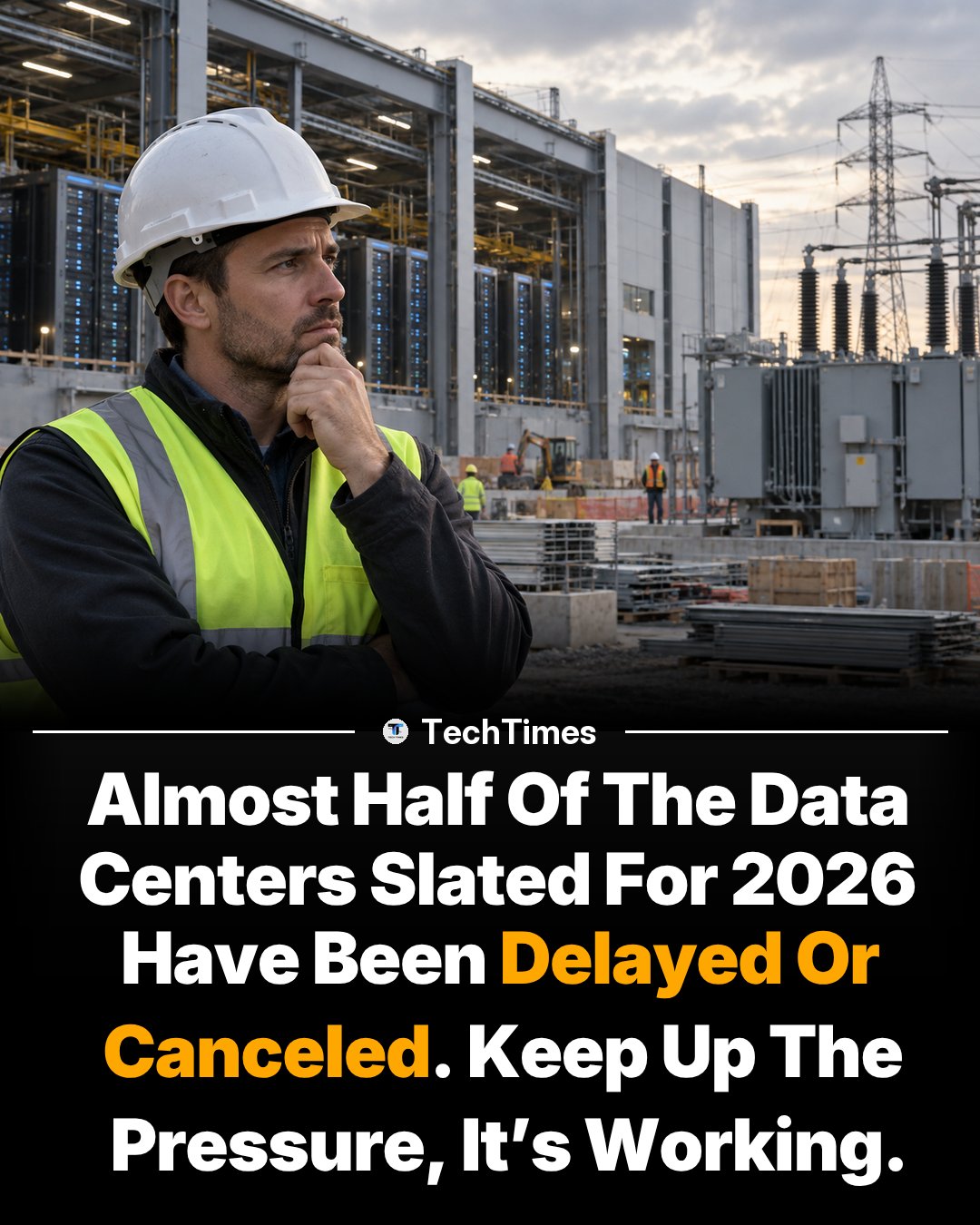
The last six years of data centre construction have been a gamble. No one predicted that almost half of all data centers slated to come online in 2026 would be delayed or canceled, According to technology and trending news TechTimes. This unprecedented level of disruption is reshaping the digital infrastructure landscape. The question is, what's driving these delays, and how will they impact the future of cloud computing and digital services?
Delays and Cancellations: The New Normal
At least 2,000 data center projects planned for 2026 are presently in jeopardy. The causes are varied, ranging from supply chain disruptions to economic uncertainty and regulatory hurdles. Existing data centers are already operating at or near capacity. Without new infrastructure, the risk of overload and service disruptions looms large. The impact of these delays is universal. The construction site featured in TechTimes’ report illustrates the stakes. A worker wearing a hard hat and safety vest stands amidst what could once have been a bustling development site. Now, the delay or cancellation leaves the project's fate uncertain. That there are more questions than answers is evident. New construction projects are crucial—these facilities are the backbone of the world’s digital infrastructure. As demand continues to rise, the absence of these projects puts future connectivity and data processing capabilities on shaky ground. It is not simply that these centers house data; their physical construction entails complex engineering and significant resources. A data center needs not only a large building but also power, cooling, and networking infrastructure. The core is the server, but enclosing them is a network of cooling systems, power supply units, and redundant components. Data centers are not just buildings; they're ecosystems that need to function smoothly to ensure reliability and uptime for the services they support. This ecosystem typically encompasses modular designs that can be scaled or reconfigured as needed. This complexity is key to understanding why delays can bring significant hazards. What makes this situation uniquely daunting is beyond the sheer numbers. Some centers are being canceled outright, while others are delayed indefinitely. The knock-on effects are difficult to measure. Pushing the completion dates of these centers will impact the broader tech industry.
The Pressure to Adapt
The tech industry has swiftly adopted cloud computing, but the same high demand for data solutions is causing the construction of data centers to stagnate. Every canceled or delayed data center project due to supply chain issues, regulatory challenges, and economic uncertainty disrupts the capacity to meet this growing need. The exact reasons behind these cancellations and delays are varied. Many projects are facing significant impediments. Supply chain disruptions have made it difficult to source necessary materials—a problem that is not unique to the construction industry. Economic uncertainty, driven by fluctuating demand and inflation, has caused some companies to reassess their investment strategies. Regulatory hurdles and environmental concerns are also contributing factors. With the increasing amount of data being created, stored, and processed, the need for new data centers is only going to grow.
The Clogging of Supply Chains
Supply chain disruptions have significantly impacted the construction of data centers. Material shortages, delivery delays, and increased costs have slowed or halted projects across the board. While the pandemic played a role in specific shortages, ongoing global issues have exacerbated the problem. The hardest hit has been at the beginning of the construction chain. Materials like steel and copper are scarce due to a combination of production delays and increased demand. Trying to meet these demands actually stretches the chain further. The scarcity of materials drives costs skyward, which further delays projects. Companies are left with the choice of postponing construction or risking significant financial losses. Hence, many projects are being put on indefinite hold. Such delays in data centers have a snowball effect, affecting not just the construction timeline, but broader economic and digital infrastructure needs as well. Key materials need to be manufactured elsewhere, causing additional delays in shipping.
The Rise of Regulatory Hurdles
Regulatory challenges are another significant factor in the current slowdown. New environmental regulations and zoning laws are impacting where and how data centers can be built. Many projects are facing legal battles and delays due to stringent environmental impact assessments and compliance with new regulations. Environmental concerns are a crucial aspect of regulatory pressures, with many jurisdictions now requiring data centers to meet higher sustainability standards. These changes can stall projects for months or even years, as companies navigate complex legal and bureaucratic processes. The regulations put a few companies in the spotlight. Most notably, Google has invested heavily in sustainable infrastructure. They are making progress, despite widespread delays. The standards for a sustainable growth landscape are unmet but rising. However, many companies are struggling to meet the new requirements. They will face longer wait times for regulatory approvals and compliance.
Varying Responses
These disruptions have sparked varied responses from tech companies. Some are pushing ahead with their original plans, while others are reassessing their strategies. For instance, several companies are adopting a more phased approach to data center construction. They’re building smaller, modular data centers that can be expanded as needed. This approach reduces the immediate financial burden while ensuring that capacity increases are aligned with demand. Google has also adopted a strategy to increase sustainable construction in data centers. They have intensively invested in the same and are making progress. However, the fact that this is being fought by delays in regulatory approvals of companies highlights the larger picture. Other companies are heavily investing in renewable energy and energy-efficient technologies to ensure that new data centers meet modern sustainability standards. Still, others are considering repurposing existing facilities or partnering with third-party providers to meet their infrastructure needs. However, none of these strategies are foolproof.
Building Better Data Centers
So what does this mean for the future of data centers? For companies and consumers alike, there are practical steps to take now to prepare. Companies should closely monitor the project status of planned data centers and consider alternative strategies to ensure continuity of service. The impact will be noticeable and people need to be prepared. This not only includes backing up data more frequently and exploring alternative services but also preparing for potential outages or reduced performance.
- Consider Alternative Storage Solutions: Look for smaller, modular data center options or repurpose existing facilities.
- Back Up Your Data: More frequent backups can ensure data continuity in case of service disruptions.
- Explore Cloud Services: Consider using a cloud service provider that’s not solely reliant on traditional data centers.
- Invest in Renewable Energy: Ensure that your infrastructure is energy-efficient and sustainable.
Watch the Reel
Questions readers ask
What specific supply chain disruptions are causing data center delays?
The article mentions that supply chain disruptions are making it difficult to source necessary materials for data center construction. While the exact materials aren't listed, these likely include everything from raw construction materials to specialized components like servers and cooling systems.
How does economic uncertainty affect data center construction plans?
Economic uncertainty is causing some companies to reassess their investment strategies. With fluctuating demand and inflation, companies may be hesitant to commit to large-scale projects like data centers, leading to delays or cancellations.
What happens if data centers don’t come online as planned in 2026?
If data centers don’t come online as planned, existing data centers may operate at or near capacity, risking overload and service disruptions. This could impact the reliability and uptime of digital services that depend on these data centers.
What are the regulatory hurdles mentioned in the article?
The article mentions regulatory hurdles as one of the factors contributing to data center delays and cancellations. While specific regulations aren't detailed, these could include zoning laws, environmental regulations, or other compliance requirements that delay or complicate construction.
Can companies mitigate these delays through modular data center designs?
Modular data center designs can indeed help mitigate some delays. These designs allow for scalability and reconfiguration, which can be useful in adapting to changing circumstances. However, the complexity and resource requirements of data centers mean that even modular designs can't entirely eliminate the impact of delays.
What are the knock-on effects of delayed data centers on the broader tech industry?
The knock-on effects of delayed data centers include potential disruptions in connectivity and data processing capabilities. As demand for digital services continues to rise, the absence of new data centers could lead to overloaded existing infrastructure and potential service interruptions.
What are the environmental concerns that might be causing data center cancellations or delays?
The article mentions environmental concerns as a factor, but doesn't specify them. These could include issues related to energy consumption, water usage, or the impact on local ecosystems. Companies may be facing pressure to address these concerns, which could lead to delays or cancellations.
Related deep dives
Similar reads based on topic and creator.

Recent articles
Fresh deep dives from the latest Reels we unpacked.




Comments
Be the first to comment.