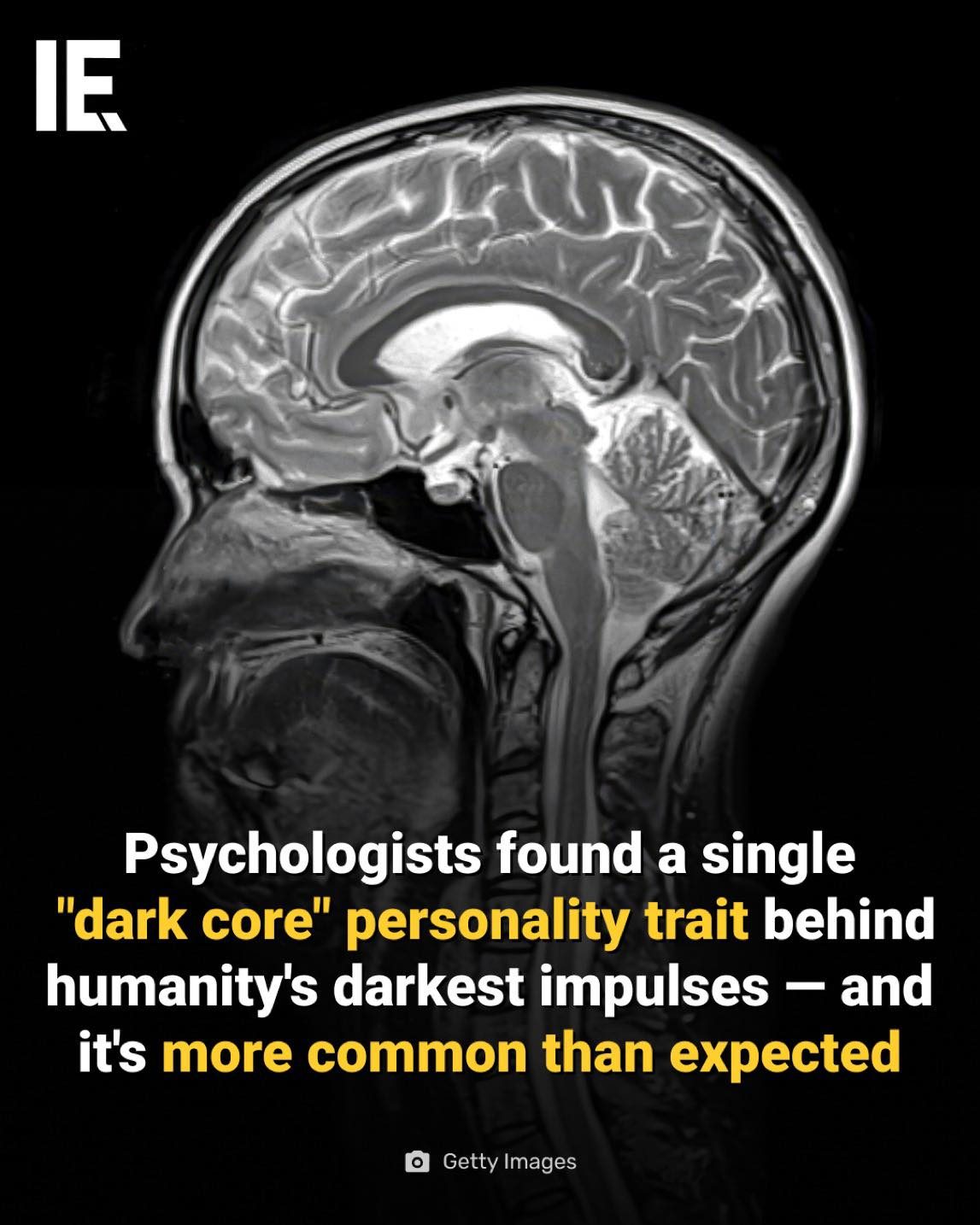
The D Factor: A New Perspective on Humanity's Darkest Impulses
The D factor is a single underlying personality trait that drives all of humanity's darkest impulses, from psychopathy and narcissism to sadism, Machiavellianism, and spite. This concept, identified by researchers from Germany and Denmark, mirrors the "g factor" in intelligence research, where a general cognitive ability underlies performance across different tasks. Here, a general darkness factor underlies all malevolent personality traits.
Why This Matters
Understanding the D factor can provide valuable insights into human behavior and psychology. It offers a framework for comprehending the commonalities among various dark personality traits, potentially leading to better ways to address and mitigate these traits. By recognizing the D factor, we can gain a deeper understanding of the darker aspects of human nature and how they manifest in society.
The D Factor: Origins and Significance
The Identification of the D Factor
The D factor was identified through a series of four studies involving over 2,500 participants. Researchers found that while dark traits like narcissism and psychopathy are distinct, they all overlap and share a common core. This common core, the D factor, indicates how likely a person is to engage in behaviors associated with these dark traits.
The Stability of the D Factor
A 2021 longitudinal study tracking 1,200 adults over four years found that the D factor was the most stable personality measure over time—more consistent than any individual dark trait. This stability suggests that the D factor is a reliable indicator of a person's tendency to exhibit dark behaviors.
The D Factor and Society
Recent research across 8,000 people in Germany, the US, and Denmark found that people with high D scores are significantly less likely to work in caring professions like teaching or nursing. This finding highlights the societal implications of the D factor and how it can influence career choices and professional environments. Moreover, a 2025 PNAS paper found that the D factor varies between societies. Countries with more toxic social conditions score higher collectively, suggesting that environmental factors play a significant role in shaping how dark human behaviors become.
The D Factor and Individual Traits
The D factor is distinct from individual dark traits like psychopathy, narcissism, and sadism. While these traits are distinct, they all share a common core, which is the D factor. This common core indicates a general tendency toward dark behaviors, regardless of the specific trait.
The D Factor and the g Factor
The D factor is analogous to the "g factor" in intelligence research, where a general cognitive ability underlies performance across different tasks. In this case, the D factor underlies all malevolent personality traits, providing a framework for understanding the commonalities among these traits.
Practical Tips for Understanding and Addressing the D Factor
Recognizing the Signs
Recognizing the signs of the D factor can help individuals and society address its manifestations. Be aware of behaviors associated with dark traits like psychopathy, narcissism, and sadism, and consider how these traits may overlap and share a common core.
Seeking Professional Help
If you or someone you know exhibits behaviors associated with the D factor, seeking professional help can be beneficial. A mental health professional can provide guidance and support in managing these behaviors and addressing their underlying causes.
Creating Supportive Environments
Creating supportive and nurturing environments can help mitigate the effects of the D factor. Encouraging empathy, compassion, and positive social interactions can foster a more balanced and harmonious society, reducing the prevalence of dark behaviors.
Research and Education
Further research and education on the D factor can help deepen our understanding of this trait and its implications. By continuing to study the D factor, we can develop more effective strategies for addressing and mitigating its effects.
Important Takeaways
The D factor provides a new perspective on humanity's darkest impulses, offering a framework for understanding the commonalities among various dark personality traits. By recognizing and addressing the D factor, we can gain valuable insights into human behavior and psychology, leading to better ways to mitigate dark behaviors and create a more harmonious society.
Conclusion
The D factor is a significant discovery in the field of psychology, offering a new way to understand and address humanity's darkest impulses. By recognizing the common core underlying these traits, we can gain a deeper understanding of human behavior and develop more effective strategies for addressing and mitigating these behaviors. Through further research, education, and support, we can create a more balanced and harmonious society, reducing the prevalence of dark behaviors and fostering empathy and compassion.
Watch the Reel
Questions readers ask
What exactly is the D factor in the context of personality traits?
The D factor is a single underlying personality trait that encompasses humanity's darkest impulses. It is a general darkness factor that connects various malevolent traits such as psychopathy, narcissism, sadism, Machiavellianism, and spite. This concept helps to explain the commonalities among these traits, much like the 'g factor' does for cognitive abilities.
Who identified the D factor and how was it discovered?
The D factor was identified by researchers from Germany and Denmark. The researchers discovered it through extensive analysis of personality traits. Their findings suggest that this general darkness factor underlies various malevolent personality traits and influences behavior.
How can understanding the D factor benefit society?
Understanding the D factor can provide valuable insights into human behavior, particularly those driven by malevolent impulses. By comprehending the commonalities among dark personality traits, society can potentially develop better ways to address and mitigate these traits, promoting more harmonious social interactions and relationships.
What are the dark personality traits associated with the D factor?
The D factor is associated with a range of dark personality traits, including psychopathy, narcissism, sadism, Machiavellianism, and spite. These traits are all connected by the underlying darkness factor, which helps to explain their commonalities and manifestations in society.
Can the D factor be measured or quantified in individuals?
The D factor itself is a theoretical construct, but it can be inferred through assessments of its associated dark personality traits. By evaluating an individual's tendencies towards psychopathy, narcissism, sadism, and other related traits, researchers can gauge the presence and influence of the D factor.
How does the D factor relate to everyday human behavior?
The D factor influences a wide range of human behaviors, from subtle social interactions to more extreme behaviors. By understanding this trait, individuals and society as a whole can gain insights into the motivations behind harmful or manipulative behaviors, fostering a greater awareness of these tendencies and their potential consequences.
What is the significance of the D factor in psychological research?
The D factor is significant in psychological research as it provides a unified framework for understanding a variety of malevolent personality traits. By identifying and studying this general darkness factor, researchers can gain a deeper comprehension of how these traits manifest and interact, potentially leading to more effective interventions and treatments.
Recent articles
Fresh deep dives from the latest Reels we unpacked.




Comments
Be the first to comment.