US City Crime Rates
Crime rates in the United States are a persistent topic of national conversation, often focusing on large metropolitan areas like Chicago or San Francisco. However, a closer examination of the data reveals that some of the most dangerous cities in the U.S. are actually smaller or suburban areas. This is according to new per capita data from NeighborhoodScout, which provides a detailed look at violent crime rates across the country.
Why This Matters
Understanding the distribution of violent crime is crucial for several reasons. It helps law enforcement agencies allocate resources more effectively, aids policymakers in crafting targeted legislation, and informs residents about the safety of their communities. By focusing on per capita crime rates, this data offers a more nuanced view of where crime is most concentrated, rather than just the raw number of incidents.
Main Discussion
The Most Dangerous Cities
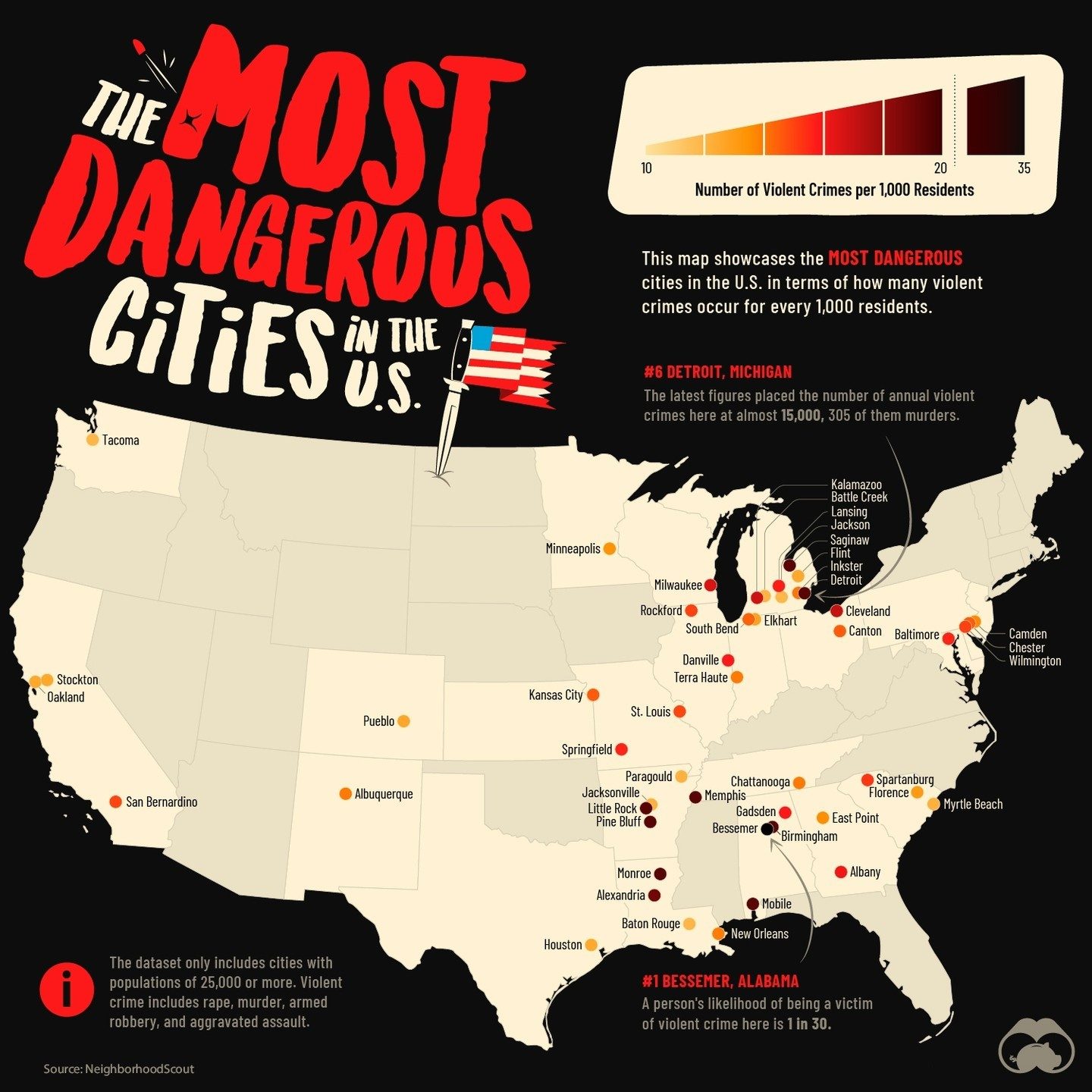
The data from NeighborhoodScout highlights cities with the highest rates of violent crimes per 1,000 residents. This metric provides a clearer picture of the risk individuals face in these areas. According to the map, Bessemer, Alabama ranks as the most dangerous city in the U.S., with a 1 in 30 chance of being a victim of violent crime. Detroit, Michigan, also stands out, ranking as the sixth most dangerous city with nearly 15,000 violent crimes annually, including 305 murders.
Data Sources and Methodology
The information is sourced from the latest FBI crime data and Census Bureau population figures available in 2023. This ensures that the data is current and reliable. The report focuses on reported violent crimes, which include rape, murder, armed robbery, and aggravated assault. Only cities with a population of 25,000 or higher are considered, providing a comprehensive view of urban crime rates across the country.
Key Findings
One of the most surprising findings is the prevalence of high crime rates in smaller cities. This challenges the stereotype that large metropolitan areas are the most dangerous. For instance, Bessemer, Alabama, with a population of just over 26,000, has a significantly higher crime rate per capita than many larger cities. This highlights the importance of looking beyond population size when assessing crime trends.
Implications for Law Enforcement and Policy
The findings have several implications for law enforcement and policy. For law enforcement agencies, it underscores the need for targeted interventions in smaller cities that may not have the same resources as larger urban areas. For policymakers, it suggests that crime prevention strategies should be tailored to the specific needs and contexts of different communities, rather than a one-size-fits-all approach.
Practical Tips
For Residents
If you live in or near a city with high crime rates, it's important to take precautions to ensure your safety. This includes being aware of your surroundings, avoiding areas known for high crime, and installing security measures in your home. Community involvement, such as joining neighborhood watch programs, can also help deter crime and foster a sense of collective security.
For Policymakers
Policymakers should consider investing in community programs that address the root causes of crime, such as lack of education and employment opportunities. Early intervention programs, such as youth mentoring and job training initiatives, can help prevent individuals from turning to criminal activities. Additionally, ensuring adequate funding for law enforcement in smaller cities can help maintain public safety.
For Law Enforcement
Law enforcement agencies should prioritize data-driven strategies to combat crime. This includes using crime mapping tools to identify hotspots and allocating resources accordingly. Collaboration with community leaders and residents can also enhance police effectiveness and build trust.
Important Takeaways
The data from NeighborhoodScout reveals that violent crime is a significant issue in many U.S. cities, regardless of their size. Smaller and suburban areas often have high per capita crime rates, challenging the notion that crime is primarily an urban problem. Understanding these trends is essential for effective law enforcement, policy-making, and community safety.
Conclusion
Crime rates in the U.S. are a complex issue that requires a nuanced understanding of the data. By focusing on per capita crime rates, we can gain a clearer picture of where crime is most concentrated and tailor our responses accordingly. Whether you're a resident, policymaker, or law enforcement officer, this information can help guide your actions and decisions to create safer communities.
Watch the Reel
Questions readers ask
What are the most dangerous cities in the US based on violent crime rates?
The most dangerous cities in the US based on violent crime rates often include smaller cities and suburbs, which may have higher rates than larger metropolitan areas. NeighborhoodScout data highlights these differences. Cities like Detroit, St. Louis, and Memphis frequently top these lists, but smaller areas can also have surprisingly high rates.
How can understanding violent crime rates help law enforcement?
Understanding violent crime rates helps law enforcement allocate resources more effectively. By identifying areas with higher crime rates, law enforcement can focus patrols, investigations, and community policing efforts where they are needed most, enhancing overall public safety.
Why do smaller cities and suburbs often have higher violent crime rates?
Smaller cities and suburbs may have higher violent crime rates due to a variety of factors, including limited resources for community programs, less robust public transportation systems, and community layout that can make policing more challenging. Also, smaller populations can lead to higher per capita crime rates.
What role do crime statistics play in shaping public policy?
Crime statistics are vital for shaping public policy as they inform lawmakers about the specific needs and challenges of different communities. Detailed data helps in crafting targeted legislation and initiatives aimed at reducing crime and enhancing community safety, such as funding for community centers or law enforcement training.
How can residents use US crime data to inform their decisions?
Residents can use US crime data to make informed decisions about where to live, work, and raise a family. By reviewing crime rates and trends in specific areas, individuals and families can assess the safety of their communities, choose neighborhoods strategically, and take necessary precautions to enhance their personal security.
Which cities are considered the safest in the US by crime rate?
Some of the safest cities in the US by crime rate often include smaller towns and suburbs known for their low crime rates. Examples might include areas like Franklin, Massachusetts, or Fishers, Indiana. These locations frequently prioritize strong community engagement and effective policing strategies.
How can residents and law enforcement work together to address high crime rates in suburbs?
Residents and law enforcement can work together to address high crime rates in suburbs by fostering open communication and collaboration. This can involve community meetings, neighborhood watch programs, and joint initiatives aimed at identifying and addressing local issues, ultimately creating a safer environment for everyone.
Recent articles
Fresh deep dives from the latest Reels we unpacked.




Comments
Be the first to comment.