Cross-Border Financial Transactions
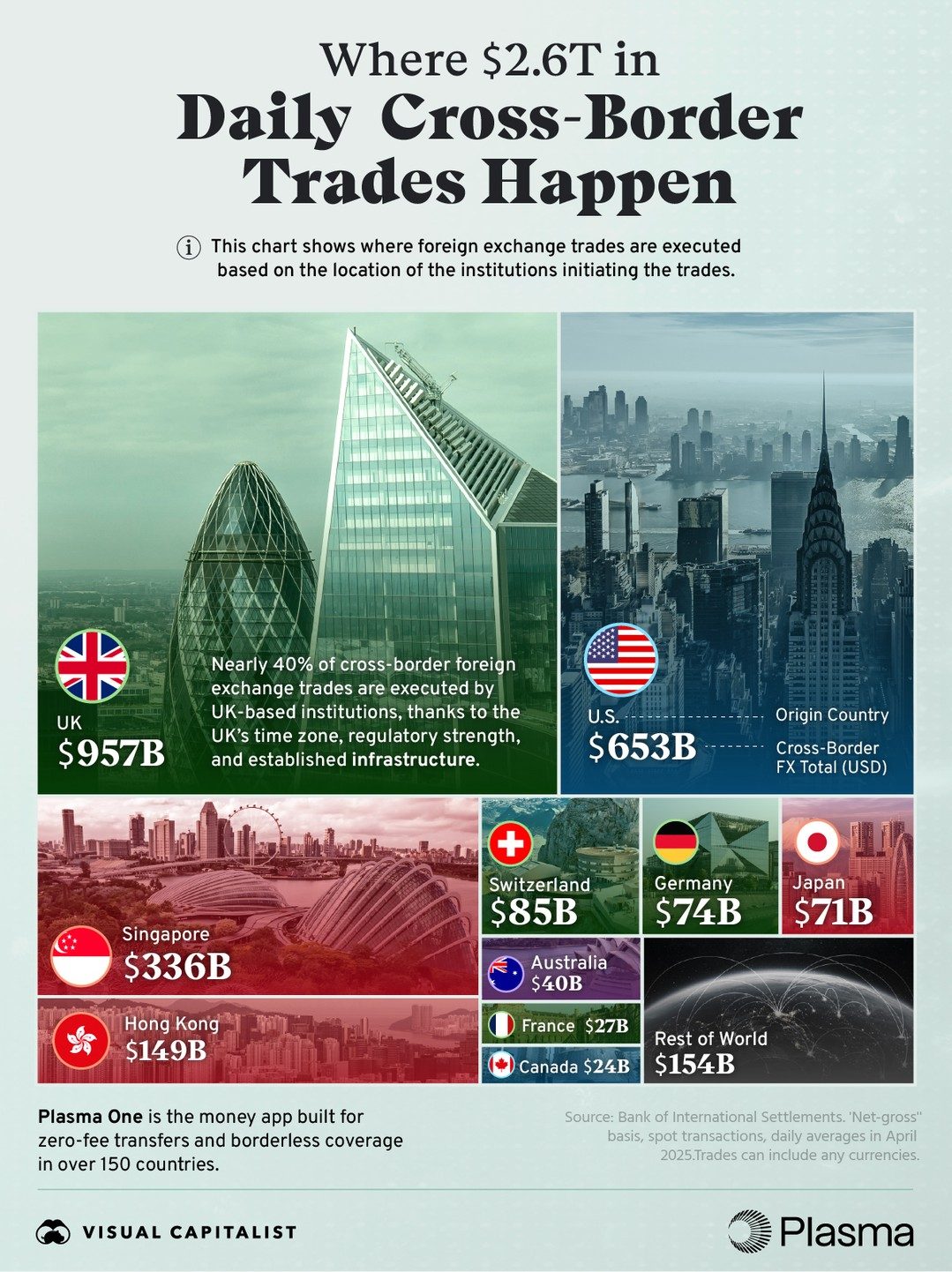
Global trade relies heavily on foreign exchange markets, facilitating the movement of $2.6 trillion across borders daily. This massive flow of capital involves complex transactions orchestrated by institutions worldwide. Here’s an in-depth look at the countries driving this financial activity, the reasons behind their prominence, and the tools that facilitate these transactions.
Why This Matters
The ease and efficiency of cross-border financial transactions are crucial for international trade, investment, and economic stability. Understanding the key players and the factors influencing their roles can provide valuable insights for businesses and investors alike.
Main Discussion
The UK's Dominance in Cross-Border Trading
The UK stands out as a leader in cross-border financial transactions. Nearly 40% of these trades are executed by UK-based institutions. Several factors contribute to this dominance:
- Time Zone Advantage: The UK's time zone allows for overlap with both Asian and American markets, enabling round-the-clock trading.
- Regulatory Environment: The UK has a robust regulatory framework that fosters trust and stability in financial markets.
- Established Infrastructure: The UK boasts a well-developed financial infrastructure, including advanced technology and skilled professionals, which supports complex financial transactions.
Major Players in Cross-Border Trading
Beyond the UK, several other countries play significant roles in cross-border financial transactions:
- Australia: Known for its strong financial services sector and regulatory environment, Australia handles a substantial volume of trades.
- Hong Kong: Serving as a gateway to the Asian markets, Hong Kong's strategic location and regulatory strength make it a key player.
- Switzerland: Renowned for its banking secrecy and financial stability, Switzerland is a hub for international financial transactions.
- Germany and Japan: These countries benefit from their robust economies and established financial systems, making them significant contributors to cross-border trading.
- Singapore and France: Both countries have developed financial centers that facilitate a high volume of trades.
- Canada: Known for its stable economy and regulatory environment, Canada also plays a crucial role in the global financial market.
The Role of Technology
Technology has revolutionized cross-border financial transactions, making them faster, more secure, and more efficient. Apps like Plasma One illustrate this trend, offering users a seamless way to manage transactions across borders. With coverage in over 150 countries, Plasma One exemplifies how technology is bridging gaps and simplifying global finance.
Practical Tips
For businesses and individuals navigating cross-border financial transactions, here are some practical tips:
Choose the Right Financial Partner
Selecting a financial institution or app with a strong regulatory compliance record and global reach can simplify transactions and reduce risks.
Understand Local Regulations
Each country has its own set of regulations governing financial transactions. Being aware of these can help avoid legal pitfalls and ensure compliance.
Leverage Technology
Using apps and platforms designed for cross-border transactions can streamline the process, making it more efficient and less prone to errors.
Stay Informed
Keeping up with market trends and economic developments in key trading countries can provide a competitive edge and help make informed decisions.
Important Takeaways
- The UK’s strategic location, regulatory environment, and financial infrastructure make it a dominant player in cross-border trading.
- Other key countries, including Australia, Hong Kong, and Switzerland, also play significant roles, each with unique strengths.
- Technology, exemplified by apps like Plasma One, is transforming cross-border financial transactions, making them more accessible and efficient.
- Understanding local regulations and leveraging the right tools are crucial for successful cross-border transactions.
Conclusion
Cross-border financial transactions are the lifeblood of global trade, involving trillions of dollars daily. Countries like the UK, Australia, Hong Kong, and others are at the forefront, driven by factors like time zones, regulatory strength, and technological advancements. By understanding these dynamics and leveraging the right tools, businesses and individuals can navigate the complexities of cross-border finance with greater ease and confidence.
Watch the Reel
Questions readers ask
Why does the UK handle nearly 40% of daily cross-border trades?
The UK's prominence in cross-border trades is due to several factors, including its strategic time zone, which allows for overlap with both Asian and American markets. Additionally, the UK boasts a robust regulatory environment and advanced financial infrastructure that facilitates secure and efficient transactions.
How does the UK's time zone benefit global cross-border payments?
The UK's time zone is advantageous because it bridges the gap between the closing of Asian markets and the opening of American markets. This overlap enables continuous trading activity, making the UK a hub for global cross-border payments.
What role does the UK's regulatory environment play in daily cross-border trading?
The UK’s regulatory environment is designed to foster trust and stability in financial transactions. Stringent regulations and oversight ensure that the UK remains a reliable and secure hub for global cross-border trades, attracting major financial institutions worldwide.
Which other countries are significant players in global cross-border trades?
While the UK is a leader, countries like Hong Kong, Singapore, and Australia are also notable for their roles in global cross-border trades. Hong Kong, for instance, is a key player due to its strategic location and robust financial system, while Australia is known for its regulatory environment and efficient payment systems.
What are the key tools and systems that facilitate cross-border trading?
Several tools and systems facilitate cross-border trading, including currency exchanges, global payment networks, and financial marketplaces. These systems leverage technology to ensure speed, security, and efficiency in processing vast amounts of daily cross-border trading volume.
How does the UK's financial infrastructure support daily cross-border trades?
The UK's advanced financial infrastructure includes state-of-the-art technology, secure communication networks, and reliable settlement systems. These components work together to process the high volume of daily cross-border trades efficiently, ensuring minimal disruptions and maximizing liquidity.
What insights can businesses and investors gain from understanding cross-border trading dynamics?
Understanding cross-border trading dynamics can help businesses and investors make informed decisions about where to allocate resources, identify potential risks, and capitalize on opportunities. Recognizing the influence of factors like time zones and regulatory environments can enhance strategic planning for global operations.
Recent articles
Fresh deep dives from the latest Reels we unpacked.




Comments
Be the first to comment.