Currency Drops: An Overview of the Biggest Declines in 2025
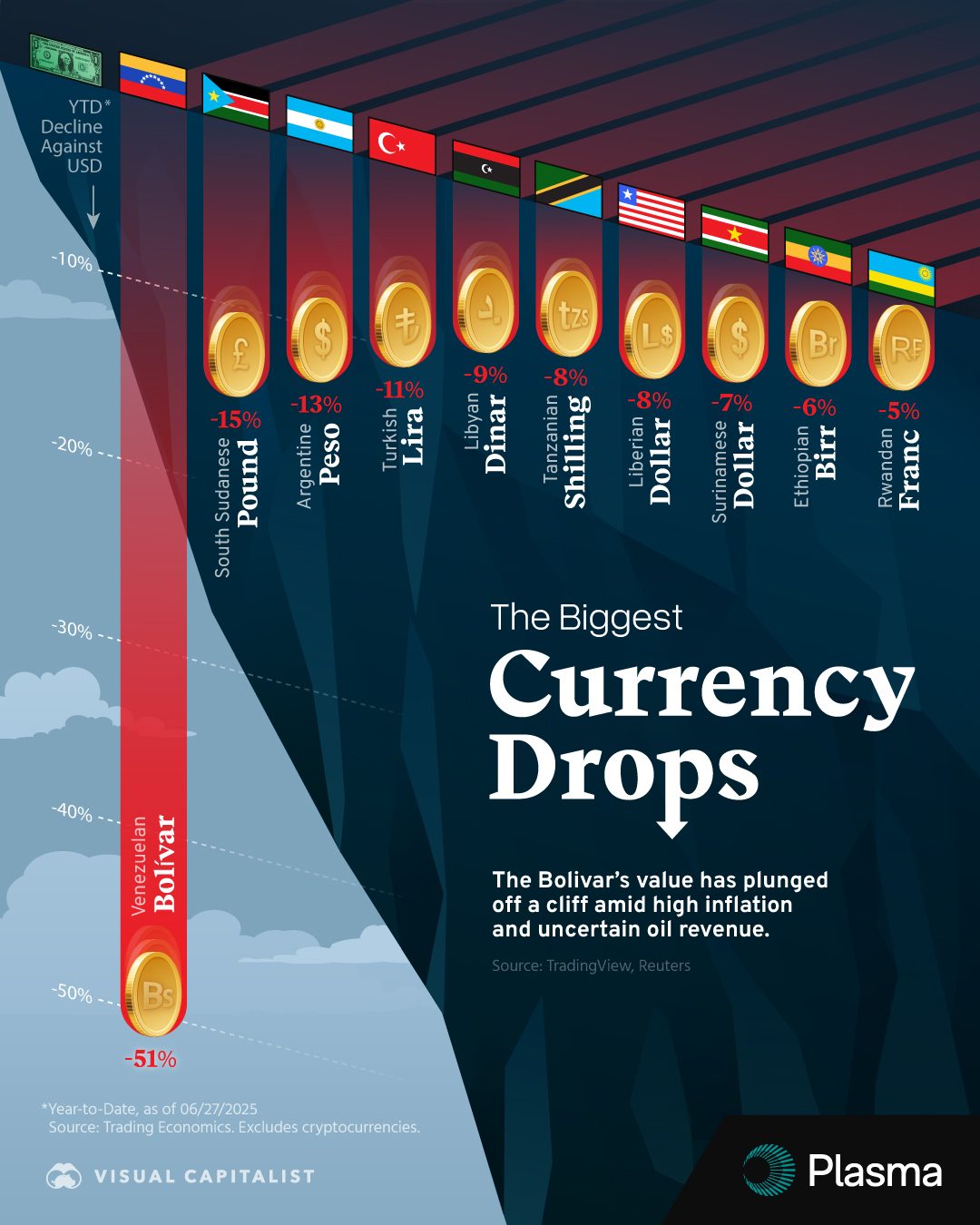
The global economy is a complex web of interconnected markets, and currency fluctuations are a key indicator of economic health. In the first half of 2025, one currency stood out for its dramatic decline: the Venezuelan Bolivar, which experienced a staggering drop of over 50% against the U.S. dollar. This significant decrease was part of a broader trend of currency depreciation, with several other currencies also facing substantial drops. Let's delve into the factors behind these declines and understand their implications.
Context / Why This Matters
Currency values are influenced by a multitude of factors, including economic policies, global trade, and geopolitical events. Understanding the reasons behind currency drops is crucial for investors, policymakers, and businesses operating in international markets. These fluctuations can impact everything from trade agreements to consumer prices, making it essential to stay informed about the latest developments.
Main Discussion
The Venezuelan Bolivar: A Steep Decline
The Venezuelan Bolivar's decline is a stark example of how economic instability can lead to currency depreciation. This currency dropped -51% against the U.S. dollar as of June 27, 2025. The primary factors contributing to this drop are high inflation and uncertain oil revenue. Venezuela heavily relies on oil exports, and fluctuations in oil prices, combined with political instability, have created an environment of economic turmoil. High inflation erodes the purchasing power of the Bolivar, making it less valuable both domestically and internationally.
Other Notable Currency Drops
While the Bolivar's decline is the most dramatic, other currencies have also experienced significant drops:
- South Sudanese Pound: Dropped -15% against the U.S. dollar.
- Argentine Peso: Dropped -13% against the U.S. dollar.
- Turkish Lira: Dropped -11% against the U.S. dollar.
These declines, while less severe than the Bolivar's, still reflect underlying economic challenges. Factors such as political instability, economic mismanagement, and external economic pressures contribute to these devaluations. Each of these currencies faces its own set of unique challenges, but they share common themes of economic uncertainty and external pressures.
Economic Implications of Currency Devaluations
Currency devaluations have far-reaching implications for a country's economy. For starters, they can make imports more expensive, leading to higher prices for consumer goods and raw materials. This can fuel inflation, further eroding the purchasing power of the local currency. For exports, a weaker currency can make goods more competitive in international markets, potentially boosting exports. However, this benefit is often offset by the broader economic instability that accompanies a weak currency.
Practical Tips
Navigating a landscape of currency volatility requires a strategic approach. Here are some practical tips for individuals and businesses affected by these fluctuations:
For Investors
- Diversify Your Portfolio: Spread investments across different asset classes and currencies to mitigate the risk of loss from any single currency's decline.
- Stay Informed: Keep up with economic news and currency trends. Understanding the broader market conditions can help you make more informed investment decisions.
- Consider Hedging: Use financial instruments like futures, options, or forwards to protect against adverse currency movements.
For Businesses
- Risk Management: Implement currency risk management strategies to protect against the impact of currency fluctuations on your financials.
- Flexible Pricing: Adjust your pricing strategies to account for changes in currency values, ensuring that you remain competitive in both domestic and international markets.
- Local Currency Prices: If you operate in multiple countries, consider pricing your products in local currencies to stabilize revenue streams.
Important Takeaways
Currency drops are a complex issue influenced by a variety of economic and political factors. Key takeaways from the significant declines in 2025 include:
- Economic Instability: High inflation and uncertain revenue sources are major contributors to currency devaluations. Countries heavily reliant on single commodities, like Venezuela with oil, are particularly vulnerable.
- Global Reach: Currency fluctuations have repercussions beyond national borders, affecting international trade, investment, and economic stability.
- Need for Strategy: Both investors and businesses must adopt strategies to navigate currency volatility, such as diversification, hedging, and risk management.
Conclusion
In a globally interconnected economy, understanding currency drops is crucial for making informed financial decisions. The decline of the Venezuelan Bolivar and other major currencies in 2025 highlights the broader economic challenges faced by these countries. By staying informed and employing strategic approaches, individuals and businesses can better navigate the complexities of currency fluctuations and protect their financial interests.
Watch the Reel
Questions readers ask
What caused the Venezuelan Bolivar to drop so sharply in 2025?
The Venezuelan Bolivar's 51% decline in 2025 was primarily driven by economic instability and political unrest within the country. These factors led to a loss of confidence in the currency, causing a significant drop in its value against the U.S. dollar.
How does the Bolivar to dollar exchange rate compare to other major currency drops in 2025?
The Bolivar's 51% drop was the most significant among major currency declines in 2025. Other currencies, such as the South Sudanese Pound, Argentine Peso, and Turkish Lira, also experienced notable drops, but the Bolivar's decline was the most pronounced.
What impact did inflation have on the Bolivar's decline in 2025?
Inflation played a substantial role in the Bolivar's decline. High inflation rates eroded the purchasing power of the Bolivar, leading to a decrease in its value. This inflationary pressure was a key factor in the currency's dramatic drop against the U.S. dollar.
Which other currencies experienced significant declines in 2025 besides the Venezuelan Bolivar?
Besides the Venezuelan Bolivar, several other currencies faced significant declines in 2025. Notable mentions include the South Sudanese Pound, Argentine Peso, and Turkish Lira, each experiencing substantial drops due to their own unique set of economic and political challenges.
How do currency fluctuations in 2025 reflect broader economic trends?
The significant currency fluctuations in 2025, including the Bolivar's decline, reflect broader economic trends such as global trade dynamics, geopolitical tensions, and varying economic policies. These fluctuations serve as indicators of the economic health and stability of different countries.
What are some implications of the Bolivar's decline for the global economy?
The Bolivar's decline has several implications for the global economy. It can affect trade dynamics, as imports become more expensive for Venezuela while exports may become more attractive. Additionally, it can influence regional economic stability and may lead to shifts in investment patterns and capital flows.
What factors should be monitored to understand future currency performance in 2026 and beyond?
To understand future currency performance, it is essential to monitor economic policies, geopolitical events, and global trade dynamics. Keeping an eye on inflation rates, political stability, and international trade agreements can provide insights into potential currency fluctuations in 2026 and the years to come.
Recent articles
Fresh deep dives from the latest Reels we unpacked.




Comments
Be the first to comment.