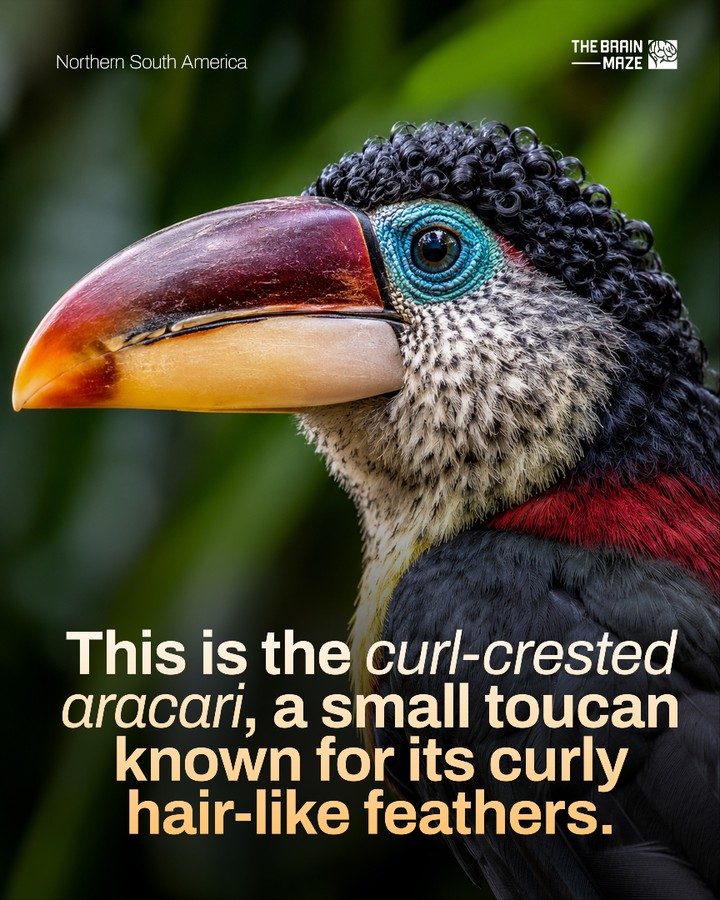
Curl-Crested Aracari: A Fascinating Bird of the Rainforest
The curl-crested aracari is a vibrant member of the toucan family, inhabiting the dense rainforests of northern South America. Known for its distinctive curly feathers and large, brightly colored bill, this bird is a captivating sight in the forest canopy.
Why the Curl-Crested Aracari Matters
These birds play a crucial role in their ecosystems, particularly in seed dispersal and pest control. Their diet, which includes fruits, insects, and small animals, helps maintain the balance of the rainforest. Additionally, their striking appearance and unique characteristics make them a subject of interest for wildlife enthusiasts and conservationists alike. Understanding the curl-crested aracari provides insights into the diversity and resilience of the rainforest ecosystems.
Getting to Know the Curl-Crested Aracari
Distinctive Features
The curl-crested aracari is easily recognizable by its unique curly feathers on top of its head. These feathers give the bird a distinctive, almost whimsical appearance, resembling a wild hairstyle. Its large, brightly colored bill is another notable feature, which it uses efficiently to forage for food in the forest canopy.
Habitat and Range
The curl-crested aracari is native to the rainforests of northern South America, including parts of Brazil, Guyana, Suriname, and Venezuela. These regions provide the dense vegetation and abundant food sources that these birds require for survival. The rainforests offer a complex ecosystem where the curl-crested aracari can thrive, utilizing its agile movements and keen senses to navigate the dense foliage.
Behavior and Diet
Like other toucans, the curl-crested aracari has a varied diet that includes fruits, insects, and small animals. Its large bill is not just for show—it is a versatile tool for foraging. The bird uses its bill to pick fruits from trees, peel them, and consume the flesh. It also uses its bill to extract insects and small animals from crevices and bark, showcasing its adaptability and resourcefulness. The curl-crested aracari's diet plays a vital role in seed dispersal, contributing to the regeneration of the rainforest.
Practical Tips for Observing Curl-Crested Aracaris
- Choosing the Right Location: Visit national parks and protected areas in Brazil, Guyana, Suriname, and Venezuela. These regions have well-preserved rainforests where you can spot these birds.
- Timing Your Visit: Plan your trip during the early morning or late afternoon when the birds are most active. They are more likely to be seen and heard during these times.
- Gearing Up: Bring a pair of binoculars and a camera with a good zoom lens. The dense foliage of the rainforest makes it challenging to spot birds, but quality optics can help you see them more clearly.
- Guided Tours: Consider joining a guided tour led by local experts. They can provide valuable insights into the behavior and habitat of the curl-crested aracari, enhancing your experience.
- Respect the Environment: Remember to be respectful of the environment and the creatures that inhabit it. Keep a safe distance from the birds and avoid disturbing their habitat.
Important Takeaways
The curl-crested aracari is a remarkable bird that adds to the rich biodiversity of the rainforests of northern South America. Its unique appearance, adaptable dietary habits, and ecological role make it a fascinating subject of study. By understanding and appreciating the curl-crested aracari, we can foster a deeper connection with the natural world and contribute to the conservation of these vital ecosystems.
Conclusion
The curl-crested aracari stands as a testament to the wonders of the rainforest. Its distinctive features and behavior make it a standout species in the avian world. The next time you find yourself in the vibrant rainforests of northern South America, take a moment to look for these enchanting birds. Their presence will undoubtedly enrich your experience and deepen your appreciation for the natural world.
Watch the Reel
Questions readers ask
What are the key identifying features of the curl-crested aracari?
The curl-crested aracari is easily recognized by its curly feathers and large, colorful bill. Its vibrant plumage and unique crest set it apart from other toucan species, making it a distinctive sight in the rainforest canopy.
Where can curl-crested aracaris be found?
Curl-crested aracaris are native to the dense rainforests of northern South America. They inhabit the forest canopy, where they play a crucial role in the ecosystem.
What is the diet of a curl-crested aracari?
These birds have a varied diet that includes fruits, insects, and small animals. This diverse diet helps them contribute to seed dispersal and pest control, which are essential for maintaining the health of the rainforest.
How do curl-crested aracaris contribute to their ecosystem?
Curl-crested aracaris are vital for seed dispersal as they eat fruits and then exile the seeds through their droppings, helping plants reproduce. Additionally, by feeding on insects and small animals, they aid in pest control. They help maintain the balance of the rainforest ecosystem.
What makes the curl-crested aracari an important subject for wildlife enthusiasts and conservationists?
Their striking appearance, unique characteristics, and the role they play in their ecosystems make them a subject of interest. They serve as an indicator of the overall health of the rainforest, making their conservation a priority for those interested in wildlife and environmental health.
Are curl-crested aracaris social or solitary birds?
Curl-crested aracaris are known to be social birds, often found in small groups or pairs. They communicate using a variety of vocalizations and are quite active in their interactions, which adds to their charm and fascination for those who observe them.
What are some conservation efforts related to curl-crested aracaris?
Conservation efforts for curl-crested aracaris focus on protecting their rainforest habitats, as deforestation poses a significant threat. Organizations work to preserve and restore these habitats, ensuring that these unique birds continue to thrive in their natural environments.
Related deep dives
Similar reads based on topic and creator.


Recent articles
Fresh deep dives from the latest Reels we unpacked.




Comments
Be the first to comment.