Critical Mineral Refining by 2030: Global Shifts and Key Players
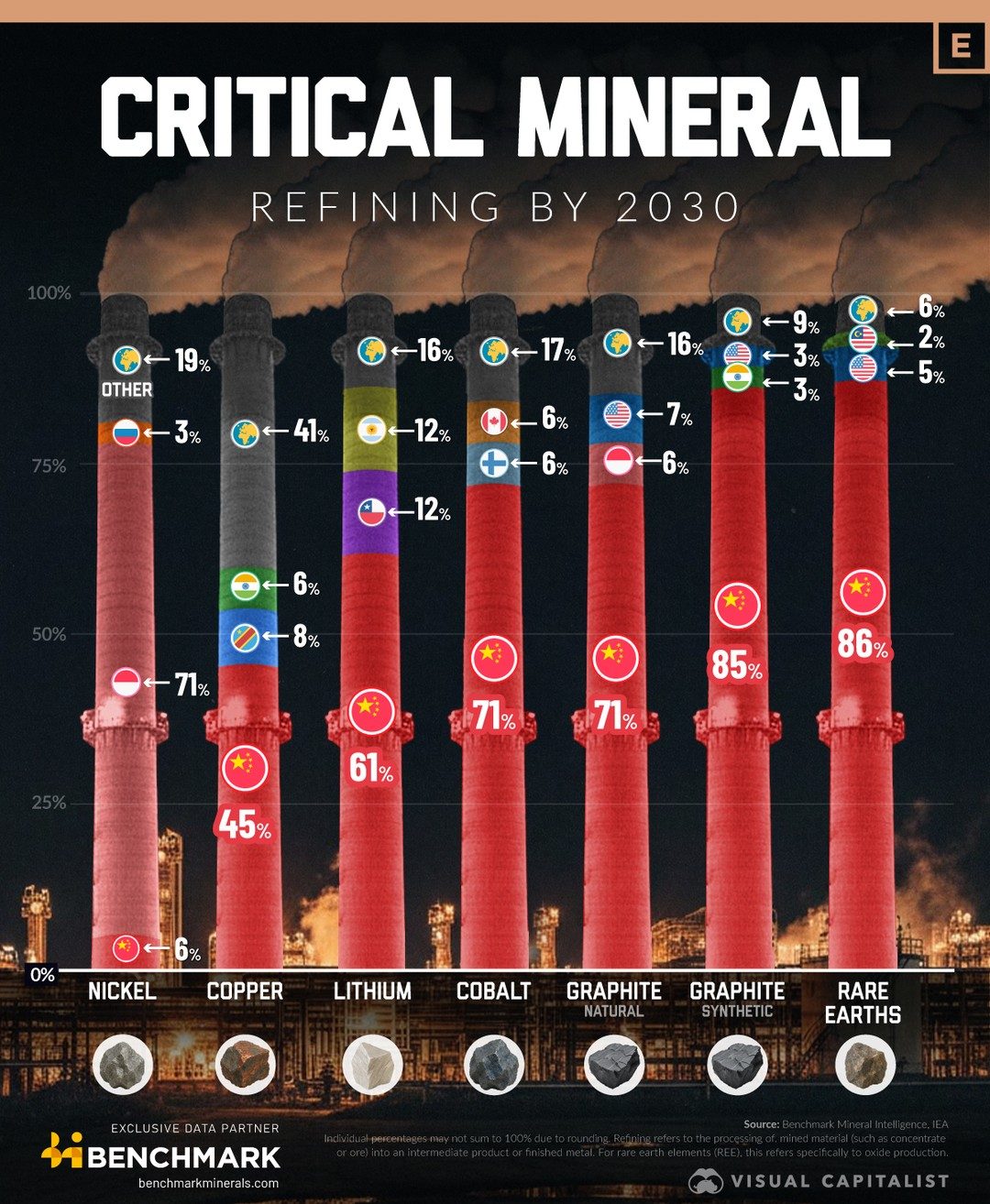
Critical minerals are essential for various industries, from electronics to clean energy. By 2030, the global landscape of critical mineral refining is set to undergo significant shifts, with China and Indonesia emerging as dominant players. This article delves into the projected refining shares of key critical minerals, highlighting the strategic importance of these resources in the global supply chain.
Context: Why This Matters
As the world transitions to cleaner energy sources, the demand for critical minerals is surging. These minerals are vital components in technologies like electric vehicles (EVs), wind turbines, and solar panels. Understanding the future landscape of critical mineral refining is crucial for policymakers, investors, and industries reliant on these resources. The insights provided here are based on exclusive data from Benchmark Mineral Intelligence, a leading source of market intelligence for the battery and raw materials markets.
Main Discussion
The global refining landscape for critical minerals is poised for significant changes by 2030. Here is a breakdown of the projected refining shares for key minerals:
Nickel
Nickel is a critical component in the production of stainless steel and rechargeable batteries. By 2030, Indonesia is projected to dominate the global nickel refining market, with a 71% share. This dominance is driven by Indonesia's rich nickel reserves and strategic investments in refining infrastructure. The country's control over nickel refining positions it as a pivotal player in the global supply chain for electric vehicle batteries and other nickel-dependent industries.
Copper
Copper is essential for electrical conductivity and is widely used in wiring, electronics, and renewable energy technologies. By 2030, China is expected to control 45% of global copper refining. This projection underscores China's strategic investments in copper mining and refining, ensuring a stable supply for its domestic industries and export markets.
Lithium
Lithium is a cornerstone of modern battery technology, particularly for electric vehicles and energy storage systems. China is anticipated to refine 61% of the world's lithium by 2030. This dominance is fueled by China's aggressive investments in lithium mining and refining, as well as its robust battery manufacturing sector.
Cobalt
Cobalt is a crucial component in lithium-ion batteries, enhancing their energy density and performance. By 2030, China is projected to refine 71% of the world's cobalt. This dominance is driven by China's control over cobalt supply chains, strategic investments in refining infrastructure, and its position as the world's largest producer of lithium-ion batteries.
Graphite
Graphite is used in a variety of applications, including batteries, steelmaking, and lubricants. By 2030, China is expected to refine 71% of the world's natural graphite. This dominance is supported by China's extensive graphite reserves and significant investments in refining capabilities.
Synthetic Graphite
Synthetic graphite is produced from petroleum coke and is increasingly used in high-performance applications, including lithium-ion batteries. By 2030, China is projected to refine 86% of the world's synthetic graphite, solidifying its control over this critical material.
Rare Earths
Rare earth elements are essential for various high-tech applications, including magnets, catalysts, and electronics. By 2030, China is expected to refine 85% of the world's rare earths. This dominance is underpinned by China's vast reserves, advanced refining technologies, and strategic control over the global supply chain.
Practical Tips
For industries and investors navigating the critical mineral landscape, several practical tips can help manage future risks and opportunities:
Diversify Supply Chains
Relying on a single source for critical minerals can be risky. Diversifying supply chains by exploring alternative sources and partners can mitigate risks associated with geopolitical instability or supply disruptions.
Invest in Research and Development
Investing in research and development can lead to innovations that reduce dependency on critical minerals or find alternatives. This approach can enhance long-term sustainability and competitiveness.
Foster Strategic Partnerships
Collaborating with key players in the global supply chain can provide access to critical minerals and technologies. Strategic partnerships can also offer insights into market trends and future developments.
Monitor Policy and Regulatory Changes
Government policies and regulations can significantly impact the supply and demand of critical minerals. Staying informed about policy changes can help industries and investors adapt to new market conditions.
Engage in Sustainable Practices
Promoting sustainable mining and refining practices can enhance long-term sustainability. This approach can also mitigate environmental and social risks associated with mineral extraction.
Important Takeaways
The global refining landscape for critical minerals is set to undergo significant changes by 2030, with China and Indonesia emerging as key players. Understanding these shifts is crucial for industries and investors navigating the evolving market dynamics. By diversifying supply chains, investing in research and development, fostering strategic partnerships, monitoring policy changes, and engaging in sustainable practices, stakeholders can effectively manage future risks and opportunities.
Conclusion
The future of critical mineral refining is characterized by strategic shifts and increased dominance by a few key players. By 2030, China and Indonesia are projected to control significant shares of global refining for critical minerals like nickel, copper, lithium, cobalt, graphite, synthetic graphite, and rare earths. These minerals are essential for various industries, particularly in the context of the global energy transition. By staying informed about these trends and adopting practical strategies, industries and investors can navigate the evolving critical mineral landscape effectively.
Watch the Reel
Questions readers ask
Which countries are expected to lead in the refining of critical minerals by 2030?
By 2030, China and Indonesia are projected to dominate the critical mineral refining market. Indonesia is anticipated to lead in nickel refining, while China is expected to dominate in copper refining.
Why are critical minerals important for the future of technology?
Critical minerals are essential for various technologies, including electric vehicles, wind turbines, and solar panels. As the world shifts towards cleaner energy sources, the demand for these minerals is increasing, making them vital for technological advancement.
What are the key critical minerals for the future, and how will they be used?
Key critical minerals for the future include nickel, copper, graphite, rare earths, lithium, and cobalt. These minerals are crucial for the production of batteries for electric vehicles, components for wind turbines, and various other technological applications.
What are the strategic implications of these shifts in the critical mineral refining market by 2030?
The shifts in the critical mineral refining market by 2030 will have significant implications for the global supply chain. Countries leading in refining, such as China and Indonesia, will gain strategic importance, influencing the geopolitical landscape and global trade dynamics.
How does the demand for critical minerals impact the refining market?
The growing demand for critical minerals, driven by the transition to cleaner energy and technological advancements, is reshaping the refining market. This increased demand is pushing countries like China and Indonesia to invest heavily in refining capabilities to meet global needs.
What role do China and Indonesia play in the global supply chain of critical minerals?
China and Indonesia are poised to play pivotal roles in the global supply chain of critical minerals. China's dominance in copper refining and Indonesia's leadership in nickel refining will make these countries crucial suppliers for industries relying on these minerals, from electronics to renewable energy.
Related deep dives
Similar reads based on topic and creator.

Recent articles
Fresh deep dives from the latest Reels we unpacked.




Comments
Be the first to comment.