Universal Health Coverage: A Global Perspective
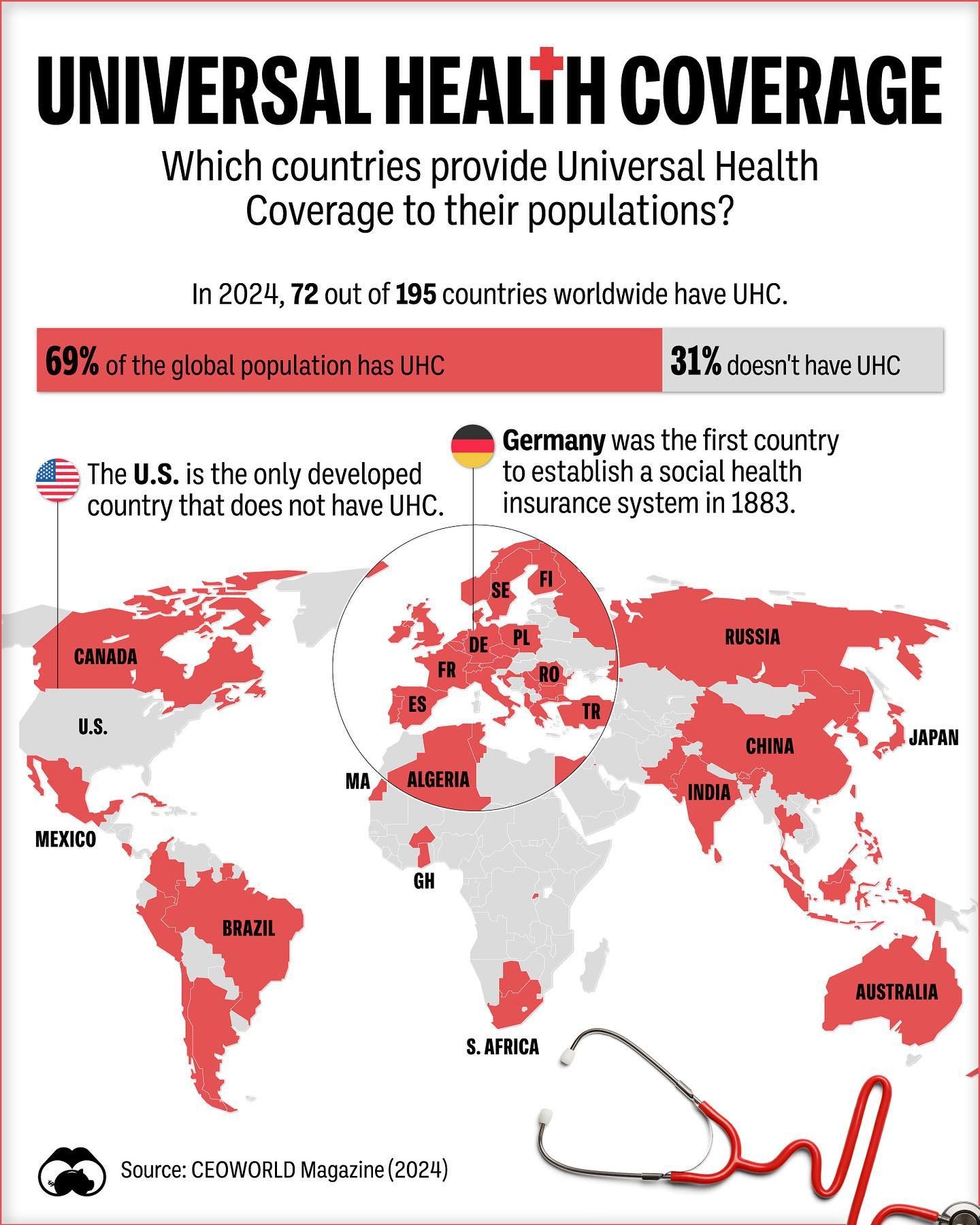
Universal Health Coverage (UHC) is a critical aspect of public health, providing access to essential healthcare services without financial hardship. As of 2024, approximately 69% of the world's population enjoys some form of public healthcare, while 31% remains without it. This disparity is stark, particularly when examining developed countries, where the United States stands out as the only nation without UHC.
Why This Matters
The significance of UHC cannot be overstated. It ensures that individuals and communities have access to the healthcare services they need without suffering financial ruin. This includes services like preventive care, treatment of diseases, and management of chronic conditions. UHC also plays a crucial role in promoting equity and social welfare, as it helps to reduce health disparities and improve overall population health.
The Global Landscape of Universal Health Coverage
Countries with UHC
As of 2024, 72 out of 195 countries worldwide have implemented UHC. This includes a diverse range of nations, from developed economies to emerging markets. For example, countries like Canada, Mexico, Brazil, China, and Japan have established comprehensive healthcare systems that provide universal coverage to their citizens. These systems vary in their design and financing mechanisms, but they share a common goal: ensuring that all residents have access to necessary healthcare services.
The U.S.: An Outlier in Developed Countries
The United States is unique among developed countries in its lack of UHC. While the U.S. has a robust healthcare system with advanced medical technologies and high-quality care, it falls short in providing universal coverage. This means that a significant portion of the U.S. population remains uninsured or underinsured, facing financial barriers to accessing necessary healthcare services. The reasons for this disparity are complex and multifaceted, involving political, economic, and social factors.
The Pioneering Role of Germany
Germany holds a special place in the history of UHC, as it was the first country to establish a social health insurance system in 1883. This pioneering effort laid the groundwork for many modern healthcare systems around the world. Germany's system, known as the "Gesellschaftliche Krankenversicherung," ensures that all citizens have access to basic healthcare services, with employers and employees contributing to the system through payroll deductions.
Regional Variations in UHC
North America
In North America, Canada stands in stark contrast to the U.S. with its universal healthcare system, known as Medicare. This system provides coverage for all Canadian citizens and permanent residents, ensuring access to necessary medical services. Canada's approach to UHC has been influential in shaping healthcare policies in other countries.
Mexico, on the other hand, has implemented a mixed healthcare system, combining public and private providers. While Mexico's healthcare system has made significant strides in recent years, it still faces challenges related to access and quality of care, particularly in rural and indigenous communities.
South America
In South America, countries like Brazil and Chile have made progress in expanding UHC. Brazil's Unified Health System (SUS) provides universal coverage to all citizens, focusing on primary care and preventive services. Chile has also implemented a comprehensive healthcare system, known as the National Health Fund (FONASA), which provides coverage to a significant portion of the population.
Africa
In Africa, the landscape of UHC is varied and evolving. Countries like South Africa and Algeria have made efforts to expand healthcare coverage, while others continue to grapple with limited resources and infrastructure. The National Health Insurance Fund (NHIF) in South Africa aims to provide universal coverage, but challenges related to funding and implementation persist.
Asia
Many Asian countries, including China, Japan, and Singapore, have implemented UHC systems that provide comprehensive coverage to their populations. China's healthcare reform, initiated in 2009, has significantly expanded access to medical services, particularly in rural areas. Japan's National Health Insurance (NHI) system ensures that all residents have access to essential healthcare services, with a strong focus on preventive care and public health.
Practical Tips for Achieving UHC
Achieving UHC requires a multi-faceted approach, involving policy changes, resource allocation, and community engagement. Here are some practical tips for countries aiming to expand UHC:
- Policy and Legislation: Develop and implement policies that prioritize healthcare access and equity. This includes laws that mandate universal coverage and ensure that healthcare services are accessible to all citizens.
- Funding and Resources: Secure adequate funding for healthcare services, which may involve a combination of public and private financing. This includes investments in infrastructure, technology, and human resources.
- Community Involvement: Engage local communities in the planning and implementation of healthcare services. This can help to identify specific needs and tailor services to meet the unique requirements of different populations.
- Preventive Care: Emphasize preventive care and public health initiatives, which can help to reduce the burden of disease and improve overall population health. This includes vaccinations, health screenings, and health education programs.
- Technology and Innovation: Leverage technology and innovation to improve healthcare delivery and access. This includes telemedicine, electronic health records, and digital health platforms.
- Public-Private Partnerships: Foster collaboration between public and private sectors to enhance healthcare services and expand access. This can involve partnerships with non-profit organizations, private healthcare providers, and international agencies.
Important Takeaways
- Global Progress: Significant progress has been made in implementing UHC, with 69% of the world's population benefiting from public healthcare.
- U.S. Exclusion: The United States remains the only developed country without UHC, highlighting a critical gap in healthcare access and equity.
- Regional Variations: The approach to UHC varies widely across regions, reflecting unique cultural, economic, and political contexts.
- Policy and Funding: Achieving UHC requires robust policy frameworks, adequate funding, and community involvement.
- Preventive Care and Innovation: Prioritizing preventive care and leveraging technology can enhance healthcare delivery and access.
Conclusion
Universal Health Coverage is a cornerstone of modern healthcare, ensuring that everyone has access to essential medical services. While significant progress has been made globally, there is still much work to be done, particularly in countries like the United States. By learning from successful models and implementing practical strategies, countries can move closer to achieving comprehensive and equitable healthcare for all.
Watch the Reel
Questions readers ask
Which countries have implemented Universal Health Coverage by 2024?
By 2024, 72 countries have implemented Universal Health Coverage. These countries span across various levels of development, from high-income nations to emerging economies, with the United States notably absent from this list.
Why is the United States the only developed country without UHC?
The United States lacks UHC due to its healthcare system, which relies heavily on private insurance and employer-sponsored health plans. This results in a significant portion of the population being uninsured or underinsured, particularly in lower-income brackets and rural areas.
What services are typically covered under Universal Health Coverage?
Universal Health Coverage typically includes a range of essential healthcare services. This includes preventive care, such as vaccinations and screenings, treatment for diseases, and management of chronic conditions, like diabetes or heart disease. The specific services can vary by country, but the goal is to provide comprehensive care without financial hardship.
How does UHC impact global health statistics?
The implementation of UHC has a significant impact on global health statistics. With 69% of the world's population having some form of public healthcare, there are improvements in overall health outcomes, reduced financial barriers to care, and better management of public health crises.
What are the benefits of UHC for both individuals and communities?
For individuals, UHC provides peace of mind and better health outcomes by ensuring access to necessary medical services. Communities benefit from UHC through improved public health, reduced disease spread, and a healthier, more productive population. Additionally, UHC can help reduce economic inequality by preventing healthcare costs from driving people into poverty.
Related deep dives
Similar reads based on topic and creator.


Recent articles
Fresh deep dives from the latest Reels we unpacked.




Comments
Be the first to comment.