International Money Transfers
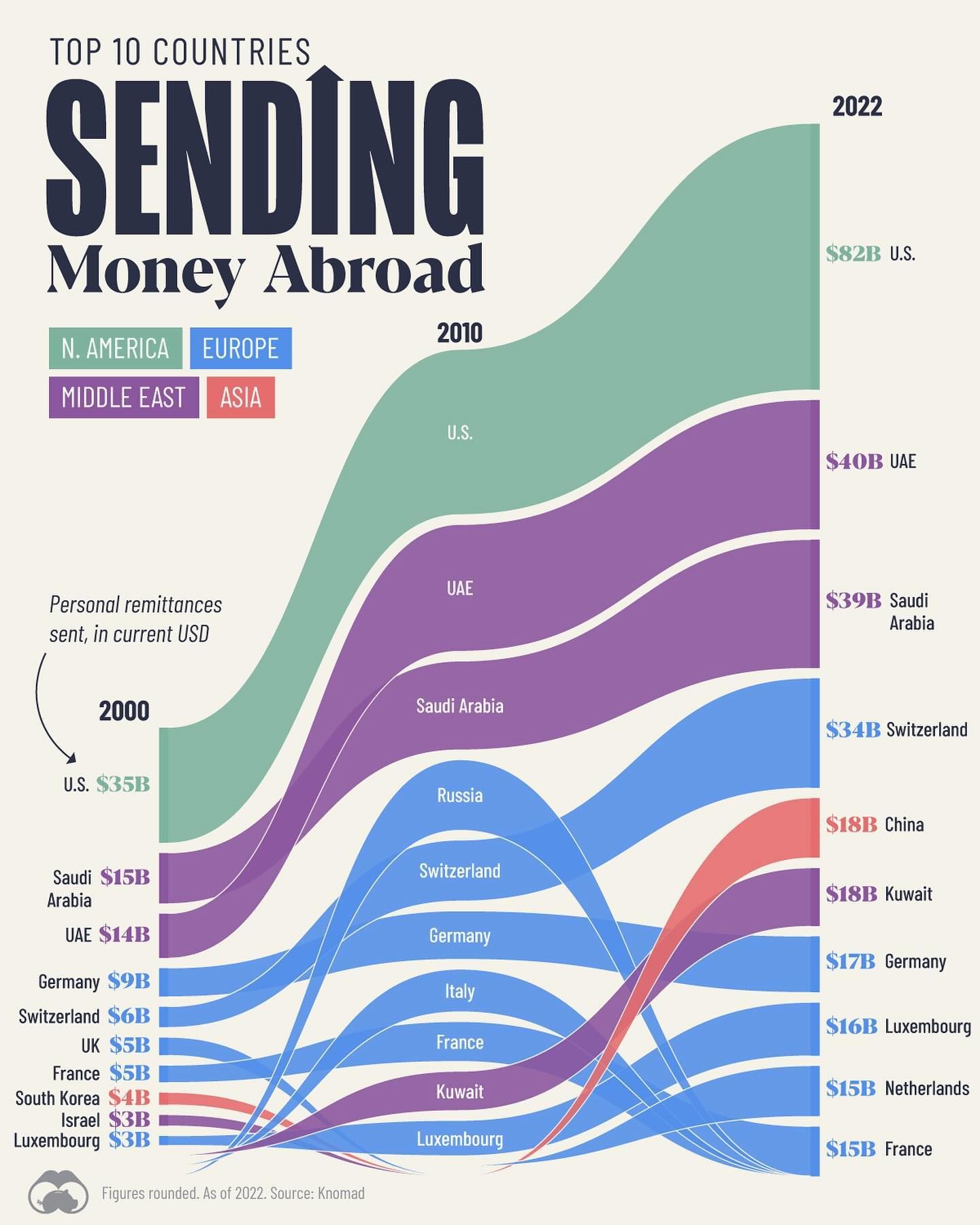
The United States stands out as a global leader in sending money abroad, with $82 billion in personal remittances in 2022. This figure underscores the significance of remittances in the global economy, especially for countries with large immigrant populations. The United States has maintained this position for over two decades, making it a crucial player in international money transfers.
Why this Matters
International money transfers play a pivotal role in the economies of both the sending and receiving countries. For the United States, remittances are a testament to the economic ties and personal connections that immigrants maintain with their home countries. For the recipient nations, these funds provide essential financial support and often serve as a lifeline for families and communities.
Understanding the dynamics of international money transfers helps in grasping the broader economic landscape and the interconnectedness of global financial systems. It also highlights the importance of efficient and cost-effective transfer methods, which can significantly impact the lives of millions of people worldwide.
Top Countries Sending Money Abroad
The United States
The United States tops the list with $82 billion sent abroad in 2022. This substantial amount reflects the country's diverse immigrant population and its economic strength. The U.S. has consistently been a leader in remittances, driven by the significant contributions of immigrant communities who send money to support families and communities back home. The remittances from the United States are distributed across various countries, but key recipients include Mexico, India, and the Philippines, which have traditionally received large amounts.
The United Arab Emirates
The United Arab Emirates (UAE) follows the United States with $40 billion in remittances. The UAE's strong economic performance and its role as a hub for expatriate workers contribute to this high figure. The country's remittances primarily flow to South Asia, particularly India, Pakistan, and Bangladesh, where many expatriates work and send money back home to support their families.
Saudi Arabia
Saudi Arabia ranks as the third-highest sender, with $39 billion in 2022. The kingdom's economy, heavily reliant on expatriate labor, drives these remittances. The majority of these funds are sent to countries in Asia, particularly India, Pakistan, and the Philippines. Saudi Arabia's strategic role in the global economy, along with its significant expatriate population, makes it a key player in international money transfers.
Switzerland
Switzerland, known for its stable economy and financial sector, sent $34 billion abroad in 2022. The country's remittances reflect its role as a global financial center and a destination for expatriate workers. Switzerland's remittances are distributed widely, including to Europe, Asia, and Africa, highlighting the country's diverse financial ties.
Other Notable Sending Countries
Russia and China each sent $18 billion in 2022. Both countries have large expatriate populations and significant economic ties with other nations. Russia's remittances are primarily sent to countries in Eastern Europe and Central Asia, while China's remittances flow to various regions, including Southeast Asia and Africa.
Kuwait, with $17 billion, Germany with $16 billion, and France with $15 billion, also rank among the top senders. These countries have substantial financial and economic ties with various regions, contributing to the global remittance landscape.
Main Discussion
Trends in Remittances
Over the past two decades, international remittances have shown a consistent upward trend. This trend reflects several factors, including the increasing number of immigrants and expatriate workers, advancements in technology facilitating cross-border payments, and the growing importance of remittances in the global economy.
Regional Distribution
The regional distribution of remittances highlights the economic ties and financial flows between different parts of the world. North America, particularly the United States, remains a significant contributor to global remittances, with a substantial portion flowing to Latin America and Asia.
Europe, with countries like the UAE, Saudi Arabia, and Switzerland, plays a crucial role in remittances to Asia and Africa. The Middle East, driven by countries like Saudi Arabia and UAE, sends a significant amount of remittances to South Asia. Asia itself, with countries like Russia and China, contributes to the financial well-being of various regions through remittances.
Economic Implications
Remittances have profound economic implications for both the sending and receiving countries. For sending countries, remittances represent a significant outflow of capital, which can impact their economic stability and growth. However, the benefits of remittances, such as increased foreign exchange reserves and reduced dependency on foreign aid, often outweigh the costs.
For receiving countries, remittances are a vital source of income, especially for families and communities. They contribute to economic development, poverty reduction, and social welfare. Remittances also support consumption, investment, and entrepreneurship, fostering economic growth in the recipient countries.
Technological Advances
The rise of digital platforms and mobile applications has revolutionized international money transfers. These technologies have made remittances more accessible, faster, and cost-effective, benefiting both the senders and receivers. As technology continues to evolve, the global remittance landscape is poised for further transformation, with potential innovations in blockchain and cryptocurrency.
Practical Tips
For those looking to send money abroad, there are several practical tips to consider:
Choose a Reliable Service
Select a reputable financial service provider. Look for companies with a strong track record, positive reviews, and competitive exchange rates. Ensure that the service offers secure and reliable transactions to safeguard your funds.
Compare Fees and Exchange Rates
Compare the fees and exchange rates offered by different service providers. Exchange rates can significantly impact the amount received, so opt for a service that provides the best rates. Additionally, consider any hidden fees that may apply.
Use Digital Platforms
Leverage digital platforms and mobile applications for faster and more convenient transactions. These platforms often offer lower fees and better exchange rates compared to traditional methods.
Stay Informed
Keep up-to-date with the latest trends and regulations in international money transfers. This knowledge can help you make informed decisions and avoid potential pitfalls. It's also a good idea to stay updated on the status of your transactions.
Important Takeaways
Global Significance: Remittances are a crucial component of the global economy, impacting millions of lives and contributing to economic development in various regions.
Key Contributors: The United States, UAE, Saudi Arabia, and Switzerland are among the top countries sending money abroad, reflecting their economic strength and expatriate populations, while countries in Asia receive significant amounts of remittances.
Economic Benefits: For receiving countries, remittances provide essential financial support, driving economic growth and development. For sending countries, remittances are a significant outflow of capital, highlighting the need for efficient and cost-effective transfer methods.
Technological Advancements: The rise of digital platforms and mobile applications has transformed international money transfers, making them more accessible and cost-effective. Future innovations in technology are expected to further enhance the global remittance landscape.
Conclusion
International money transfers are a vital component of the global economy, with the United States leading the way in 2022 with $82 billion in remittances. Understanding the dynamics of remittances provides insights into the economic ties and financial flows between countries. As technology continues to advance, the landscape of international money transfers is set to evolve, offering more efficient and cost-effective solutions for both senders and receivers.
Watch the Reel
Questions readers ask
Which country sent the most money abroad in 2022?
The United States sent the highest amount of money abroad in 2022, with a total of $82 billion in personal remittances. This significant figure highlights the U.S. as a key player in international money transfers.
How do international money transfers impact global economies?
International money transfers have a substantial impact on global economies. They provide crucial financial support to recipient nations, often serving as a lifeline for individuals and families in countries with large immigrant populations. These transfers also strengthen economic ties and personal connections between sending and receiving countries.
Why does the United States have high remittance figures?
The United States has consistently high remittance figures due to its large immigrant population. Many immigrants work in the U.S. and send a portion of their earnings back to their home countries, contributing to the significant sums sent abroad by the U.S. annually.
What role do remittances from the United Arab Emirates play in the global economy?
The United Arab Emirates has emerged as a major remitter of funds, reflecting its diverse expatriate population and strong economy. The funds sent from the UAE contribute to the economic stability and growth of recipient countries, particularly in Asia and Africa, where many expatriates originate.
How do remittances from Europe contribute to global money flows?
Europe, with its large and diverse immigrant communities, sends substantial amounts of money abroad. Remittances from European countries support families in recipient countries, providing essential financial assistance. These funds often contribute to economic stability and development in recipient regions, particularly in Eastern Europe and the Middle East.
Recent articles
Fresh deep dives from the latest Reels we unpacked.




Comments
Be the first to comment.