Countries with the Highest Proportion of Immigrants
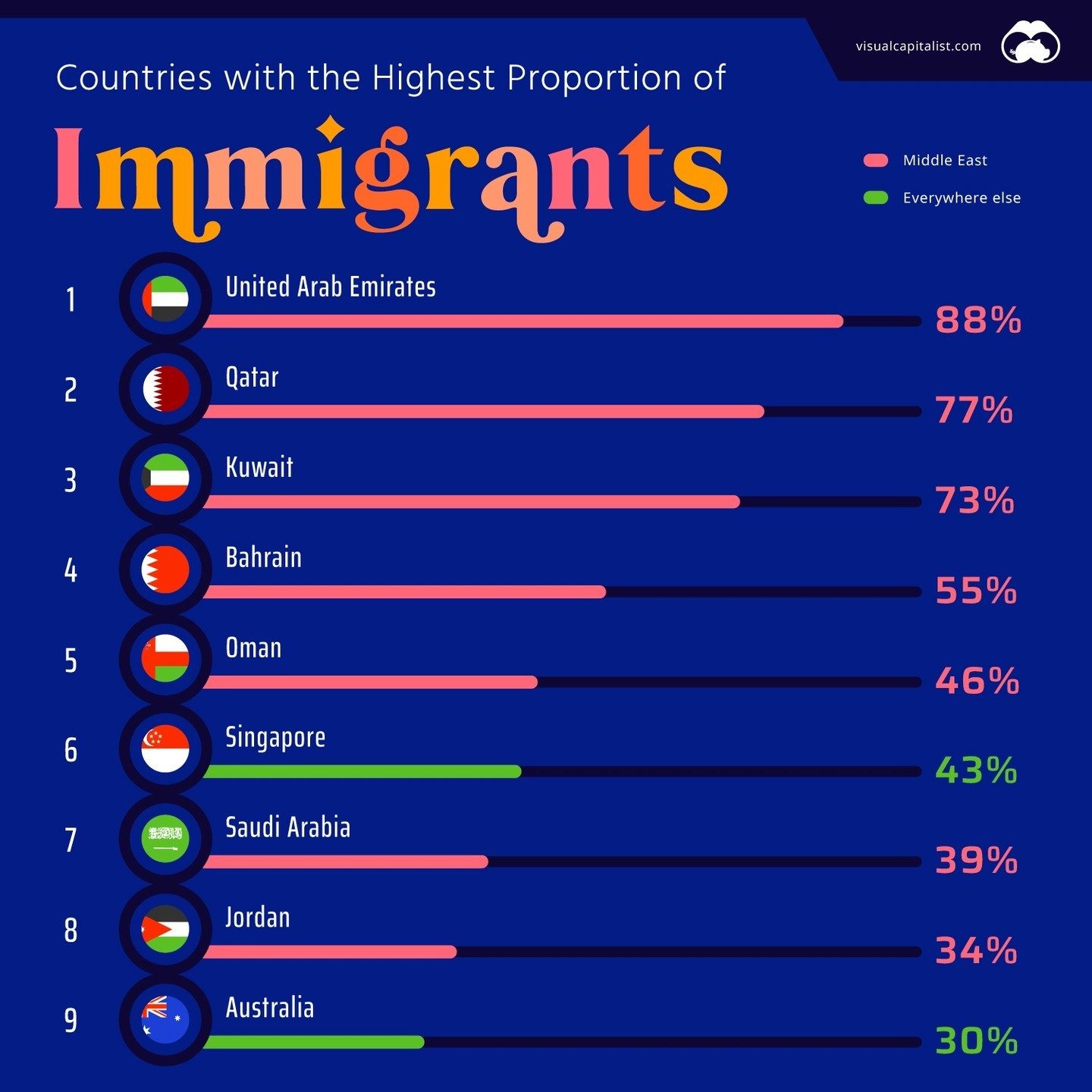
Many people living in global urban centers might overestimate the prevalence of immigrants worldwide. While it's true that some countries have a high percentage of immigrants, the global median proportion of foreign-born residents is just over 5%. Furthermore, out of countries with populations exceeding one million, only four have a majority of foreign-born residents, and only eight have more than one-third.
This article will explore the top 20 countries with the highest proportion of immigrants, shedding light on the demographics and providing context for these statistics.
Why This Matters
Understanding the distribution of immigrants across different countries is crucial for various reasons. It influences policies related to immigration, impacts social and economic structures, and shapes cultural landscapes. For a more nuanced view, focusing on countries with significant immigrant populations provides insights into global migration patterns, economic opportunities, and social dynamics.
Main Discussion
The United Arab Emirates: The Global Leader
The United Arab Emirates (UAE) tops the list with an astonishing 88% of its population being foreign-born. The UAE's economy, heavily reliant on sectors like construction, oil and gas, and tourism, attracts a large number of expatriates. These immigrants often fill roles in sectors crucial to the country's economic growth, contributing significantly to its development.
Qatar: A Hub for Migration
Qatar follows closely with 77% of its population being immigrants. Much of this influx can be attributed to the country's rapid economic expansion and the demand for labor in various sectors, including construction and finance. Additionally, Qatar's hosting of major international events, such as the FIFA World Cup, has further boosted its need for a diverse and skilled workforce.
Gulf Countries and Their High Proportion of Immigrants
Countries like Kuwait (73%) and Bahrain (55%) also have a high proportion of immigrants. These nations are known for their robust economies and the opportunities they offer in various industries. The influx of immigrants in these countries has contributed to their economic stability and growth, further solidifying them as key players in the global economy.
Southeast Asia: Singapore and Its Immigrant Population
Singapore, with 43% of its population being immigrants, is a significant player in the global economy. The country's strategic location, strong economy, and vibrant culture make it an attractive destination for immigrants from all over the world. The influx of immigrants has contributed to Singapore's economic growth, innovation, and cultural diversity.
Middle Eastern Countries: A Blend of Cultures
Jordan and Saudi Arabia, with 34% and 39% of their populations being immigrants, respectively, are examples of countries where migration plays a crucial role in shaping the social and economic fabric. These countries attract immigrants for their economic stability, opportunities, and opportunities in education and healthcare.
European Countries: Sweden and Germany
Sweden and Germany, with 20% and 19% of their populations being immigrants, respectively, have seen significant immigration flows. Both countries have strong economies and are renowned for their social welfare systems, making them attractive destinations for immigrants. This diversity has enriched their cultural landscapes and contributed significantly to their economic growth.
Practical Tips
For those considering migration, understanding the demographics and opportunities in various countries can provide valuable insights. Here are some practical tips:
Research Economic Opportunities
Before making a decision, research the job market and economic opportunities in the countries you are considering. Understanding the demand for skills and industries can help you make an informed decision.
Understand Legal Requirements
Each country has unique legal requirements for immigration. Ensure that you are aware of the visa processes, work permits, and any other legal obligations you need to fulfill. This can save you time and potential legal issues.
Consider Cultural Adaptation
Moving to a new country means adapting to a different culture. Research the social norms, customs, and language to ease your transition and make the most of your new environment. This will help you integrate more smoothly and enrich your experience.
Seek Support Networks
Establish connections with immigrant communities or expat groups in the country you are moving to. These networks can provide valuable support, advice, and a sense of belonging as you navigate your new surroundings.
Important Takeaways
The top 20 countries with the highest proportion of immigrants highlight the global nature of migration. Economic opportunities, cultural diversity, and social dynamics are key factors driving these migration patterns. The influx of immigrants contributes significantly to the economic growth and cultural richness of these countries, making them hubs of global interaction and development.
Conclusion
The distribution of immigrants across countries offers a compelling narrative of global migration. From the UAE and Qatar to European nations, each country's unique demographics and economic opportunities play a significant role in attracting immigrants. Understanding these dynamics can provide valuable insights and practical tips for those considering migration, helping them navigate the complexities and opportunities of a new country.
Watch the Reel
Questions readers ask
Which country has the highest percentage of immigrants in its population?
The United Arab Emirates has the highest percentage of immigrants, with 88% of its population being foreign-born.
What is the global median percentage of foreign-born residents?
The global median percentage of foreign-born residents is just over 5%.
How many countries have a majority of immigrants in their population?
Only four countries with populations exceeding one million have a majority of foreign-born residents.
Which countries have more than one-third of their population as immigrants?
Eight countries have more than one-third of their population as immigrants. The United Arab Emirates is the highest, with 88% of its population being foreign-born, followed by Qatar, and six other countries.
Why is it important to know the ranking of countries by immigrant population?
Understanding the distribution of immigrants across different countries is crucial for informing policies related to immigration, integration, and demographic trends. It also offers context about globalization, labor markets, and cultural exchange.
What is the difference between the immigrant population of the UAE and Qatar versus other countries with high immigrant populations?
The UAE and Qatar have the highest percentages of immigrants in their populations, with 88% and a similarly high percentage, respectively. Other countries with high immigrant populations, such as Kuwait and Oman, still have significantly lower percentages than these two countries.
How does the immigrant population ranking change when considering countries with populations of over one million?
When considering countries with populations exceeding one million, only four have a majority of foreign-born residents, and only eight have more than one-third. This highlights the unique demographics of smaller and wealthier countries that attract a high number of immigrants.
Recent articles
Fresh deep dives from the latest Reels we unpacked.




Comments
Be the first to comment.