Work Week Hours Around the World
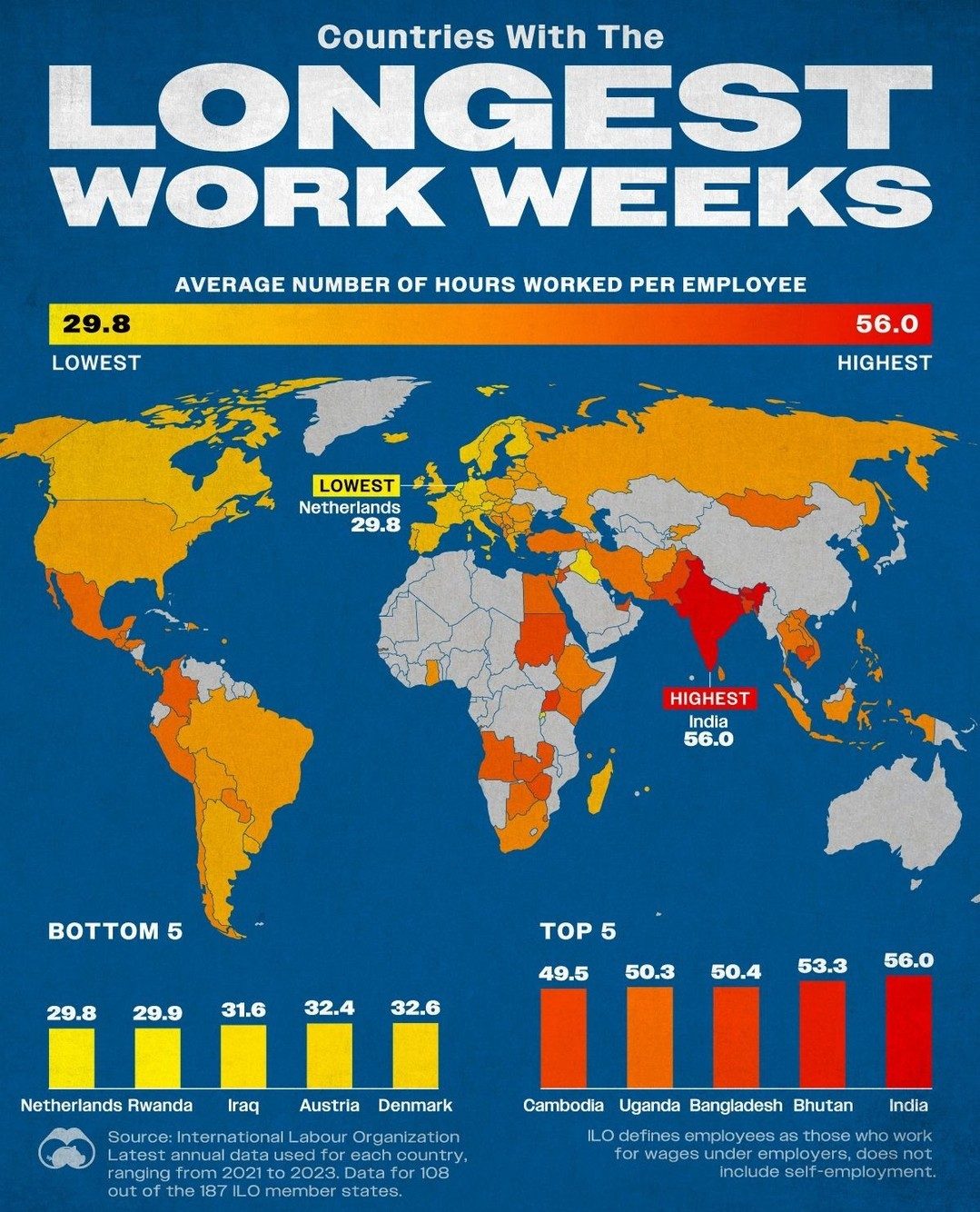
Understanding how work hours vary across different regions is essential for grasping the global workforce's dynamics. A recent infographic provides a detailed comparison of average weekly work hours per employee in various countries, based on data from the International Labour Organization (ILO).
The data used spans from 2021 to 2023 and covers 108 out of the 187 ILO member states. Notably, the ILO defines employees as those who work for wages under employers, excluding self-employment.
Why This Matters
Comparing work hours across different countries offers insights into cultural, economic, and regulatory differences. It highlights the varying approaches to labor policies, work-life balance, and economic productivity. This information is valuable for policymakers, businesses, and individuals considering international work opportunities.
The data reveals significant disparities, with some countries having notably shorter or longer work weeks. These differences can impact global business operations, labor negotiations, and international collaboration.
Main Discussion
The Longest Work Weeks
India
India tops the list with an average of 56 hours per week. This is significantly higher than the global average and reflects the country's intense work culture. Factors contributing to this include the high demand for labor, economic pressures, and a growing economy.
Other Countries with Long Work Weeks
Other countries with notably long work weeks include:
- Cambodia: 53.3 hours
- Bangladesh: 50.4 hours
- Bhutan: 50.3 hours
- Uganda: 49.5 hours
These countries share similar challenges, such as economic development and labor market conditions, which often necessitate longer work hours.
The Shortest Work Weeks
Netherlands
The Netherlands stands out with the shortest average work week, at around 29.8 hours. This aligns with the country's progressive labor policies, which prioritize work-life balance and employee well-being. The Netherlands' approach includes measures such as part-time employment and flexible work arrangements, which contribute to a healthier and more balanced work environment.
Other Countries with Short Work Weeks
Other countries with shorter work weeks include:
- Iraq: 29.9 hours
- Luxembourg: 32.4 hours
- Denmark: 32.6 hours
These countries also emphasize work-life balance and have policies that support part-time work, vacation time, and adequate rest periods.
Regional Trends
The data also reveals regional trends:
- Asia: Generally has longer work weeks, with countries like India, Cambodia, and Bangladesh leading the way.
- Europe: Tends to have shorter work weeks, with countries like the Netherlands, Luxembourg, and Denmark setting the standard for balanced labor policies.
- Africa: Countries like Uganda have long work weeks, often driven by economic necessities and limited labor regulations.
Practical Tips
For Employees
If you are considering work opportunities in different countries, it's crucial to understand the work-hour norms and labor policies. Look for opportunities that align with your preferences for work-life balance and productivity. Countries with progressive labor policies, such as the Netherlands, might offer a better quality of life, while others, like India, might provide more significant economic growth opportunities.
For Employers
For businesses, understanding work-hour norms in different regions can help in planning and managing operations. It's essential to consider local regulations and cultural expectations when setting work hours and expectations. Employers should also prioritize employee well-being and productivity, which might mean adjusting work hours to align with local standards and practices.
Important Takeaways
Global Work-Hour Disparities
The data highlights the vast disparities in work hours across different regions. These differences underscore the need for a more holistic approach to labor policies, considering both economic productivity and employee well-being. Policymakers should strive to create balanced labor regulations that support sustainable economic growth and a healthy workforce.
Work-Life Balance
Countries with shorter work weeks, like the Netherlands, often prioritize work-life balance. This approach can lead to better employee satisfaction, lower stress levels, and higher productivity. Employers and policymakers should consider implementing policies that promote work-life balance, such as flexible work arrangements and part-time employment options.
Economic and Cultural Factors
The data reveals that economic development and cultural factors significantly influence work-hour norms. Countries with developing economies often have longer work weeks, driven by the need for higher productivity and economic growth. In contrast, countries with more developed economies and progressive labor policies tend to have shorter work weeks, focusing on employee well-being and balanced work environments.
International Collaboration
Understanding work-hour norms in different regions can foster better international collaboration. Businesses and organizations can leverage this information to create more effective partnerships, manage global operations, and support their international workforce.
Conclusion
The comparison of average weekly work hours across different countries provides valuable insights into global labor dynamics. From India's intense work culture to the Netherlands' progressive labor policies, each region offers a unique perspective on balancing economic productivity and employee well-being. By understanding these differences, we can create more informed labor policies, support a healthy global workforce, and foster better international collaboration.
Watch the Reel
Questions readers ask
Which country has the longest work week in the world?
Based on the data, India has the longest work week globally, with employees working an average of 56 hours per week.
What factors contribute to the variation in work hours across different countries?
Cultural norms, economic conditions, and regulatory differences in labor laws all play significant roles in determining weekly work hours.
Which countries have the shortest work week?
The Netherlands has one of the shortest work weeks, with employees working an average of 29.8 hours per week. Other countries with notably short work weeks include Denmark and Norway.
Are the data on global work hours inclusive of self-employed individuals?
No, the data from the International Labour Organization (ILO) focuses on employees who work for wages under employers, excluding any self-employed individuals.
Why is understanding global work week differences important?
It provides insights into cultural and economic differences, and how these differences shape labor policies and work-life balance. This understanding can inform discussions on productivity, job satisfaction, and economic policy.
Recent articles
Fresh deep dives from the latest Reels we unpacked.




Comments
Be the first to comment.