Global Aging and Workforce Dependency
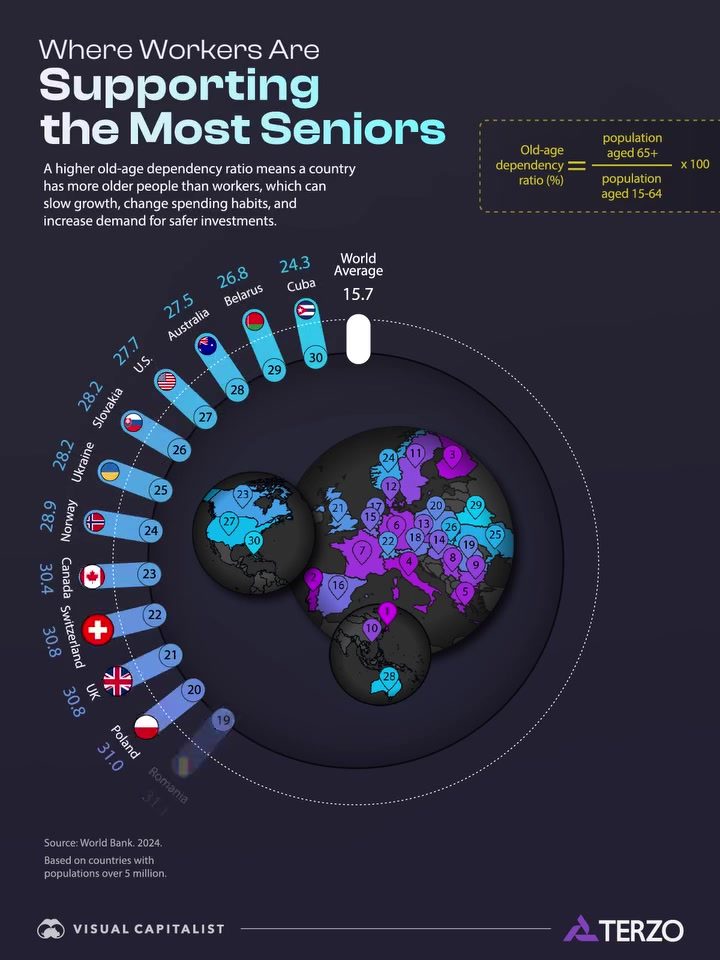
Global aging is transforming economies worldwide. As the number of retirees rises and workforces shrink, understanding the old-age dependency ratio becomes crucial. This ratio indicates the number of older adults (aged 65 and above) relative to the working-age population (15-64 years). Countries with higher ratios face unique economic challenges and opportunities. Let’s delve into which countries are most affected and what this means for their economic landscapes.
Context: Why This Matters
The old-age dependency ratio is more than just a statistic; it reflects a country's economic health and future projections. A higher ratio suggests more older people relying on a smaller workforce, which can impact economic growth, spending habits, and investment strategies. For instance, a higher ratio might slow economic growth as fewer workers contribute to productivity. It can also shift spending patterns towards healthcare and pensions, and increase demand for safer, long-term investments.
Main Discussion
Countries with the Highest Ratios
Several countries stand out for their high old-age dependency ratios. Japan leads the pack with a ratio of 50.7%, meaning there are more than twice as many older people as there are workers. This is a significant challenge for a country already dealing with labor shortages.
In Europe, several countries are also grappling with high ratios. Portugal tops the list with a ratio of 39.1%, followed closely by Finland (38.9%), Italy (38.8%), and Greece (38.1%). These countries must contend with rapidly aging populations, which can strain their healthcare systems and pension funds.
Countries with Lower Ratios
While Japan and several European countries face substantial challenges, other nations have lower old-age dependency ratios. Belarus, for example, has a ratio of 26.8%, and Cuba has 24.3%. These ratios, while still notable, are relatively lower than in many Western countries. This suggests a more balanced demographic distribution, where the working-age population is better equipped to support the older generation.
Economic Implications
A higher old-age dependency ratio can slow economic growth by reducing the number of productive workers relative to the overall population. This can lead to lower GDP per capita and higher public debt due to increased spending on pensions and healthcare. In countries with high ratios, the pressure on the social security system is immense.
Investment patterns also shift in response to higher dependency ratios. With more older people, there is a greater demand for safer, long-term investments, such as bonds, which can reduce the overall risk appetite of the population. This shift can lead to lower investment in riskier but potentially higher-return sectors, like technology and innovation, which can slow long-term economic growth.
Practical Tips
For Policy Makers
Encourage Immigration
One effective strategy to combat a high old-age dependency ratio is to encourage immigration. Bringing in younger workers can help balance the demographic distribution, ensuring a larger workforce to support a growing elderly population.
Promote Labor Force Participation
Increasing the labor force participation rate among women, older adults, and other underrepresented groups can also help. Policies that support flexible work arrangements, lifelong learning, and childcare can encourage more people to join or stay in the workforce.
For Businesses
Adapt to an Aging Workforce
Businesses must adapt to an aging workforce by offering more flexible work arrangements, such as part-time jobs and remote work options, and providing training programs to keep older workers up-to-date with new technologies and skills. This can help retain valuable experience and knowledge within the company.
Invest in Long-Term Care Services
There is a growing demand for long-term care services. Businesses can invest in healthcare and wellness industries, providing support for older adults and their families. This not only meets a critical need but also presents a significant growth opportunity.
For Individuals
Plan for Retirement
With an aging population, it's becoming increasingly important for individuals to plan for retirement. This means saving more, investing wisely, and considering long-term care needs. Early planning can help ensure a comfortable and financially secure retirement.
Important Takeaways
Understanding the old-age dependency ratio is crucial for navigating the economic challenges of an aging population. Countries with higher ratios face significant economic hurdles, but there are strategies to mitigate these challenges. Encouraging immigration, promoting labor force participation, and adapting to an aging workforce are just a few ways to address this issue.
Ultimately, the impact of global aging extends beyond economic indicators. It affects every aspect of society, from healthcare and social services to housing and infrastructure. By recognizing and preparing for these changes, countries can better manage the transition to an older world and ensure a more sustainable future.
Conclusion
Global aging is an inexorable trend that will continue to shape economies worldwide. Understanding the old-age dependency ratio and its implications is essential for policymakers, businesses, and individuals alike. By taking proactive measures, we can navigate the challenges of an aging population and build a more resilient and sustainable future.
Watch the Reel
Questions readers ask
What is the old-age dependency ratio and why is it important to track?
The old-age dependency ratio is a measure that compares the number of older adults (aged 65 and above) to the working-age population (15-64 years). Tracking this ratio is important because it provides insights into a country's economic health, future workforce dynamics, and the potential strain on resources and social services.
Which countries are expected to have the highest old-age dependency ratios in 2024?
While specific rankings can vary, countries like Japan, Italy, and Portugal are often at the top of the list due to their rapidly aging populations and relatively low birth rates. These countries are likely to face significant challenges in maintaining economic growth and supporting their elderly populations.
How does a high old-age dependency ratio impact a country's economy?
A high old-age dependency ratio can lead to increased pressure on pension systems, healthcare services, and social security. It may also result in a smaller workforce, potentially slowing economic growth and increasing the tax burden on younger workers, who need to support a larger elderly population.
What measures can countries take to mitigate the challenges posed by a high old-age dependency ratio?
Countries can implement policies to encourage higher birth rates, promote immigration, and extend the retirement age. Additionally, investing in technologies that enhance productivity, encouraging lifelong learning, and fostering an inclusive workforce that values the skills and experience of older workers can help.
How does the old-age dependency ratio affect social services and healthcare?
A higher old-age dependency ratio can strain social services and healthcare systems, as more resources are needed to support the growing elderly population. This may lead to increased healthcare costs, longer waiting times for services, and potential shortages in specialized care for the elderly.
Why is it beneficial to compare old-age dependency ratios across different countries?
Comparing old-age dependency ratios across countries allows for the identification of global trends and best practices in managing aging populations. It also highlights which countries are at greater risk of economic and social challenges, enabling policymakers to learn from one another and develop more effective strategies.
What are some common misconceptions about the old-age dependency ratio?
A common misconception is that a high old-age dependency ratio is always detrimental. While it presents challenges, it can also offer opportunities, such as the potential for increased productivity and innovation from an experienced workforce. Additionally, the ratio itself is just one indicator and should be considered alongside other economic and demographic factors.
Related deep dives
Similar reads based on topic and creator.

Recent articles
Fresh deep dives from the latest Reels we unpacked.




Comments
Be the first to comment.