Global Conflict Concerns
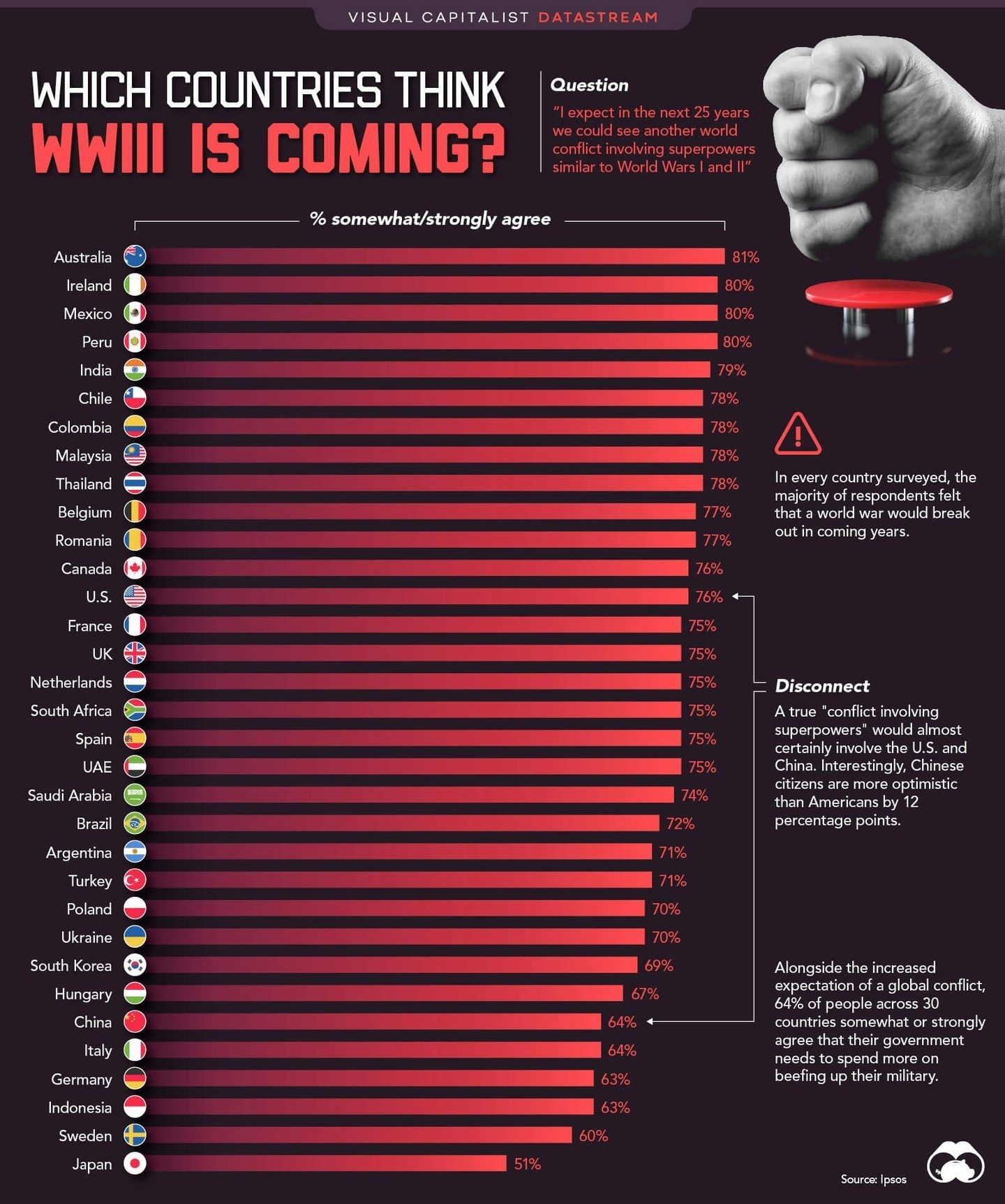
The prospect of a global conflict involving superpowers in the coming years is a pressing concern worldwide. An Ipsos survey reveals that a majority of respondents across various countries expect such a conflict within the next 25 years.
Why This Matters
Understanding public sentiment about global conflict is crucial for several reasons. It provides insight into the geopolitical climate, influences policy decisions, and shapes international relations. The survey results highlight a widespread apprehension that could impact everything from military spending to diplomatic efforts.
The Survey Results
Global Perspectives
The survey results are striking. In Australia, 81% of respondents believe a world conflict is likely. Similarly high percentages are seen in Mexico, Peru, and India, all hovering around 80%. Other countries, including Canada, South Africa, and Germany, also show high levels of agreement, with percentages ranging from 75% to 78%.
Disconnect Between Superpowers
A notable finding is the perceived involvement of the U.S. and China in any potential conflict. The "Disconnect" section of the infographic underscores this point, noting that while a true conflict involving superpowers would almost certainly include these two nations, there's a surprising optimism gap: Chinese citizens are more optimistic than Americans by 12 percentage points. This discrepancy raises intriguing questions about differing perceptions of geopolitical risks and the potential for influence and perception.
Country-Specific Insights
- Australia: 81% of Australians expect a global conflict, reflecting a high level of concern and awareness.
- Mexico, Peru, India: These countries show strong agreement rates, with 80% of respondents in each country anticipating a conflict.
- South Africa, Germany, Turkey: These nations also show high levels of agreement, with 77% to 78% of respondents expecting a conflict.
- Japan, Spain, Brazil: Around 76% of respondents in these countries share the same concern.
- United States: 71% of Americans expect a global conflict, highlighting a significant level of apprehension.
- China: 51% of Chinese citizens expect a global conflict, showing a more optimistic outlook compared to other countries.
What This Means for International Relations
The survey findings underscore the importance of international diplomacy and cooperation. With such a high percentage of people across the globe expecting a superpower conflict, there is a clear need for robust diplomatic efforts to mitigate tensions. Effective communication and understanding between nations can play a crucial role in preventing escalation.
Practical Tips for Staying Informed
Given the global concern about potential conflicts, staying informed is essential. Here are some practical tips for staying updated on geopolitical developments:
- Follow Reliable News Sources: Keep up with reputable news outlets that provide balanced and accurate reporting on international affairs.
- Join Public Discussions: Participate in forums, webinars, and discussions on global issues to gain diverse perspectives and insights.
- Engage with Experts: Follow experts in international relations, geopolitics, and conflict resolution to gain deeper insights into the dynamics at play.
- Track Policy Changes: Pay attention to policy changes and statements from government leaders, as these can signal shifts in global relations.
- Read Academic Research: Access academic papers and reports from think tanks and research institutions that delve into the complexities of international conflicts.
Important Takeaways
The global concern about a potential conflict involving superpowers is not confined to a few countries; it is a widespread sentiment. The disconnect between the optimism of Chinese citizens and the concerns of Americans highlights the need for a nuanced understanding of global perceptions. Furthermore, the high percentages across various countries underscore the urgency of diplomatic efforts and the importance of staying informed.
Conclusion
The Ipsos survey provides a sobering perspective on the global outlook regarding potential conflicts between superpowers. With a majority of respondents in every country surveyed expecting such a conflict, the need for effective diplomacy and international cooperation has never been more pressing. By staying informed and engaged, individuals and nations can work together to mitigate risks and promote peace.
Watch the Reel
Questions readers ask
Which countries show the highest concern about an impending superpower conflict?
The Ipsos survey indicates that Australia has the highest concern, with 81% of respondents expecting a global conflict. Other countries with significant worries include Mexico and India, where a majority of citizens also anticipate such an event.
What is the significance of public opinion on the likelihood of a future superpower war?
Public opinion is a critical indicator of geopolitical tensions and can drive policy changes. High levels of concern can push governments to alter military strategies, increase defense spending, and engage in more robust diplomatic efforts to prevent conflict.
What role do the U.S. and China play in the public's perception of an impending global conflict?
The U.S. and China are central to the public's concerns about a future superpower conflict. Citizen sentiment varies by country, with some nations more optimistic about the U.S.'s role in preventing conflict, while others express concern about the potential for heightened tensions between the U.S. and China.
How do the survey results influence international relations and policy decisions?
The survey findings highlight the widespread apprehension about a global conflict, which can influence international relations by fostering stronger alliances and increasing diplomatic efforts. Policymakers may use this data to advocate for peace, adjust military strategies, and engage in more productive diplomatic talks.
What does the survey reveal about the likelihood of World War III?
The survey shows a significant portion of the global population believes a major conflict, potentially akin to World War III, is likely within the next 25 years. This perspective is most pronounced in countries like Australia, where over 80% of respondents share this view.
What is the impact of public sentiment on military spending and preparedness?
Public sentiment can significantly influence military spending and preparedness. When a majority of citizens expect a future global conflict, governments may respond by increasing military budgets, enhancing defense capabilities, and preparing for potential engagement in a large-scale war.
Which countries are the most optimistic about avoiding a future superpower conflict?
While the survey focuses on widespread concern, some countries may exhibit relatively lower levels of apprehension. For instance, nations with a strong alliance with either the U.S. or China might show more optimism about the prospect of avoiding a superpower conflict, though specific data on such optimism isn't provided in the excerpt.
Recent articles
Fresh deep dives from the latest Reels we unpacked.




Comments
Be the first to comment.