Ecological Footprint Comparison
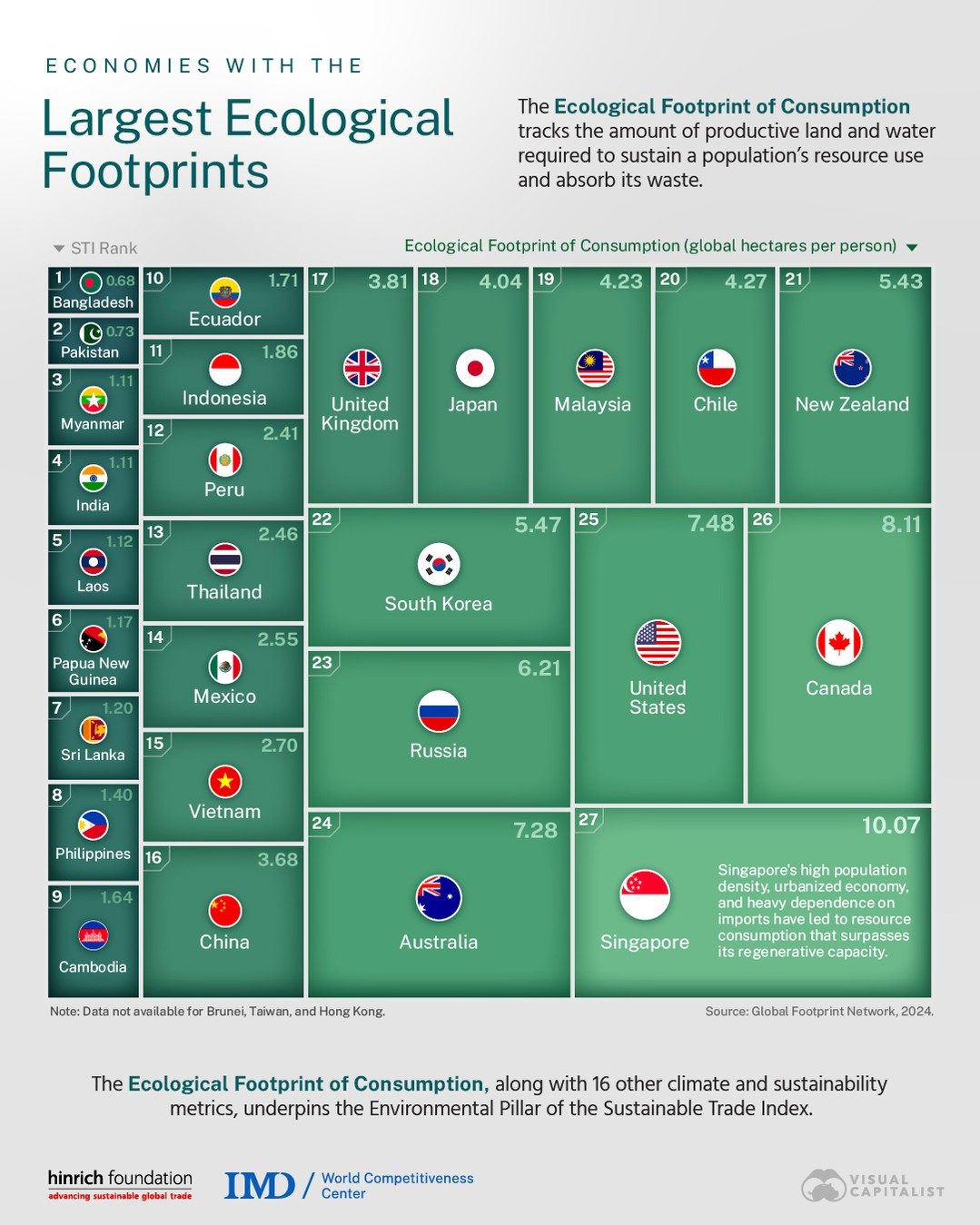
Every product, service, and activity we consume has an environmental impact. The ecological footprint measures this impact, showing how much of the planet's resources are used and how much waste is generated. It's a critical indicator of sustainability and environmental stewardship. This comparison draws on data from the Global Footprint Network, highlighting the varying environmental pressures of consumption across different countries.
Why This Matters
Understanding the ecological footprint of countries is essential for several reasons. It helps identify which economies are the most resource-intensive, which ones are more sustainable, and which ones are most at risk from environmental degradation. This information is crucial for policymakers, businesses, and consumers looking to make informed decisions about resource use and sustainability.
Comparisons like these also reveal the broader context of global sustainability efforts. They show where progress is being made and where more work is needed. By highlighting the ecological footprints of various countries, we can see the varying impacts of consumption patterns and identify opportunities for improvement.
Main Discussion
What is an Ecological Footprint?
An ecological footprint measures the amount of biologically productive land and sea area needed to support a population's consumption of resources and waste generation. This metric is typically expressed in global hectares per person, providing a standardized way to compare the environmental impact of different economies.
Global Rankings
The data from the Global Footprint Network reveals significant disparities in the ecological footprints of different countries. Singapore and Canada, for instance, have much higher ecological footprints compared to others. This is due to a variety of factors, including high levels of industrialization, urbanization, and resource-intensive lifestyles.
Key Findings
The comparison shows that countries with larger ecological footprints are often those with higher levels of economic development. For example, Singapore's ecological footprint is notably high, reflecting its status as a major global economic hub. Similarly, Canada's footprint is substantial, likely due to its extensive use of natural resources and large land area.
On the other hand, countries like Bangladesh have lower ecological footprints. This is partly because of their lower levels of industrialization and consumption. However, these countries also face significant challenges, including high levels of poverty and limited access to resources, which affect their overall sustainability.
Practical Tips
Reduce, Reuse, Recycle
One of the simplest ways to reduce your ecological footprint is to follow the three R's: reduce, reuse, and recycle. By minimizing waste and reusing materials, you can significantly lower your environmental impact.
Support Sustainable Practices
Supporting businesses and industries that prioritize sustainability can also make a difference. Look for products with eco-friendly certifications and support companies that implement sustainable practices in their operations.
Advocate for Policy Changes
Engaging with policymakers and advocating for policies that promote sustainability is another effective way to address ecological footprints. By pushing for better environmental regulations and incentives, you can contribute to a more sustainable future.
Important Takeaways
- Ecological Footprints Vary Widely: Countries with higher levels of economic development tend to have larger ecological footprints. This highlights the need for balanced economic growth and sustainability.
- Data Matters: Accurate data is crucial for understanding and addressing ecological footprints. Missing data for certain countries, like Brunei, Taiwan, and Hong Kong, underscores the importance of comprehensive data collection.
- Global Efforts Are Needed: Addressing ecological footprints requires global cooperation. International efforts to promote sustainable practices and reduce resource consumption are essential.
Conclusion
The ecological footprint comparison reveals the significant impact of consumption on the planet. By understanding the varying environmental pressures of different economies, we can identify opportunities for improvement and take steps towards a more sustainable future.
Implementing practical tips, such as reducing waste, supporting sustainable businesses, and advocating for policy changes, can help lower our individual and collective ecological footprints. It is a collective effort that requires the participation of governments, businesses, and consumers alike. Together, we can strive for a more balanced and sustainable world.
Watch the Reel
Questions readers ask
What is an ecological footprint and why is it important for comparing countries?
An ecological footprint measures the environmental impact of a country's consumption, including resource use and waste generation. It's important for comparing countries because it highlights the varying environmental pressures and sustainability levels across different nations. This comparison can help identify which countries are most resource-intensive and which ones are more sustainable.
Which countries typically have the highest ecological footprints?
Countries with high levels of consumption and industrial activity often have the highest ecological footprints. According to global data, nations like the United States, Canada, and Australia tend to rank high in terms of per person ecological footprints. These countries consume a significant amount of resources and generate considerable waste.
How does the ecological footprint help in assessing environmental degradation risk?
By examining the ecological footprint, we can understand the strain a country places on the planet's resources. Countries with high footprints are often at risk of environmental degradation due to overexploitation of resources. This data helps policymakers and environmentalists identify areas needing urgent attention and intervention.
What are some of the most sustainable countries based on ecological footprint data?
Some of the most sustainable countries, based on their lower ecological footprints, include countries in Africa, Asia, and parts of South America. Nations such as India, Indonesia, and Nigeria often have lower per-person footprints, indicating more efficient use of resources and less environmental impact. These countries often rely more on renewable resources and have lower consumption rates.
How does the ecological footprint comparison help in global policymaking?
The ecological footprint comparison provides valuable insights for global policymakers. It helps in identifying areas where resource use is excessive and where waste management needs improvement. This information can guide policies aimed at reducing environmental impact, promoting sustainable practices, and ensuring equitable distribution of global resources.
What are the main factors contributing to a country's ecological footprint?
Several factors contribute to a country's ecological footprint, including energy consumption, agricultural practices, industrial activity, and waste generation. High consumption rates, reliance on fossil fuels, and inefficient resource management significantly increase a country's environmental impact. Understanding these factors can help in developing targeted strategies for reducing the ecological footprint.
How can individuals contribute to reducing their country's ecological footprint?
Individually, people can contribute to reducing their country's ecological footprint by adopting sustainable practices. This includes reducing energy consumption, recycling, and minimizing waste. Choosing renewable energy sources, supporting sustainable agriculture, and advocating for policies that protect the environment are crucial steps. Collectively, these actions can significantly lower the overall environmental impact of a country.
Recent articles
Fresh deep dives from the latest Reels we unpacked.




Comments
Be the first to comment.