Inflation Rates Globally
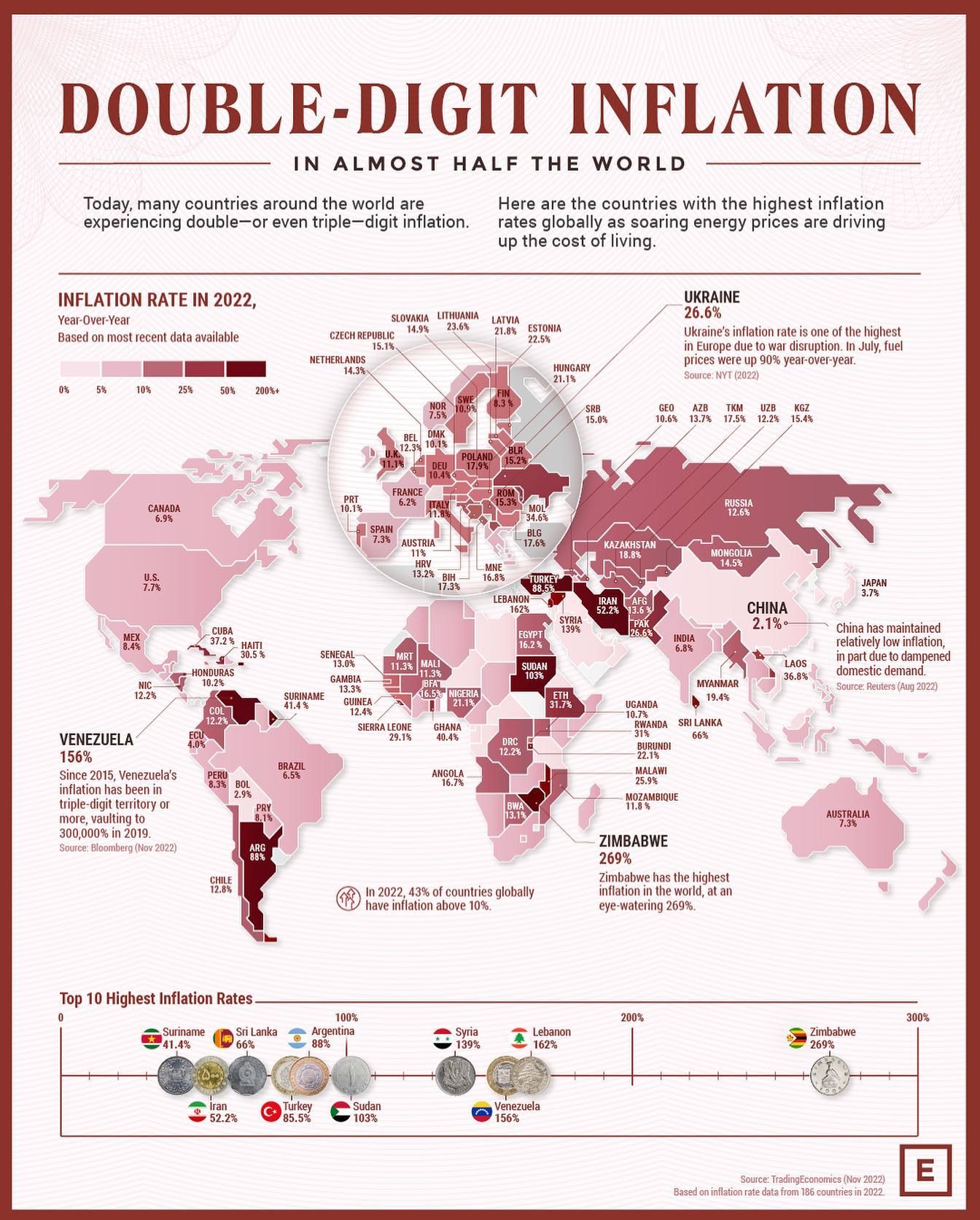
Inflation is a pressing economic concern in 2022, affecting nearly every corner of the globe. The surge in inflation rates can be attributed to a variety of factors, including geopolitical tensions and supply-side disruptions that have distorted consumer prices. As a result, countries worldwide are grappling with significant increases in living costs, with almost half experiencing double-digit inflation or higher.
Why This Matters
Understanding current inflation rates is crucial for navigating the global economy. High inflation impacts purchasing power, investment decisions, and overall economic stability. Governments and central banks worldwide are closely monitoring these trends to implement effective monetary policies.
Main Discussion
Global Trends in Inflation
Energy costs have soared, significantly driving up the cost of living. Countries such as Ukraine, Latvia, and Estonia are among those experiencing the highest inflation rates, with triple-digit increases. Ukraine, in particular, has been severely impacted, with an inflation rate of 26.6% in July 2022. This drastic increase is largely due to war-related disruptions, which have caused fuel prices to rise by 18% year over year.
Regional Inflation Hotspots
Eastern Europe
In Eastern Europe, several countries are experiencing high inflation rates. Estonia and Latvia have inflation rates of 23.5% and 21.6%, respectively. These figures reflect significant economic stress, with factors such as supply chain disruptions and rising energy costs playing major roles. Additionally, Hungary and the Czech Republic are also dealing with high inflation, with rates at 21.1% and 17.2%, respectively. The region's inflationary pressures highlight the broader economic challenges faced by countries in the area.
Western Europe
Western Europe is not immune to the inflationary pressures. Countries like Italy and Austria are experiencing inflation rates of 11.9% and 11.6%, respectively. These figures, while lower than those in Eastern Europe, still represent significant challenges for their economies. Facing the cost of living crisis, governments in these countries are implementing various measures to mitigate the impact of inflation on citizens.
Asia
Asia presents a mixed picture in terms of inflation. China has maintained relatively low inflation at 2.1%, largely due to dampened domestic demand. This contrasts sharply with countries like Myanmar, which has an inflation rate of 17.1%. India, on the other hand, has managed to keep inflation relatively low, which is a testament to its economic policies and supply chain management. The varying inflation rates in Asia reflect the diverse economic conditions and policies across the region.
Africa
Africa is another continent grappling with high inflation rates. Sierra Leone leads with an inflation rate of 24.5%, followed by Nigeria at 20.5%. These high rates are driven by a combination of factors, including supply chain disruptions, rising energy costs, and economic policies. The inflationary pressures in Africa underscore the need for robust economic policies to stabilize prices and support economic growth.
Factors Driving Inflation
Several key factors are driving the current surge in inflation. Supply chain disruptions have been a significant contributor, as they have made it difficult for businesses to obtain necessary materials and goods, leading to increased production costs. Additionally, rising energy costs have a ripple effect on other sectors, driving up the cost of goods and services across the board. Geopolitical tensions, particularly those affecting energy supplies, have also played a critical role in exacerbating inflation.
Practical Tips
For individuals and businesses, understanding and navigating high inflation requires strategic planning. Here are some practical tips:
Budgeting and Financial Planning
Create a detailed budget to track income and expenses. Focus on essential spending and cut back on non-essential items. Consider setting aside an emergency fund to cover unexpected costs.
Investment Strategies
Diversify investments to include assets that tend to perform well during inflationary periods, such as real estate and commodities. Consider inflation-indexed bonds, which adjust their value based on inflation rates, providing a hedge against rising prices.
Government Support and Policies
Keep an eye on government policies aimed at managing inflation. Stay informed about relief programs, tax incentives, and other measures that could help mitigate the impact of inflation on your finances.
Important Takeaways
Inflation is a global phenomenon driven by multiple factors, including geopolitical tensions, supply chain disruptions, and rising energy costs. Countries worldwide are experiencing varying degrees of inflation, with some facing triple-digit increases. To navigate this economic landscape, individuals and businesses should focus on strategic financial planning, diversified investment, and staying informed about government policies.
Conclusion
Inflation is a complex and multifaceted issue affecting economies worldwide. Understanding the factors driving inflation and its impact on different regions is crucial for making informed financial decisions. By staying informed and adopting strategic financial practices, individuals and businesses can better navigate the challenges posed by surging inflation rates.
Watch the Reel
Questions readers ask
Which countries are experiencing double-digit inflation in 2022?
Nearly half of the countries worldwide are facing inflation rates of 10% or higher, with Ukraine leading at 26.6% due to war-related disruptions. Other countries with notable inflation rates include those affected by supply disruptions, geopolitical tensions, and energy prices.
What are the main causes of the global inflation surge in 2022?
The primary factors contributing to the global inflation surge in 2022 include geopolitical tensions, supply-side disruptions, and rising energy prices. These issues have led to distorted consumer prices, affecting living costs across the globe.
How does high inflation impact living costs?
High inflation erodes purchasing power, making everyday goods and services more expensive. This leads to increased living costs, as consumers must spend more to maintain their standard of living.
Why is monitoring inflation rates important for governments and central banks?
Governments and central banks closely monitor inflation rates to implement effective monetary policies. This helps them stabilize the economy, manage investment decisions, and mitigate the impacts of high inflation on citizens' lives.
What role do supply disruptions play in the current global inflation?
Supply disruptions significantly contribute to global inflation by causing shortages and driving up prices. These disruptions can result from various factors, including geopolitical tensions, natural disasters, and pandemics, all of which have been prevalent in 2022.
What are the inflation rates for 2022 nearly half of the countries experiencing?
Nearly half of the countries worldwide are experiencing inflation rates of 10% or higher in 2022. In some of these countries, inflation rates reach double digits, while a few even face triple-digit inflation.
Which specific events most significantly impact the high inflation rate in Ukraine in 2022?
The high inflation rate in Ukraine, reaching 26.6%, is primarily due to the war-related disruptions, which have severely impacted the country's economy. This includes damage to infrastructure, supply chain interruptions, and increased military spending, all of which contribute to the surge in prices.
Recent articles
Fresh deep dives from the latest Reels we unpacked.




Comments
Be the first to comment.