Declines in Freedom Across the Globe
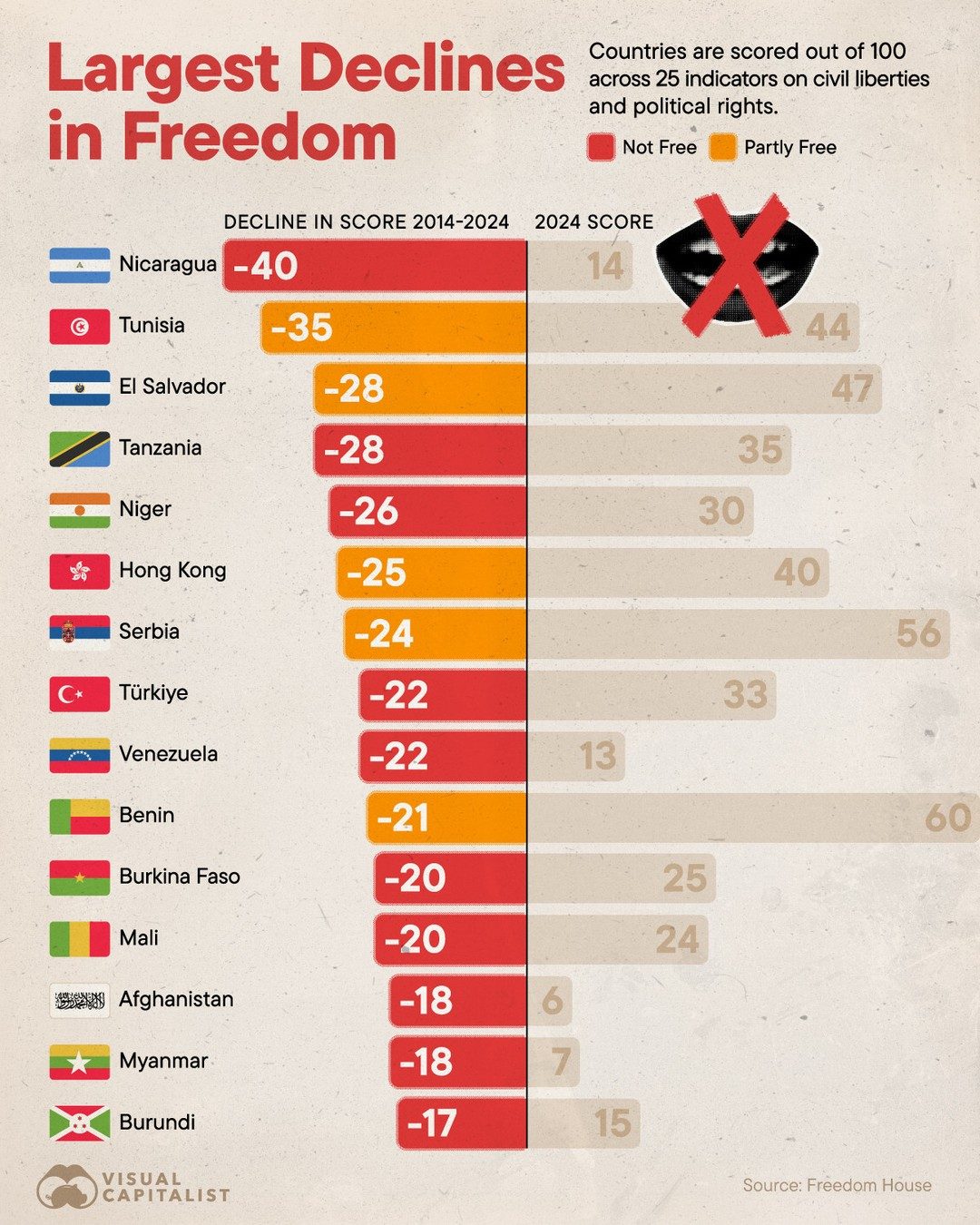
The world has seen significant changes in the landscape of freedom over the past decade. Nicaragua, in particular, has experienced the most dramatic decline in democratic freedoms since 2014, as highlighted by the Ortega regime's actions, such as shutting down over 57 media outlets and violently suppressing protests. Other countries have also seen notable drops in freedom scores, reflecting a broader trend of regressing civil liberties and political rights.
Why This Matters
Understanding where and how freedom has declined is crucial for several reasons. It helps identify regions where human rights are under threat, allowing international organizations and civil society groups to focus their efforts more effectively. Moreover, tracking these declines can provide insights into the political and social dynamics at play, helping to predict future trends and potential crises. This information is also valuable for policymakers, activists, and everyday citizens who wish to advocate for change and support those living under oppressive regimes.
The Sharpest Declines in Freedom
Nicaragua
Nicaragua tops the list with a staggering decline of -40 points in its freedom score since 2014. The Ortega regime has been particularly aggressive in consolidating power, shutting down media outlets, and suppressing dissent.
Tunisia
Tunisia follows with a decline of -35 points. Once hailed as a beacon of hope in the Arab Spring, the country has seen a backsliding in democratic freedoms, raising concerns about its future stability and commitment to civil liberties.
El Salvador and Tanzania
Both El Salvador and Tanzania have experienced a decline of -28 points. These countries have seen significant setbacks in political rights and civil liberties, often attributed to authoritarian tendencies and corruption.
Hong Kong
Hong Kong, known for its vibrant and diverse society, has seen a -25 point decline. The imposition of national security laws and the erosion of democratic institutions have raised international alarm about the future of Hong Kong's autonomy and freedoms.
Türkiye
Türkiye has experienced a decline of -22 points. The country has faced criticism for its crackdowns on media freedom, political opposition, and civil society organizations, leading to a significant drop in its freedom score.
The Scoring System
Countries are scored out of 100 across 25 indicators related to civil liberties and political rights. These indicators cover a broad range of freedoms, including the right to vote, freedom of expression, and the rule of law. The scores are categorized into three broad groups: 'Free,' 'Partly Free,' and 'Not Free.' The infographic specifically highlights countries that have seen the most significant declines in their scores, providing a stark visual representation of the erosion of freedoms.
Countries Categorized as 'Not Free'
Countries categorized as 'Not Free' have experienced severe restrictions on political rights and civil liberties. These countries often have authoritarian regimes that suppress dissent and limit freedoms through various means, including censorship, arbitrary arrests, and violent crackdowns on protests. Examples include Nicaragua, Afghanistan, and Myanmar.
Countries Categorized as 'Partly Free'
Countries in the 'Partly Free' category have more moderate restrictions on freedoms but still face significant challenges. These countries may have democratic institutions but suffer from corruption, weak rule of law, and limited civil liberties. Examples include Hong Kong, Serbia, and Venezuela.
Practical Tips for Staying Informed
Staying informed about the state of freedom around the world is essential for anyone interested in global affairs. Here are some practical tips for keeping up-to-date:
Follow Reputable Sources
Rely on credible sources like Freedom House and other human rights organizations for accurate and up-to-date information on freedom and civil liberties.
Engage with Local Communities
Connect with local activists, journalists, and organizations to gain firsthand insights into the challenges faced by people in different countries.
Advocate for Change
Use your voice to advocate for policies that support democratic freedoms and civil liberties. Whether through social media, community events, or political participation, every effort counts.
Support Independent Media
Independent media outlets are crucial for maintaining transparency and accountability in governments. Support them through subscriptions, donations, or simply sharing their work.
Important Takeaways
The stark decline in freedom scores across various countries highlights a troubling global trend. Authoritarian regimes and weak democratic institutions are eroding civil liberties and political rights, leading to a backsliding of freedoms. It's crucial to stay informed, engage with local communities, and advocate for change to support those living under oppressive regimes.
Conclusion
The decline in freedom scores across various countries is a sobering reminder of the challenges facing democratic institutions and civil liberties. From Nicaragua's dramatic drop to the erosion of freedoms in Hong Kong and Tunisia, the trend is clear: many countries are moving away from democratic ideals. By staying informed, supporting independent media, and advocating for change, we can help reverse these trends and promote a more free and just world.
Watch the Reel
Questions readers ask
Which country experienced the most dramatic decline in democratic freedoms from 2014 to 2024?
Nicaragua has seen the most significant decline in democratic freedoms over the past decade. The Ortega regime's actions, including the shutdown of over 57 media outlets and the violent suppression of protests, have contributed to this dramatic regression.
What are some of the key actions taken by the Nicaraguan government that led to this decline?
The Nicaraguan government, under the Ortega regime, has taken several actions that have led to a decline in freedom. These include shutting down over 57 media outlets, violently suppressing protests, and implementing policies that restrict civil liberties and political rights.
Which other countries, besides Nicaragua, have seen notable declines in freedom scores?
Countries such as Tunisia, El Salvador, and Tanzania have also seen significant drops in their freedom scores. These declines reflect a broader trend of regressing civil liberties and political rights across various regions.
Why is it important to track changes in freedom scores over time?
Tracking changes in freedom scores over time is crucial for identifying regions where human rights are under threat. This allows international organizations and civil society groups to focus their efforts more effectively and to predict future political and social trends.
How can understanding the decline in freedom in countries like Nicaragua help in addressing human rights threats?
Understanding the specific actions and policies that have led to the decline in freedom in countries like Nicaragua can help in addressing human rights threats. It enables targeted interventions and advocacy efforts to restore civil liberties and political rights, and to support those who are fighting against the repression.
What are some of the broader implications of the decline in freedom in countries like Tunisia and El Salvador?
The decline in freedom in countries like Tunisia and El Salvador has broader implications for regional stability and international relations. These trends can influence political dynamics, social cohesion, and the effectiveness of international efforts to promote human rights and democracy.
What kinds of data are used to track freedom score declines in countries over time?
Data used to track freedom score declines typically include metrics on civil liberties, political rights, media freedom, and the prevalence of political repression. These metrics are often compiled by international organizations and NGOs that monitor human rights and democratic governance.
Recent articles
Fresh deep dives from the latest Reels we unpacked.




Comments
Be the first to comment.