Corporate Bankruptcies in America
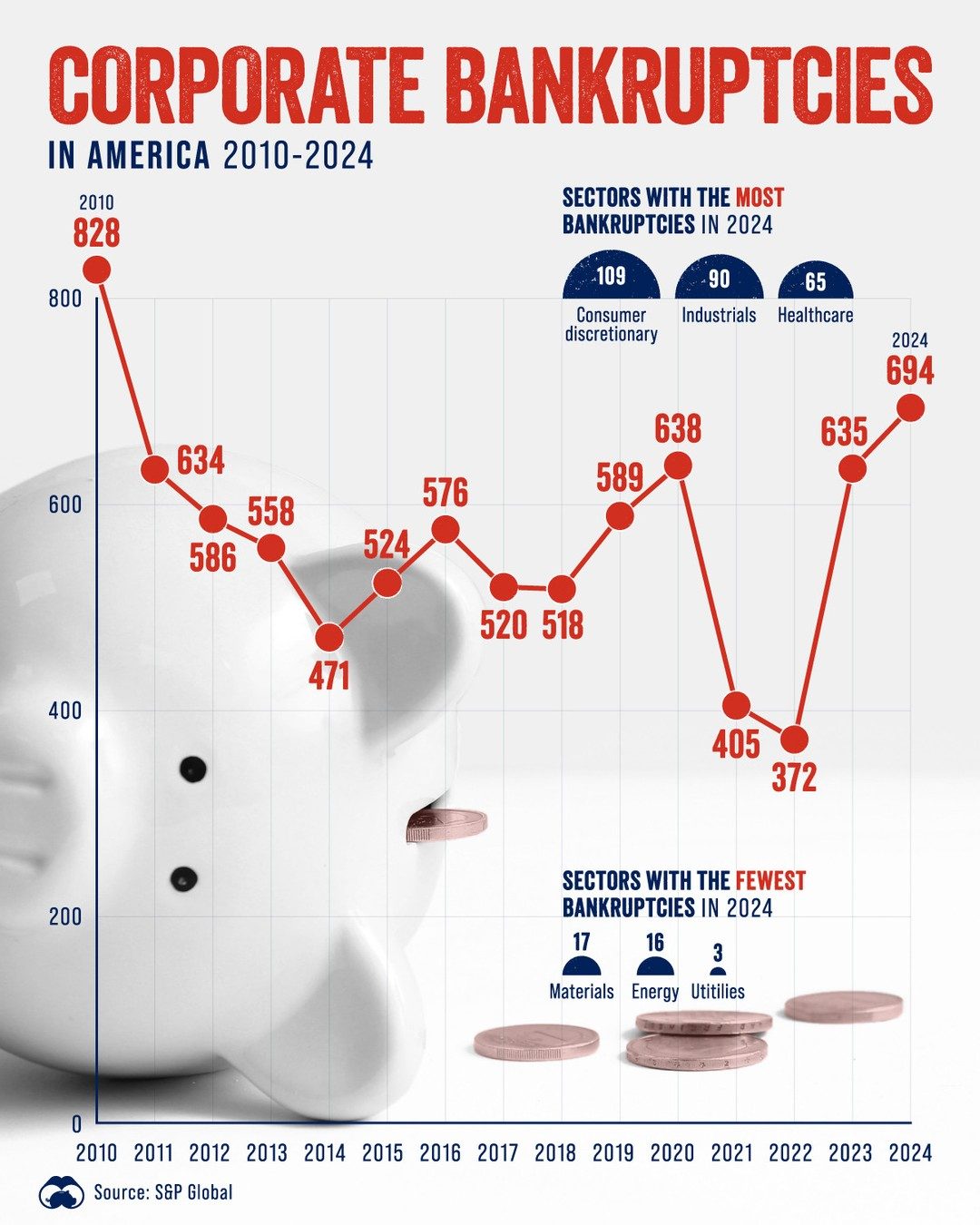
Corporate bankruptcies in the United States surged to 694 filings in 2024, marking the highest annual total since 2010. This significant spike highlights the economic challenges faced by various sectors, particularly the consumer discretionary industry. Understanding the trends and factors behind these bankruptcies provides valuable insights into the current economic landscape. The consumer discretionary sector, which includes companies selling non-essential goods and services, saw the most bankruptcies, totaling 109. This sector's struggles are a direct result of tighter spending by consumers, reflecting broader economic conditions.
Why This Matters
Corporate bankruptcies are a critical indicator of economic health. The rise in filings signals that many companies are facing severe financial distress, which can have far-reaching effects on employment, investment, and overall economic stability. The consumer discretionary sector's struggles are particularly noteworthy because they reflect changes in consumer behavior and spending patterns. This sector includes businesses that sell goods and services that are not essential, such as luxury items, entertainment, and non-essential retail products. When consumers tighten their spending, these businesses are often the first to feel the impact.
Annual Trends in Corporate Bankruptcies
The infographic charts the annual number of corporate bankruptcies in the U.S. from 2010 to 2024, based on data from S&P Global, providing a clear visual representation of the trends over the past decade.
2010-2019: A Decade of Fluctuations
From 2010 to 2019, the number of corporate bankruptcies fluctuated but generally remained below the 2024 total. The years following the 2008 financial crisis saw a higher number of filings as companies struggled to recover from the economic downturn. However, as the economy stabilized, the number of bankruptcies gradually decreased. The period from 2014 to 2019 was relatively stable, with a slight upward trend in the latter years.
2020-2024: The Surge
In 2020, the onset of the COVID-19 pandemic led to a significant increase in bankruptcies as businesses struggled with lockdowns, supply chain disruptions, and reduced consumer spending. The trend continued into 2021 and 2022, with the consumer discretionary sector being particularly hard hit. The surge in 2024, with 694 filings, is a stark reminder of the ongoing economic challenges faced by many companies. The data reveals that 2024 saw the highest number of corporate bankruptcies since 2010.
Sectors with the Most Bankruptcies in 2024
Consumer Discretionary
The consumer discretionary sector, which includes businesses that sell non-essential goods and services, experienced the highest number of bankruptcies in 2024, with 109 filings. This sector includes industries such as retail, entertainment, and luxury goods. When consumers tighten their spending, these businesses are often the first to feel the impact. The rise in bankruptcies in this sector reflects a broader trend of reduced consumer spending on non-essential items.
Industrials
The industrials sector, which includes companies involved in manufacturing, construction, and transportation, also saw a significant number of bankruptcies. This sector faced challenges due to supply chain disruptions, increased raw material costs, and reduced demand for industrial products.
Healthcare
The healthcare sector, which includes companies involved in medical services, pharmaceuticals, and biotechnology, experienced a notable increase in bankruptcies. Factors such as regulatory changes, increased competition, and rising healthcare costs contributed to the financial distress faced by many companies in this sector. This sector includes hospitals, clinics, and pharmaceutical companies, all of which are essential to public health.
Sectors with the Fewest Bankruptcies in 2024
Energy
The energy sector, which includes companies involved in the production and distribution of energy, saw the fewest bankruptcies in 2024. This sector, which includes oil and gas companies, renewable energy providers, and utilities, has been relatively stable compared to other sectors. The energy sector includes companies involved in the production and distribution of energy, such as oil and gas companies, renewable energy providers, and utilities. This sector has been relatively stable compared to other sectors, with fewer bankruptcies in 2024.
Utilities
The utilities sector, which includes companies that provide essential services such as electricity, water, and natural gas, also saw a low number of bankruptcies. This sector is often considered a defensive sector, as it provides essential services that are less affected by economic downturns.
Materials
The materials sector, which includes companies involved in the production and distribution of raw materials, also saw a relatively low number of bankruptcies. This sector includes companies that produce and distribute raw materials, such as metals, chemicals, and paper. The materials sector has been relatively stable compared to other sectors, with fewer bankruptcies in 2024.
Factors Contributing to the Surge in Bankruptcies
Economic Uncertainty
Economic uncertainty is a significant factor contributing to the rise in corporate bankruptcies. The COVID-19 pandemic, geopolitical tensions, and inflation have created a volatile economic environment, making it difficult for businesses to plan and operate effectively. This uncertainty has led to reduced consumer spending, supply chain disruptions, and increased operational costs, all of which have contributed to the financial distress faced by many companies.
Consumer Spending Patterns
Changes in consumer spending patterns have also played a significant role in the surge in bankruptcies. As consumers tighten their spending on non-essential items, businesses in the consumer discretionary sector have been particularly hard hit. This trend reflects a broader shift in consumer behavior, with a greater focus on essential goods and services.
Regulatory Changes and Industry Competition
Regulatory changes and increased competition have also contributed to the financial distress faced by many companies. In the healthcare sector, for example, regulatory changes and increased competition have led to reduced revenues and increased operational costs, making it difficult for many companies to remain profitable.
Practical Tips for Businesses
Diversify Revenue Streams
Diversifying revenue streams can help businesses weather economic downturns and reduce their reliance on a single source of income. By exploring new markets, products, and services, companies can increase their resilience and reduce their vulnerability to market fluctuations.
Strengthen Financial Position
Strengthening financial position is crucial for businesses to navigate economic uncertainty. This can be achieved through cost-cutting measures, improved cash management, and increased investment in technology and innovation. By strengthening their financial position, companies can better withstand economic shocks and maintain their operations during times of uncertainty.
Adapt to Changing Consumer Behavior
Adapting to changing consumer behavior is essential for businesses to remain competitive. As consumer spending patterns shift, companies need to adjust their strategies to meet the evolving needs and preferences of their customers. This may involve offering new products or services, improving customer service, or exploring new marketing channels.
Invest in Technology and Innovation
Investing in technology and innovation can help businesses remain competitive and adapt to changing market conditions. By embracing new technologies, companies can improve their operational efficiency, reduce costs, and enhance their product offerings.
Important Takeaways
The surge in corporate bankruptcies in 2024 highlights the economic challenges faced by many companies. The consumer discretionary sector, in particular, has been hard hit by tighter spending and reduced demand for non-essential goods and services. Understanding the factors contributing to these bankruptcies and adapting to changing market conditions are crucial for businesses to navigate the current economic landscape.
Conclusion
The rise in corporate bankruptcies in 2024 serves as a reminder of the economic challenges faced by many businesses today. By understanding the trends and factors behind these bankruptcies, companies can better prepare for the uncertainties ahead. Diversifying revenue streams, strengthening financial positions, adapting to changing consumer behavior, and investing in technology and innovation are key strategies for businesses to remain competitive and resilient in the face of economic adversity.
Watch the Reel
Questions readers ask
What sectors were most affected by corporate bankruptcies in 2024?
The consumer discretionary sector was the most affected, accounting for 109 of the 694 corporate bankruptcies in 2024. This sector includes businesses selling non-essential goods and services, which have seen reduced consumer spending.
Why did corporate bankruptcies in America hit a 14-year high in 2024?
The surge in corporate bankruptcies in 2024 was primarily driven by economic challenges, particularly in the consumer discretionary sector. Tighter spending by consumers led to increased financial struggles for many businesses in this industry.
How many corporate bankruptcies occurred in the U.S. in 2024, and what does this indicate?
There were 694 corporate bankruptcies in the U.S. in 2024, the highest number since 2010. This indicates significant economic challenges and potential instability, as the rise in bankruptcies reflects broader issues affecting various sectors.
What are the implications of the rise in corporate bankruptcies for the economy?
The rise in corporate bankruptcies can have wide-ranging implications, including job losses, reduced consumer confidence, and potential disruptions in supply chains. It also serves as a critical indicator of overall economic health and stability.
What was the total number of corporate bankruptcies in 2024 and how does this compare to previous years?
The total number of corporate bankruptcies in 2024 was 694, which is the highest annual total since 2010. This represents a significant increase and reflects the economic challenges experienced by many businesses.
Which trends and factors contributed to the increase in corporate insolvency in 2024?
The increase in corporate insolvency in 2024 was largely influenced by a tightening of consumer spending, particularly in the discretionary sector. Additionally, broader economic challenges and sector-specific issues contributed to this trend, leading to a notable rise in corporate bankruptcies.
Recent articles
Fresh deep dives from the latest Reels we unpacked.




Comments
Be the first to comment.