Copper Production in 2021: Key Countries and Their Contributions
Copper is an essential industrial metal renowned for its high ductility, malleability, and superior electrical conductivity. Its versatility makes it a critical component in various modern technologies, especially those aimed at combating climate change, such as solar panels and wind turbines. Given its significance, understanding the global copper production landscape is crucial.
Why Copper Matters
Reliable copper sources are vital for several reasons. Firstly, copper is indispensable in the renewable energy sector. Solar panels, for example, rely on copper for effective energy transmission, while wind turbines require it for their electrical components. Additionally, copper’s conductivity makes it ideal for power transmission infrastructure, which is constantly expanding to meet growing energy demands. Copper is also used in electric vehicles (EVs) and various other industrial applications.
Global Copper Production in 2021
The Top Producers
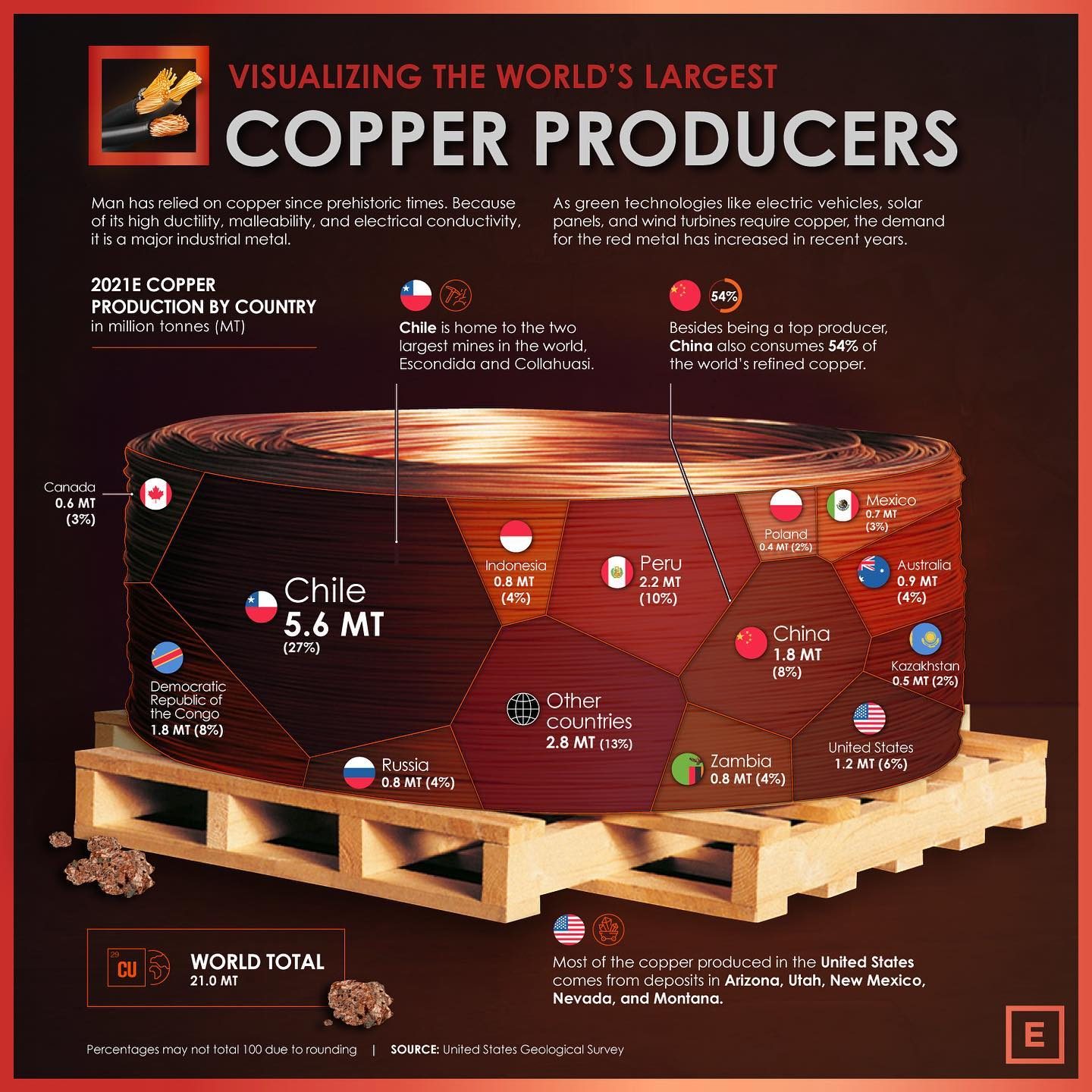
In 2021, the world produced a total of 21.0 million tonnes (MT) of copper. The top producers led the way, with each playing a significant role in the global supply chain. Here’s a breakdown of the top contributors:
Chile
Leading the pack, Chile produced 5.6 million tonnes (MT) of copper, accounting for 27% of the world’s total. The country’s deposits are some of the most significant and profitable in the world, making Chile an unrivaled leader in copper production.
Peru
With 2.2 MT, Peru is the second-largest producer, contributing 10% of the global total. The country is known for its rich mineral reserves and has been a significant player in the copper market for many years.
Other Major Producers
China
China, a major consumer and producer, manufactured 1.8 MT of copper, contributing 8% to the global total. While China's contribution is significant, its consumption is even more substantial, accounting for 54% of the world’s refined copper.
Australia
Australia produced 0.9 MT in 2021, contributing 4% to the world’s total. The country is renowned for its extensive mining industry, which includes copper along with other valuable minerals.
Mexico
Mexico’s copper production also stood at 0.8 MT, adding another 4% to the global total. The country’s copper mining industry is robust, with several large-scale mining operations.
Russia
Similar to Mexico, Russia contributed 0.8 MT, making up 4% of the global total. Russia is another significant player in the global metals market, with substantial reserves of various minerals, including copper.
Kazakhstan
Kazakhstan produced 0.5 MT, contributing 2% to the world’s total. The country’s copper production is an essential part of its mining sector, which is a crucial economic driver.
United States
The United States produced 1.2 MT, contributing 6% to the global total. Copper deposits in the U.S. are primarily located in Arizona, Utah, New Mexico, Nevada, and Montana.
Other Notable Producers
While the above countries dominate the list, other nations also play a role in global copper production. Although their individual contributions are smaller, they collectively add to the overall supply, ensuring a steady flow of this critical metal.
Copper Production Processes
Copper production involves several stages, from mining to refining. Extraction is usually done through open-pit or underground mining, depending on the deposit's location and depth. After extraction, the ore is processed to separate copper from other minerals. This process includes crushing, grinding, and flotation, which separates the copper-rich minerals from waste rock.
Practical Tips for Understanding Copper Production
To gain a deeper understanding of the global copper industry, it’s helpful to follow industry reports and stay informed about key economic trends. Knowing the major producers and their contributions can provide insights into potential supply disruptions and market fluctuations. Additionally, keeping an eye on technological advancements in mining and refining can offer a glimpse into the future of copper production.
Important Takeaways
Copper is a vital component in many modern technologies, particularly in the renewable energy sector. Understanding the global copper production landscape is essential for appreciating the intricacies of the global supply chain.
Conclusion
Copper is a metal of immense importance, and its production is a complex, multifaceted process involving several countries and extensive technological processes. The top copper-producing countries in 2021, including Chile, Peru, China, and Australia, play a crucial role in meeting the world’s copper demands. Staying informed about these key producers and the production processes can offer valuable insights into the global copper market. Copper’s importance in modern technologies underscores the need for a robust and efficient production and supply chain to meet the demands of an ever-evolving world.
Watch the Reel
Questions readers ask
Which countries were the top producers of copper in 2021?
In 2021, the top copper producing countries were Chile, Peru, and China. These countries significantly contributed to the global copper production, which reached 21.0 million tonnes that year.
How much copper did Chile produce in 2021?
Chile is the world's largest copper producer. In 2021, Chile produced approximately 5.7 million tonnes of copper, making it a dominant force in the global copper production industry.
What is the significance of copper in renewable energy technologies?
Copper plays a pivotal role in renewable energy technologies due to its superior electrical conductivity. It is extensively used in solar panels for efficient energy transmission and in wind turbines for their electrical components, making it a critical material in efforts to combat climate change.
Which major countries in the United States contributed to the copper production in 2021?
The United States has several key copper mines, particularly in Arizona. In 2021, the United States produced approximately 1.2 million tonnes of copper, making it one of the top copper-producing countries globally.
What are some of the largest copper mines in the world?
The largest copper mines in the world are predominantly located in Chile and Peru. These mines, such as Escondida in Chile and Antamina in Peru, are known for their significant contributions to the global copper market, producing millions of tonnes of copper annually.
How does copper contribute to the production of solar panels and wind turbines?
Copper is essential for the production of solar panels and wind turbines due to its high ductility, malleability, and excellent electrical conductivity. These properties make copper ideal for the efficient transmission of energy in renewable energy systems, enhancing their overall performance and reliability.
Recent articles
Fresh deep dives from the latest Reels we unpacked.




Comments
Be the first to comment.