Cooking Methods and Their Impact on Calories and Macros
Cooking methods play a significant role in determining the calorie and macro content of food. Understanding these differences is key to making informed decisions about what and how you cook. This guide breaks down how various cooking methods affect the nutritional profiles of common foods, helping you align your meals with your personal health goals.
Why This Matters
The way you cook your food can drastically change its nutritional content. For instance, frying generally increases calories and fat content compared to boiling or air frying. Roasting can also significantly impact calorie and macro content, especially for foods like potatoes and bananas. Recognizing these differences allows you to make choices that better support your dietary goals, whether you're aiming for fat loss, muscle gain, or overall better health.
Main Discussion
Eggs: A Nutritious Staple
Eggs are a versatile and nutritious food, but their calorie and macro content can vary significantly based on the cooking method.
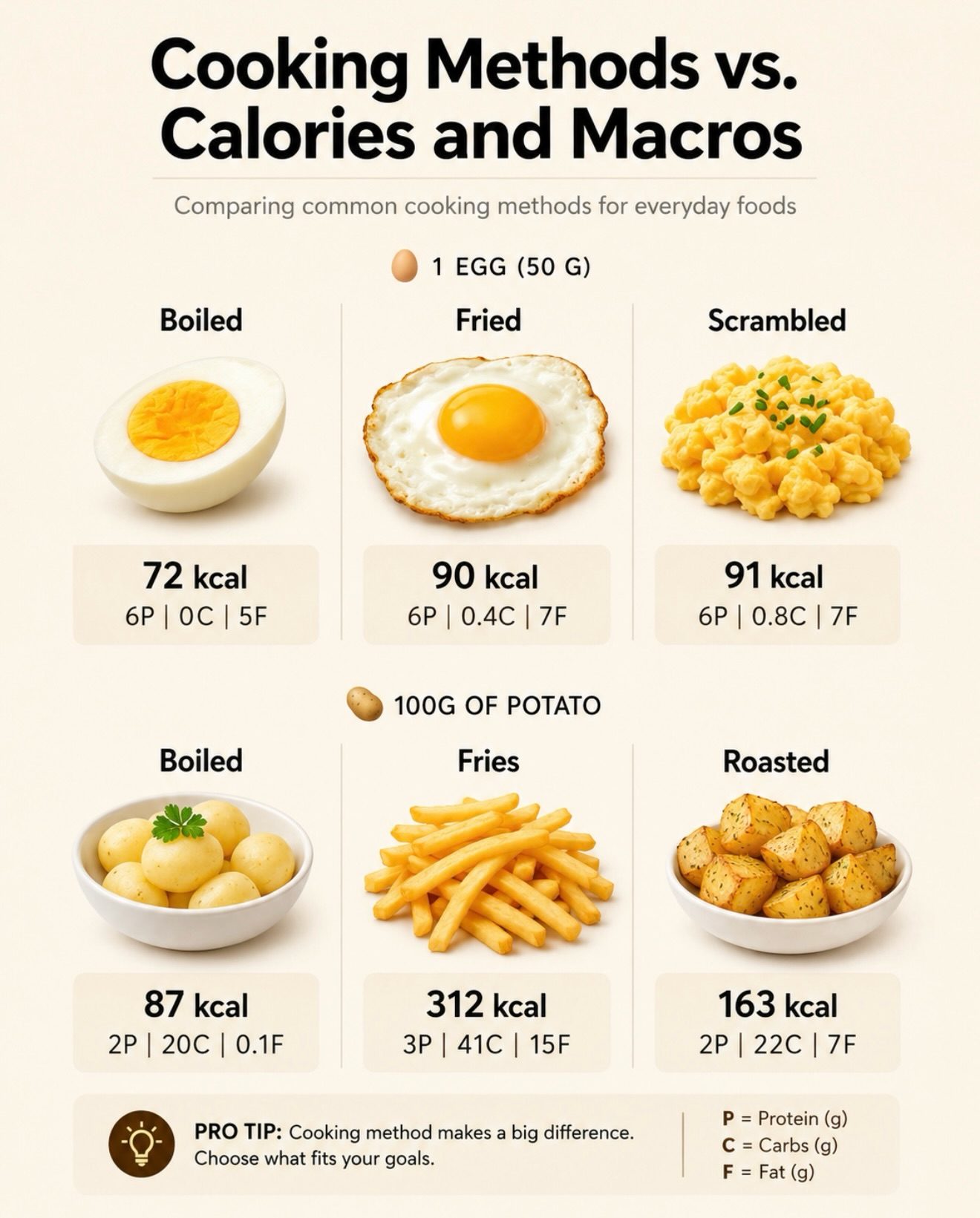
- Boiled: Boiling an egg (50g) results in about 72 calories, with 6 grams of protein, 0 grams of carbs, and 5 grams of fat.
- Fried: A fried egg of the same size contains around 90 calories, with 6 grams of protein, 0.4 grams of carbs, and 7 grams of fat.
- Scrambled: Scrambling an egg adds a bit more fat, resulting in 91 calories, with 6 grams of protein, 0.8 grams of carbs, and 7 grams of fat.
Potatoes: A Carb-Laden Favorite
Potatoes are naturally low in calories but can quickly become high-calorie foods when fried. The cooking method significantly impacts their nutritional profile.
- Fries: Deep-frying 100g of potatoes results in 312 calories, with 3 grams of protein, 15 grams of fat, and 20 grams of carbs.
- Roasted: Roasting the same amount yields 163 calories, with 2 grams of protein, 2 grams of carbs, and 7 grams of fat.
Chicken Breast: Lean Protein
Chicken breasts are known for being lean, but the cooking method can add significant calories and fat.
- Boiled: Boiling 250g of chicken breast results in 300 calories, with 2 grams of protein, 0 grams of carbs, and 7 grams of fat.
- Fried: Fried chicken breast of the same size contains 480 calories, with 54 grams of protein, 11 grams of carbs, and 28 grams of fat.
- Air Fried: Air frying is a healthier alternative, with 380 calories, 57 grams of protein, 3 grams of carbs, and 16 grams of fat.
Bananas: Naturally Sweet
Bananas are a great source of natural sugars, but frying can significantly alter their nutritional content.
- Fresh: A fresh medium banana (118g) contains 105 calories, with 1.3 grams of protein, 27 grams of carbs, and 0.3 grams of fat.
- Roasted: Roasting slightly increases the calories to 110, with 1.3 grams of protein, 28 grams of carbs, and 0.4 grams of fat.
- Fried: Fried bananas contain 320 calories, with 1.7 grams of protein, 39 grams of carbs, and 20 grams of fat.
Pork Chops: Versatile and Flavorful
Pork chops offer a variety of nutritional profiles depending on the cooking method.
- Grilled: Grilling 100g of pork chop results in 210 calories, with 24 grams of protein, 1 gram of carbs, and 12 grams of fat.
- Pan-Fried: Pan-fried pork chop of the same size contains 260 calories, with 23 grams of protein, 6 grams of carbs, and 18 grams of fat.
- Fried: Fried pork chops contain 320 calories, with 20 grams of protein, 14 grams of carbs, and 22 grams of fat.
- Baked: Baking results in 180 calories, with 3 grams of protein, 24 grams of carbs, and 8 grams of fat.
- Air-Fried: Air-frying is a healthier option, with 220 calories, 3 grams of protein, 26 grams of carbs, and 12 grams of fat.
Practical Tips
Choosing the right cooking method can make a big difference in your nutritional intake. Here are some practical tips:
Air Fry Instead of Deep Fry
Air frying is a great alternative to deep frying. It requires less oil, reducing the overall fat content and calories. For example, air-frying chicken breast can significantly lower the fat and calorie content compared to deep-frying.
Roast Instead of Fry
Roasting food can be a healthier option than frying. Roasted potatoes, for instance, have far fewer calories and less fat than their fried counterparts. Roasting also retains more of the food's natural flavors and nutrients.
Grill Instead of Pan-Fry
Grilling is another healthier alternative to pan-frying. It uses less oil and can help reduce the overall fat content of the food. Grilled meats, like pork chops, are leaner and often more flavorful than pan-fried versions.
Use Less Oil
Reducing the amount of oil used in cooking can make a noticeable difference in the calorie and fat content. Opt for cooking methods that require less oil, such as boiling, baking, or grilling.
Consider Your Goals
Different cooking methods serve different purposes. If your goal is fat loss, choose methods that reduce overall fat content. If you're building muscle, focus on lean proteins and balance your macronutrients accordingly.
Important Takeaways
Nutritional Awareness
Nutritional awareness is key to making better food choices. Understanding how different cooking methods affect calorie and macro content allows you to make decisions that align with your health goals. This awareness helps you balance your meals and maintain a healthier lifestyle.
Balance and Variety
Balance and variety are essential in a healthy diet. Sometimes, it's okay to enjoy high-calorie foods. The key is moderation and understanding the impact of these choices on your overall health and fitness goals. Tracking your nutrition and workout progress can provide valuable insights and simplify the process.
Small Swaps Matter
Small swaps can make a huge difference. For example, choosing to air-fry instead of deep-fry can significantly reduce the calorie and fat content of your meals. Similarly, opting for roasted vegetables over fried ones can help you achieve your health goals more effectively.
Conclusion
The way you cook your food plays a crucial role in determining its nutritional content. By understanding the impact of different cooking methods, you can make informed decisions that support your health goals. Whether you're aiming for fat loss, muscle gain, or general well-being, choosing the right cooking methods and tracking your nutrition can significantly enhance your overall health and fitness journey.
Watch the Reel
Questions readers ask
How does frying affect the calorie count in foods compared to other cooking methods?
Frying typically increases the calorie count in foods due to the absorption of oil. For example, fried chicken can have significantly more calories than chicken breast cooked using low-fat methods like grilling or air frying. This is because the oil used in frying adds extra calories and fat.
What is the impact of air frying on the fat content of foods?
Air frying significantly reduces the fat content in foods compared to traditional frying. Air fryers use hot air to cook food, requiring little to no oil. This makes air frying a healthier alternative for those looking to cut down on fat and calories, as it helps maintain the nutritional integrity of the food.
Why does roasting alter the calorie and macro content of foods like potatoes?
Roasting can increase the calorie count and change the macro content of foods like potatoes because it often involves the use of oil, butter, or other fats for added flavor. These additions boost the calorie count and fat content. Additionally, the high heat can cause nutrients like vitamin C in potatoes to degrade, slightly altering the nutritional profile.
How can I cook chicken breast to maintain a low calorie count?
To maintain a low calorie count while cooking chicken breast, opt for methods like grilling or poaching. These methods do not require additional fats and oils, preserving the original macro content and calories as naturally found in the chicken. Baking or air frying are also good alternatives if you prefer a crispy texture.
What are some healthy cooking methods for reducing fat in foods?
Healthy cooking methods for reducing fat in foods include steaming, boiling, grilling, and air frying. Steaming and boiling use minimal or no oil, preserving the natural moisture and nutrients in the food. Grilling and air frying can also be low-fat options, as they use less oil and allow for the fat to drip off during cooking.
Can cooking methods like boiling and steaming help in achieving specific health goals?
Yes, cooking methods like boiling and steaming are excellent for achieving specific health goals such as weight loss or maintaining a balanced diet. They help retain the natural nutrients and keep the calorie and macro content low, as they do not require added fats or oils.
How do different cooking methods impact the calorie count in potatoes?
The calorie count in potatoes can vary significantly based on the cooking method. Roasting or frying potatoes with added oils and fats increases the calorie count. Conversely, boiling or steaming potatoes keeps the calorie count lower by avoiding added fats and oils, making them a healthier choice when managing weight and health goals.
Recent articles
Fresh deep dives from the latest Reels we unpacked.




Comments
Be the first to comment.