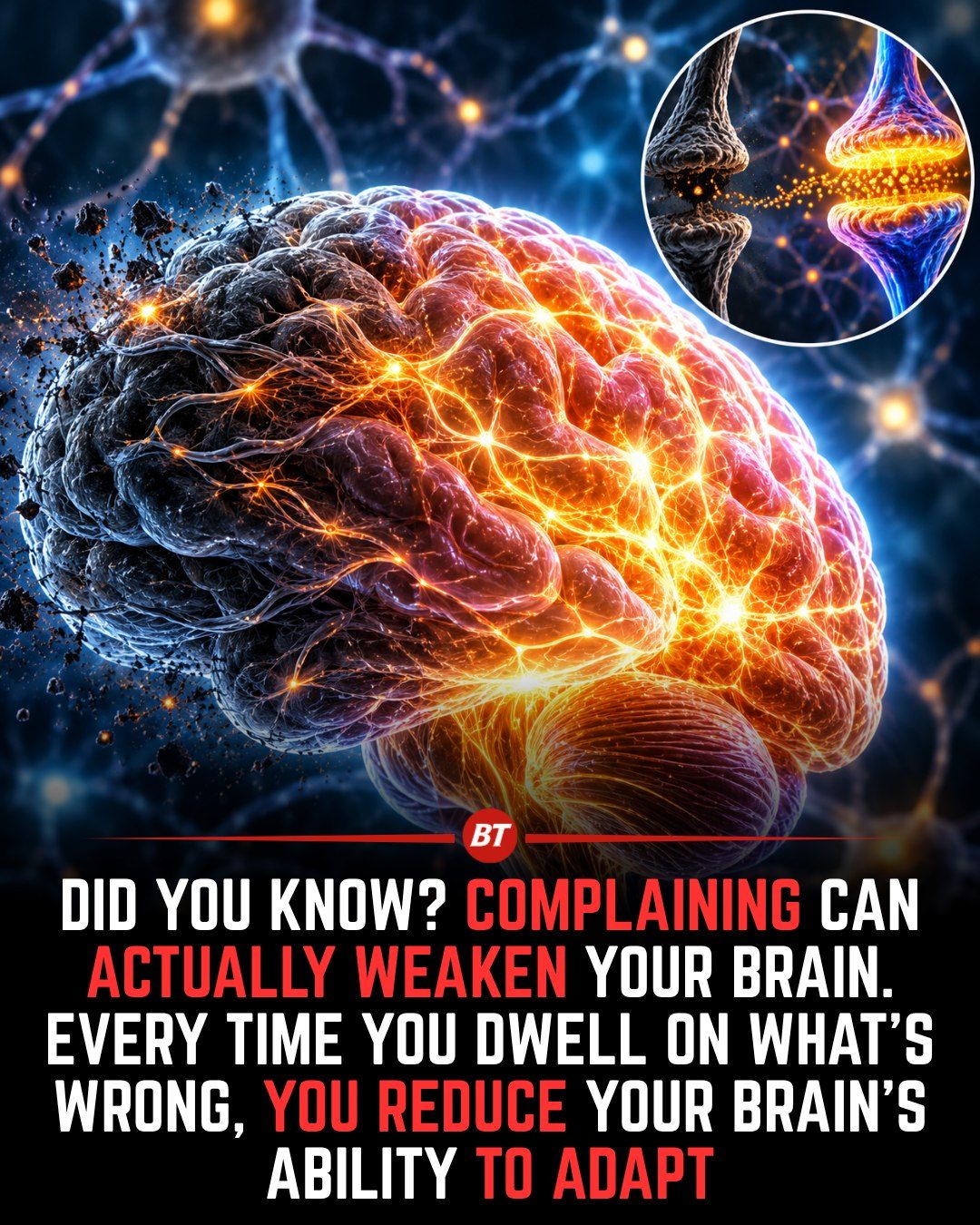
Brain Health: The Impact of Complaining on Neuroplasticity
Neuroplasticity, the brain's ability to adapt and re-wire itself based on repeated thoughts and actions, plays a crucial role in shaping our mental well-being. Understanding how our thoughts influence this process can help us cultivate a more resilient and adaptable mindset.
Context: Why This Matters
Neuroplasticity is not just a theoretical concept; it has tangible effects on how we perceive and respond to our environment. By regularly focusing on certain thoughts or behaviors, we strengthen the corresponding neural pathways in our brain. This process can enhance our cognitive abilities and emotional resilience, or it can lead to increased stress and negativity, depending on the nature of our thoughts. Recognizing the impact of our mental habits is the first step in harnessing the power of neuroplasticity for positive change.
Main Discussion
The Science Behind Neuroplasticity
Neuroplasticity refers to the brain's capacity to reorganize itself by forming new neural connections. This adaptive process allows us to learn, grow, and recover from injuries. However, it also means that harmful thought patterns, such as persistent complaining or rumination, can negatively impact our brain function over time. By repeatedly dwelling on problems, we inadvertently train our brain to become more attuned to negativity, making it harder to adapt to new challenges and cope with stress.
Rumination vs. Healthy Problem-Solving
Researchers have identified a distinction between healthy problem-solving and rumination. Problem-solving involves actively seeking solutions to issues, whereas rumination entails repeatedly replaying problems without taking action. Chronic rumination has been linked to increased psychological stress, a higher risk of anxiety and depression, reduced cognitive flexibility, and difficulty adapting to new situations. Studies published in respected journals like Nature Reviews Neuroscience, Clinical Psychology Review, and the Journal of Abnormal Psychology have provided evidence supporting these findings. These studies underscore the importance of recognizing when we are ruminating and taking steps to shift our focus towards constructive problem-solving.
The Impact of Chronic Rumination
Prolonged rumination can have profound effects on the brain, particularly on regions such as the prefrontal cortex. This area is responsible for regulating decision-making, emotional control, and resilience. When rumination activates the body's stress response for extended periods, it can impair the functioning of the prefrontal cortex, making it harder to manage stress and maintain emotional stability. This vicious cycle can further exacerbate negative thought patterns, leading to a downward spiral of increased stress and reduced cognitive flexibility.
The Role of Gratitude and Optimism
In contrast to rumination, practicing gratitude and optimism can strengthen positive neural pathways. By consistently focusing on the good in our lives and maintaining an optimistic outlook, we can enhance our brain's ability to adapt and thrive. These practices not only improve our mental well-being but also contribute to better decision-making and emotional resilience. Engaging in constructive problem-solving and seeking support from trusted friends, family, or a therapist can further reinforce these positive neural connections.
Real-Life Implications
Understanding the impact of complaining and rumination on neuroplasticity has practical implications for daily life. By being mindful of our thoughts and actively working to shift negative patterns, we can foster a more resilient and adaptable mindset. This awareness can help us navigate challenges more effectively and improve our overall well-being.
Practical Tips
Catching Yourself in the Act
One practical tip is to catch yourself when you find yourself repeatedly focusing on a problem. Ask yourself, "What's one small action I can take today?" This shift from rumination to action helps your brain practice resilience. By taking even a small step towards solving the problem, you can break the cycle of negative thoughts and foster a more constructive mindset.
Seeking Support
Talking through problems with trusted friends, family, or a therapist can be a healthy way to process difficult emotions. Sharing your concerns with others can provide a fresh perspective and help you move towards actionable solutions. The key is to ensure that these conversations are productive and focused on finding solutions, rather than getting stuck in a cycle of complaining.
Practicing Gratitude
Make a habit of practicing gratitude by acknowledging the positive aspects of your life. This can be as simple as writing down three things you are grateful for each day. By focusing on the good, you can strengthen the neural pathways associated with positivity and optimism, making it easier to adapt to challenges and maintain a resilient mindset.
Important Takeaways
The Power of Neuroplasticity
Neuroplasticity is a powerful force that shapes our mental well-being. By understanding how our thoughts and actions influence this process, we can cultivate a more adaptable and resilient mindset. Recognizing the impact of rumination and complaining on brain function is the first step in making positive changes.
Action Over Rumination
Shifting from rumination to action is crucial for maintaining mental well-being. By actively seeking solutions to problems and taking small steps towards resolution, we can break the cycle of negative thoughts and foster a more constructive mindset.
Conclusion
Embracing the power of neuroplasticity can transform how we approach challenges and maintain our mental well-being. By being mindful of our thoughts and actively working to shift negative patterns, we can cultivate a more resilient and adaptive mindset. Practice gratitude, seek support, and take action to harness the remarkable ability of your brain to adapt and thrive.
Watch the Reel
Questions readers ask
How does complaining influence the brain's neuroplasticity?
Complaining can strengthen negative neural pathways. When you frequently complain, you reinforce the connections in your brain that focus on negative aspects of life, making it easier to default to these thoughts and behaviors in the future.
What is the relationship between complaining and stress levels?
Complaining can increase your stress levels. When you complain, your body responds as if you are experiencing a threat, triggering a stress response. This can lead to increased cortisol production, which, if prolonged, can negatively impact your overall health.
Can complaining affect your problem-solving abilities?
Yes, complaining can hinder problem-solving. When you focus on the negative aspects of a situation, you may miss out on potential solutions. This can create a cycle of negativity that makes it harder to address and overcome challenges effectively.
How does complaining relate to rumination psychology?
Complaining is closely linked to rumination, which is the tendency to repetitively focus on negative thoughts. Both habits can exacerbate negative emotions and make it difficult to break free from a pessimistic mindset, creating a cycle that is hard to escape.
What are some effective strategies to stop the habit of complaining?
To reduce complaining, try practicing mindfulness and cognitive-behavioral techniques. Replace negative thoughts with positive affirmations and focus on solutions rather than problems. Additionally, setting specific goals and tracking your progress can help you become more aware of your complaining habits and make positive changes.
Why is it important to recognize the impact of complaining on mental well-being?
Recognizing the impact of complaining is crucial because it allows you to take control of your thoughts and emotions. By understanding how complaining affects your mental well-being, you can make conscious efforts to shift your perspective and improve your overall happiness and resilience.
How can complaining affect your interactions with others?
Complaining can strain your relationships. Constant negativity can make others feel drained and less willing to engage with you. Additionally, it can create a toxic environment that hinders communication and problem-solving, further isolating you from support systems.
Related deep dives
Similar reads based on topic and creator.




Recent articles
Fresh deep dives from the latest Reels we unpacked.




Comments
Be the first to comment.