Post-Pandemic GDP Recovery Trends
The global economic landscape has undergone significant shifts since the onset of the 2020 recession. While many major economies have made strides toward recovery, the pace and extent of their GDP growth vary widely. Understanding these trends is crucial for policymakers, investors, and businesses navigating the post-pandemic world.
Why This Matters
The trajectory of GDP growth not only reflects a region's economic health but also influences policy decisions, investment strategies, and business operations. The United States, for instance, has shown remarkable resilience, surpassing pre-pandemic projections. Conversely, other regions like the Euro Area, China, and emerging markets have faced different challenges and recoveries.
GDP Growth Projections
United States
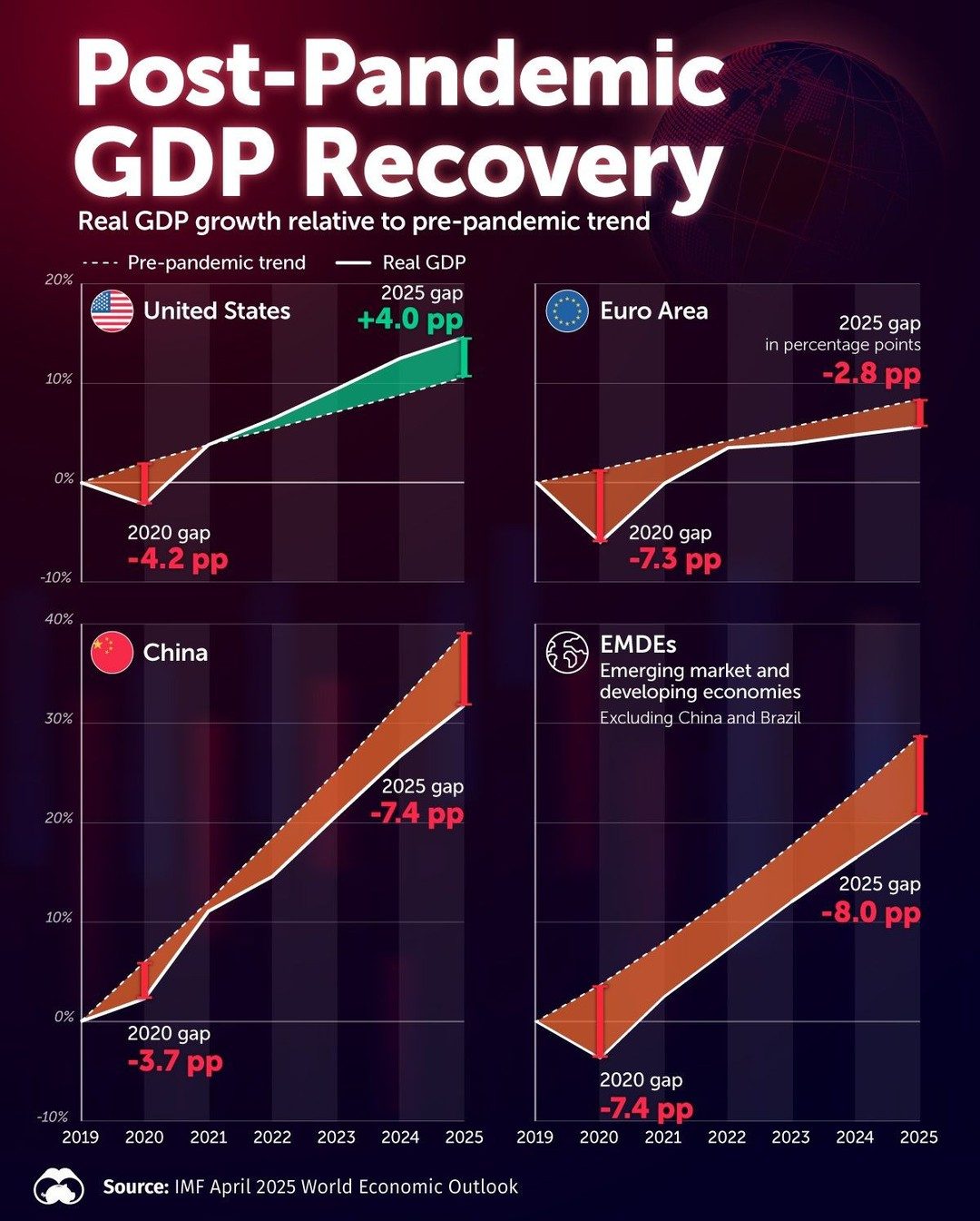
The U.S. stands out as the only major economy whose GDP growth has surpassed pre-pandemic projections from 2019 to 2025. With a projected +4.0 percentage point gap in 2025, the U.S. economy has demonstrated robust recovery and growth. This performance can be attributed to several factors, including robust fiscal and monetary stimulus, a strong labor market, and innovative technologies.
Euro Area
In contrast, the Euro Area is projected to have a -2.8 percentage point gap in 2025. The Euro Area's recovery has been slower and more fragmented, with varying levels of growth among its member states. Factors such as differing national responses to the pandemic, varying levels of public debt, and divergent fiscal policies have contributed to this gap. The Euro Area's recovery is crucial for the stability of the global economy, given its significant role in international trade and financial markets.
China
China, the world's second-largest economy, is expected to have a -7.4 percentage point gap in 2025. China's recovery has been uneven, with initial rapid growth followed by challenges such as supply chain disruptions and regulatory changes. The Chinese government's efforts to manage these issues and stimulate domestic demand will be critical in shaping its future economic trajectory.
Emerging Markets and Developing Economies (EMDEs)
Emerging markets and developing economies (excluding China and Brazil) are projected to have an -8.0 percentage point gap in 2025. These economies have faced significant challenges, including limited access to vaccines, weak healthcare systems, and fragile financial sectors. However, some EMDEs have shown resilience, driven by strong domestic demand and commodity prices. The path to recovery for these economies will depend on factors such as global trade policies, access to international markets, and domestic policy reforms.
Factors Influencing GDP Recovery
Fiscal and Monetary Policies
Fiscal and monetary policies have played a pivotal role in shaping the GDP recovery trends. Countries that implemented large-scale stimulus packages and maintained accommodative monetary policies have generally fared better. In the U.S., for example, the combination of direct cash payments, expanded unemployment benefits, and low-interest loans helped stabilize the economy.
Healthcare Systems and Vaccine Rollouts
The effectiveness of healthcare systems and the pace of vaccine rollouts have also significantly impacted economic recovery. Countries with robust healthcare infrastructure and efficient vaccine distribution have seen quicker economic rebounds. In contrast, regions with delayed or unequal vaccine access have faced longer and more challenging recovery periods.
Global Trade and Supply Chains
Global trade and supply chain disruptions have posed significant hurdles to economic recovery. The pandemic highlighted the vulnerabilities in global supply chains, leading to shortages and increased costs. Regions that were heavily reliant on global trade and supply chains have struggled more in their recovery efforts.
Practical Tips for Businesses and Investors
Diversify Investment Portfolios
Given the varied recovery trends, diversifying investment portfolios across different regions and sectors can help mitigate risks. Investors should consider allocating funds to both advanced and emerging economies, as well as to sectors with strong growth potential.
Stay Informed About Policy Changes
Keeping abreast of fiscal and monetary policy changes is crucial. Policies such as tax incentives, regulatory reforms, and infrastructure investments can create new opportunities and affect business operations.
Strengthen Supply Chain Resilience
Businesses should focus on building resilient supply chains to minimize disruptions. This may involve diversifying suppliers, investing in local manufacturing, and leveraging technology to enhance supply chain visibility and efficiency.
Important Takeaways
The post-pandemic GDP recovery is a complex and multifaceted process. Key takeaways include:
- The U.S. has shown remarkable resilience, with GDP growth surpassing pre-pandemic projections.
- The Euro Area's recovery is slower and more fragmented, with significant variations among member states.
- China's recovery has been uneven, driven by a mix of rapid growth and regulatory challenges.
- Emerging markets and developing economies face significant challenges but also show resilience in certain areas.
- Fiscal and monetary policies, healthcare systems, and global trade play crucial roles in shaping recovery trends.
These insights highlight the importance of a nuanced understanding of regional economic dynamics for informed decision-making in the post-pandemic era. By staying informed and adapting to the evolving landscape, businesses, investors, and policymakers can navigate the challenges and opportunities ahead.
Conclusion
The post-pandemic economic recovery is a global story of resilience, variation, and adaptation. The United States, Euro Area, China, and emerging markets each face unique challenges and opportunities. Understanding these trends is essential for making informed decisions in an increasingly interconnected world. As the global economy continues to evolve, staying attuned to these dynamics will be crucial for navigating the path ahead.
Watch the Reel
Recent articles
Fresh deep dives from the latest Reels we unpacked.




Comments
Be the first to comment.