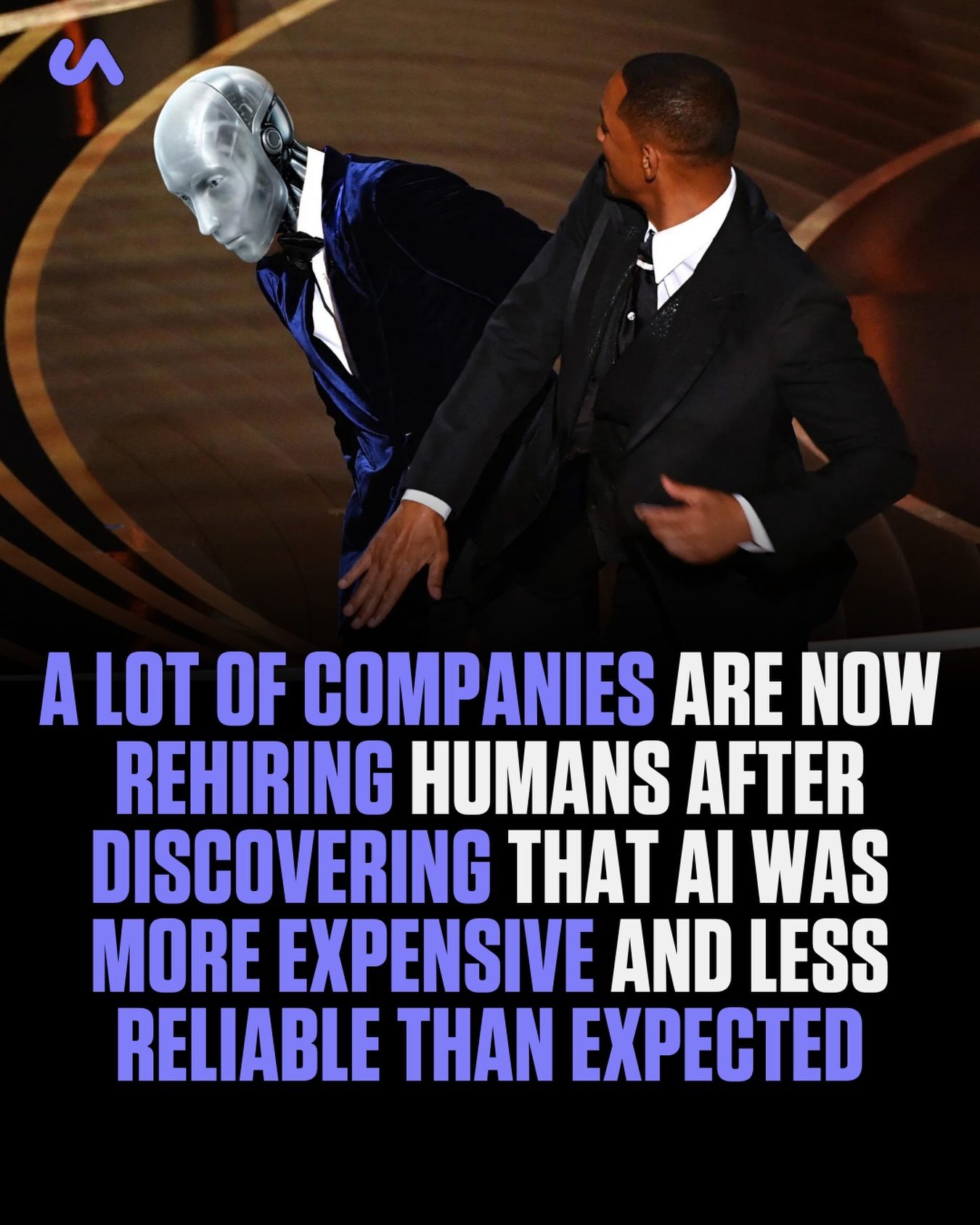
The Resurgence of Human Workforce: Companies Rethinking AI Reliance
The shift from AI to human workforce is a growing trend. Companies are increasingly re-evaluating their reliance on AI, particularly in customer service roles, and opting to rehire human employees due to AI's higher costs and unreliability. This trend highlights a critical aspect of modern business strategy: balancing automation with human touch.
Why This Matters
The integration of AI into business operations has long been seen as a way to reduce costs and increase efficiency. However, recent developments show that relying solely on AI can lead to issues with service quality and customer satisfaction. Companies are now realizing that while AI excels at routine tasks, human judgment and accuracy remain invaluable, especially in roles that require empathy and critical thinking.
AI technology has developed rapidly, but there are still significant limitations. These include the high initial investment, ongoing maintenance costs, and the potential for technical glitches that can disrupt operations. Additionally, AI solutions often lack the nuanced understanding and emotional intelligence that human employees bring to the table, which is crucial for building customer trust and loyalty.
Main Discussion
The Rise and Fall of AI in Customer Service
Klarna, a prominent payment solutions provider, initially claimed that its AI chatbot could handle the workload of 700 customer service employees, potentially adding $40 million in annual profit. However, CEO Sebastian Siemiatkowski later admitted that the heavy focus on cost-cutting had negatively impacted service quality. As a result, Klarna started bringing human agents back to improve customer satisfaction and ensure accurate service delivery.
This experience is not unique to Klarna. Many companies are now adopting a hybrid approach, using AI for routine and repetitive tasks while relying on human agents for more complex issues that require judgment and empathy. This balance allows businesses to leverage the strengths of both AI and human workers, creating a more efficient and customer-focused operation.
The Role of Human Judgment and Accuracy
One of the key areas where human workers excel is in making critical decisions that require nuanced understanding. Customer service roles, in particular, often involve handling sensitive information and resolving complex issues, which demand a high level of accuracy and judgment. AI, while capable of processing vast amounts of data, often struggles with contextual understanding and emotional intelligence, leading to potential missteps that can negatively impact customer trust.
For example, Ikea, a global furniture retailer, retrained 8,500 support workers to better handle customer inquiries. This decision highlights the importance of human judgment in providing personalized and accurate support. Similarly, tech giants like IBM and AWS are expanding their early-career hiring programs, recognizing that human talent is essential for driving innovation and maintaining high service standards.
Balancing Automation and Human Talent
The trend of rehiring human employees does not signify a rejection of AI but rather a more balanced approach to automation. Companies are realizing that the optimal strategy involves using AI for tasks that are repetitive and data-driven, while reserving human roles for tasks that require creativity, empathy, and critical thinking.
A prime example is the work of IBM. Instead of treating automation as a complete replacement for people, IBM is investing in early-career hiring. This strategy allows the company to foster a diverse and dynamic workforce, leveraging the strengths of both AI and human talent to drive innovation and customer satisfaction.
Similarly, Amazon Web Services (AWS) is expanding its hiring efforts, particularly in areas that require human expertise and judgment. By doing so, AWS is ensuring that it maintains a high level of service quality, even as it continues to invest in AI and automation technologies.
Practical Tips
1. Assess Your Needs
Before implementing AI, assess your company's specific needs and determine which tasks can be effectively automated without compromising service quality. Tasks that are repetitive and data-driven are ideal candidates for automation, while roles that require critical thinking and empathy should remain with human workers.
2. Invest in Training
Training your workforce to work alongside AI is crucial. This not only helps in maintaining high service standards but also ensures a smoother transition to automated systems. For example, retraining 8,500 employees, like Ikea, can significantly improve customer satisfaction and operational efficiency.
3. Maintain a Balance
Balance the use of AI and human workforce. Use AI for routine tasks and human agents for tasks requiring judgment and empathy. This hybrid approach allows you to leverage the strengths of both AI and human talent, creating a more efficient and customer-focused operation.
4. Focus on Customer Satisfaction
Always prioritize customer satisfaction. While AI can handle routine queries, human agents are better equipped to deal with complex and sensitive issues. Ensuring that customers receive accurate and empathetic support is essential for building trust and loyalty.
5. Embrace Early-Career Hiring
Consider expanding your early-career hiring programs. This strategy allows you to foster a diverse and dynamic workforce, leveraging the strengths of both AI and human talent to drive innovation and customer satisfaction.
Important Takeaways
The trend of rehiring human employees highlights the importance of balancing automation with human touch. While AI excels at routine tasks, human judgment and empathy remain invaluable, especially in roles that require critical thinking and empathy. Companies like Klarna, Ikea, IBM, and AWS are leading the way in adopting a hybrid approach, using AI for repetitive tasks and relying on human agents for more complex issues.
Conclusion
In conclusion, companies are increasingly re-evaluating their reliance on AI, opting to rehire human employees due to AI's higher costs and unreliability. This trend highlights the importance of balancing automation with human touch, leveraging the strengths of both AI and human talent to create a more efficient and customer-focused operation. Whether it's through retraining, early-career hiring, or a hybrid approach, companies are finding innovative ways to ensure that their operations remain efficient and customer-focused.
Watch the Reel
Recent articles
Fresh deep dives from the latest Reels we unpacked.




Comments
Be the first to comment.