Commercial Real Estate Lending in the U.S.
The landscape of commercial real estate (CRE) lending in the U.S. is undergoing significant changes, particularly with the rise in delinquent loans and growing regulatory scrutiny. As of 2023, the six largest U.S. banks have seen delinquent commercial property loans nearly triple to $9.3 billion. This surge is driven by high vacancy rates and increasing borrowing costs, prompting regulators to closely monitor the sector due to its potential impact on bank stability.
Why This Matters
Commercial real estate debt is a significant component of the lending portfolios of many U.S. banks. For almost half of all U.S. banks, CRE loans are the largest loan category. Understanding the distribution and risks associated with these loans is crucial for both financial institutions and investors. The current trends highlight the need for a deeper dive into the specific exposures and strategies employed by the largest banks in the U.S.
The Current State of CRE Lending
Key Players and Their Exposures
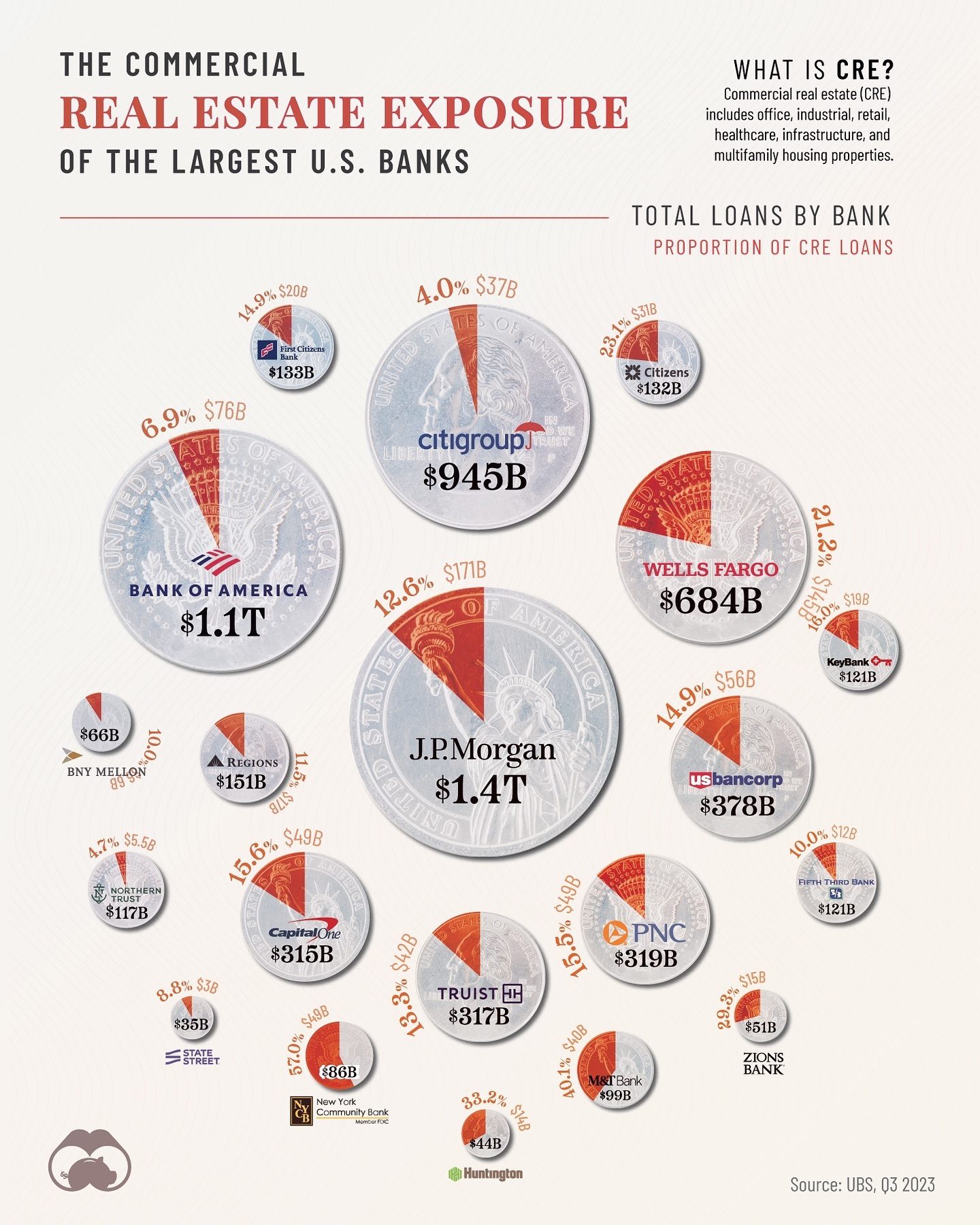
The largest U.S. banks play a pivotal role in the commercial real estate lending market. Here’s a breakdown of the commercial real estate loan exposures for some of the major players as of the third quarter of 2023:
- J.P. Morgan: Holds $1.4 trillion in commercial real estate loans, making up 15.6% of the total.
- Citi Group: Has $945 billion in CRE loans, representing 12.6% of the total.
- Wells Fargo: Holds $684 billion, accounting for 9.5% of the total.
- BNY Mellon: Has $20 billion in CRE loans, which is 4.0% of the total.
- Capital One: Holds $315 billion, representing 4.7% of the total.
- Regions: Has $151 billion in CRE loans, making up 3.0% of the total.
- Trust HH: Holds $317 billion, which is 3.3% of the total.
- Huntington: Has $49 billion in CRE loans, accounting for 8.8% of the total.
These figures underscore the magnitude of commercial real estate lending and the significant exposure that major U.S. banks have in this sector. The pie chart breakdown in the visualization provides a clear picture of how these banks are distributed in the market.
Types of Commercial Real Estate Properties
Commercial real estate encompasses a variety of property types, each with its own set of risks and returns. The main categories include:
- Office Properties: These are buildings used primarily for business operations, including corporate headquarters, administrative offices, and professional services.
- Industrial Properties: These include warehouses, manufacturing facilities, and distribution centers.
- Retail Properties: These are commercial spaces used for retail purposes, such as shopping malls, strip malls, and standalone retail stores.
- Healthcare Properties: This category includes hospitals, clinics, and medical offices.
- Infrastructure: This encompasses properties like data centers, communication towers, and other critical infrastructure assets.
- Multifamily Housing: These are residential properties with multiple units, such as apartments and condominiums.
Given the diversity of these property types, banks must manage a wide array of risks, from market fluctuations to regulatory changes.
Regulatory Scrutiny and Bank Stability
The increasing delinquency rates in commercial real estate loans have raised concerns among regulators. Banks are under greater scrutiny to ensure that their lending practices do not pose systemic risks to the financial system. Regulators are keenly focused on assessing the asset quality of CRE loans, the risk management practices of banks, and the overall stability of the financial sector.
Practical Tips for Navigating CRE Lending
For investors and financial institutions, navigating the complexities of commercial real estate lending requires a strategic approach. Here are some practical tips:
Conduct Thorough Due Diligence
Before investing in commercial real estate, conduct comprehensive due diligence. This includes assessing the property's location, market demand, tenant quality, and potential rental income. Understanding the local real estate market trends and economic indicators is also crucial.
Diversify Your Portfolio
Diversification is key to mitigating risks in commercial real estate lending. Investing in a mix of property types and locations can help spread risk and reduce the impact of market downturns in any single sector. For example, a diversified portfolio might include office buildings, retail spaces, and industrial properties.
Monitor Market Trends
Stay informed about market trends and economic indicators. Factors such as interest rates, employment rates, and consumer spending can significantly impact the demand for commercial real estate. Regularly reviewing market reports and economic forecasts can help in making informed lending decisions.
Implement Effective Risk Management
Effective risk management practices are essential for managing commercial real estate loans. This includes setting clear lending criteria, conducting regular property evaluations, and maintaining adequate capital reserves. Lenders should also have contingency plans in place to manage potential defaults and delinquencies.
Important Takeaways
The current state of commercial real estate lending in the U.S. is characterized by significant exposure and increasing risks. Key takeaways include:
- High Delinquency Rates: The six largest U.S. banks have seen a near-tripling of delinquent commercial property loans to $9.3 billion in 2023.
- Regulatory Scrutiny: The sector is facing greater scrutiny from regulators due to the potential impact on bank stability.
- Diverse Property Types: Commercial real estate encompasses a wide range of property types, each with its own set of risks and returns.
- Risk Management: Effective risk management and diversification are crucial for mitigating risks in commercial real estate lending.
Conclusion
Commercial real estate lending in the U.S. is a complex and dynamic sector, with significant implications for financial institutions and investors. Understanding the current trends, key players, and risk factors is essential for making informed decisions. By conducting thorough due diligence, diversifying portfolios, monitoring market trends, and implementing effective risk management practices, stakeholders can navigate the challenges and opportunities in this sector. As the regulatory environment evolves, staying informed and adaptable will be key to maintaining stability and growth in commercial real estate lending.
Watch the Reel
Related deep dives
Similar reads based on topic and creator.


Recent articles
Fresh deep dives from the latest Reels we unpacked.




Comments
Be the first to comment.