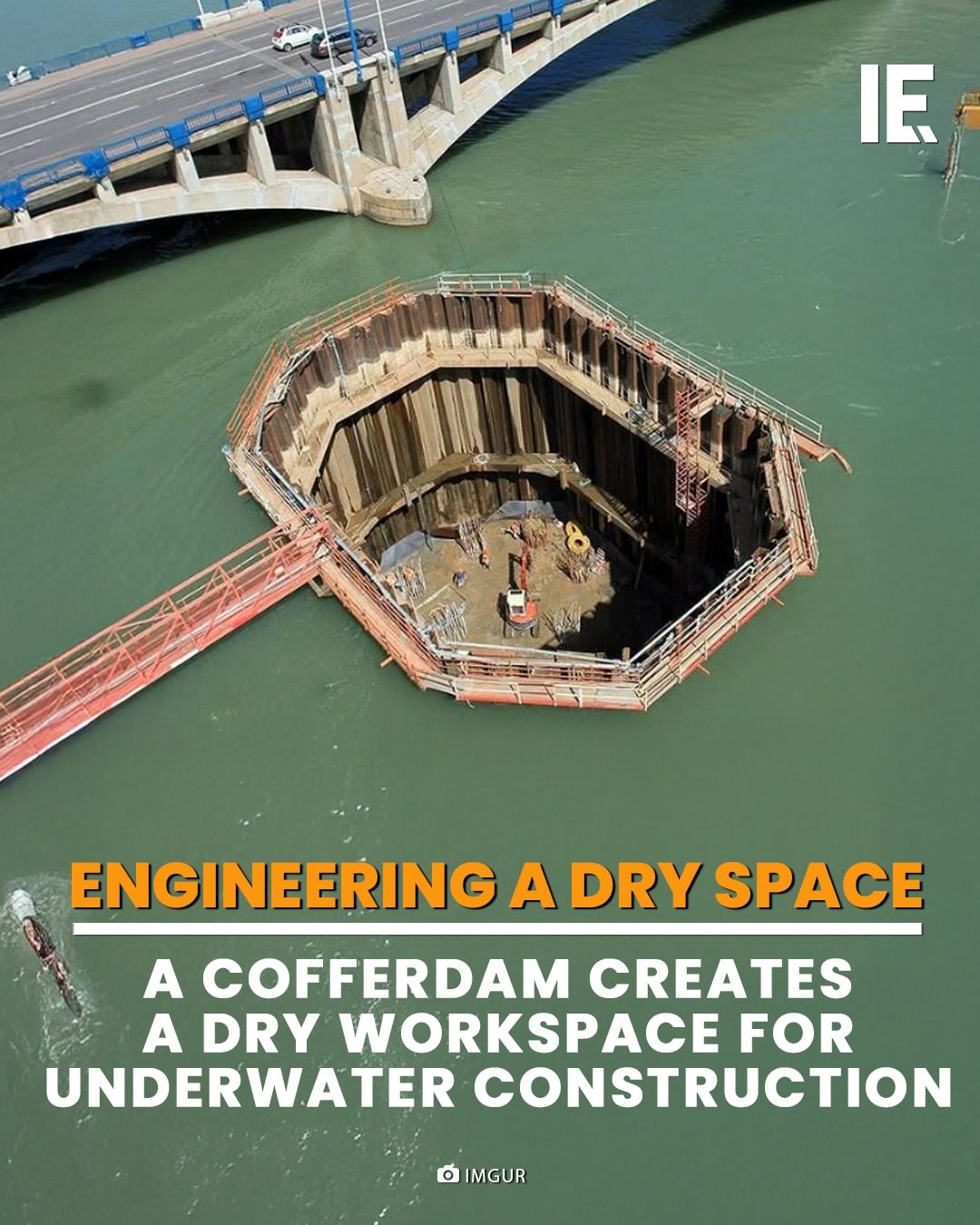
Cofferdam Construction
Cofferdams are a critical tool in engineering, enabling construction in underwater environments. These temporary enclosures create a dry workspace, allowing engineers to build structures like bridge supports in challenging conditions. Let's delve into the purpose, types, and applications of cofferdams in modern engineering projects.
Context / Why this matters
Underwater construction presents unique challenges. Water can disrupt the construction process, making it difficult to build stable, durable structures. Cofferdams address this issue by creating a controlled, dry environment where workers can safely and efficiently perform their tasks. They are particularly useful for building bridges, tunnels, and other infrastructure that requires underwater foundations or supports.
Main discussion
Purpose and Function
A cofferdam is essentially a watertight enclosure built around the area where construction is needed. The primary purpose is to pump out the water, creating a dry workspace. This enclosure can be made from various materials, including steel, wood, or concrete, depending on the project's specific requirements.
Types of Cofferdams
Several types of cofferdams are used in engineering, each suited to different situations:
-
Earthen Cofferdams: These are the simplest and most economical. They are constructed using compacted earth or soil. Earthen cofferdams are suitable for shallow water and areas with stable soil conditions.
-
Braced Cofferdams: These are more temporary and often used in shallow water. They are constructed using sheet piling supported by internal or external bracing. Braced cofferdams are quick to set up and can be dismantled relatively easily.
-
Cellular Cofferdams: These are made from interlocking cells filled with sand or water. They are flexible and can be adjusted to fit the shape of the construction site. Cellular cofferdams are suitable for deeper water and uneven terrain.
-
Double-Wall Cofferdams: These consist of two parallel walls with an internal space filled with sand or water. They provide extra stability and are used in areas with high water pressure or unstable soil.
Applications in Engineering
Cofferdams are used in various engineering projects, including:
-
Bridge Construction: One of the most common applications is in building bridge supports. Cofferdams allow engineers to construct stable foundations for bridge piers in rivers or other bodies of water.
-
Tunnel Construction: They are used to create dry workspaces for building underwater tunnels, ensuring that the construction process is not disrupted by water.
-
Dams and Levees: Cofferdams are also used in the construction of dams and levees, providing a dry workspace for building foundational structures.
-
Marine Structures: They are essential for constructing marine structures like piers, docks, and offshore platforms, creating stable foundations in underwater environments.
Construction Process
The construction of a cofferdam involves several steps:
-
Site Preparation: The area where the cofferdam will be built is prepared by clearing any debris and ensuring the soil is stable.
-
Material Selection: The type of material for the cofferdam is chosen based on the project's requirements and the environmental conditions.
-
Installation: The chosen material is installed around the construction site, creating a watertight enclosure. For example, sheet piling is driven into the ground, and bracing is added for support.
-
Water Pumping: Once the cofferdam is in place, water is pumped out, creating a dry workspace. This process can take several days or weeks, depending on the size and depth of the enclosure.
-
Construction: With the area dry, construction can proceed as planned. Workers can safely perform tasks like excavating, pouring concrete, or installing support structures.
-
Removal: After the construction is complete, the cofferdam is dismantled, and the site is restored to its original state.
Practical tips
When planning a cofferdam project, keep these tips in mind:
-
Choose the Right Type: Select a cofferdam type based on the project's requirements and environmental conditions. For example, earthen cofferdams are suitable for shallow water, while cellular cofferdams are better for deeper water and uneven terrain.
-
Ensure Stability: The cofferdam must be stable to withstand water pressure and soil movement. Proper bracing and reinforcement are crucial.
-
Monitor Water Levels: Keep a close eye on water levels during the construction process. If water levels rise, additional measures may be needed to maintain the dry workspace.
-
Safety First: Always prioritize safety. Ensure workers are trained in handling cofferdam construction and provide them with the necessary safety gear.
-
Environmental Considerations: Be mindful of the environmental impact. Choose materials and methods that minimize disruption to the ecosystem and ensure proper restoration after the project is complete.
Important takeaways
- Cofferdams are essential for underwater construction, creating dry workspaces in challenging environments.
- Various types of cofferdams are available, each suited to different conditions and project requirements.
- Proper planning, material selection, and construction methods are crucial for the success of a cofferdam project.
- Cofferdams are used in a wide range of engineering projects, from bridge construction to marine structures.
Conclusion
Cofferdams play a vital role in modern engineering, enabling construction in underwater environments. By creating a dry workspace, they allow engineers to build stable, durable structures in challenging conditions. Whether constructing bridge supports, tunnels, or marine structures, cofferdams provide a reliable solution for underwater construction challenges. Understanding their types, applications, and construction processes can help engineers make informed decisions and ensure the success of their projects.
Watch the Reel
Questions readers ask
What exactly is a cofferdam and why is it important in construction?
A cofferdam is a temporary barrier used to enclose an area of water and pump it out, creating a dry workspace. This is crucial in construction for building stable structures like bridges and tunnels in challenging underwater environments, ensuring worker safety and efficiency.
What are the different types of cofferdams used in engineering projects?
There are several types of cofferdams, including earthen, rock-fill, and double-wall steel sheet pile cofferdams. Each type is chosen based on the specific project requirements, such as water depth, soil conditions, and the size of the workspace needed.
How do cofferdams create a dry workspace underwater?
Cofferdams create a dry workspace by enclosing a specific area with barriers and then using pumps to remove the water from within the enclosure. This controlled environment allows for safe and efficient construction activities, similar to those on land.
What safety measures are associated with cofferdam construction?
Cofferdam construction involves several safety measures, including proper design and installation of the cofferdam, regular inspections, and monitoring of water levels. Additionally, workers must be trained in underwater construction techniques and use appropriate safety equipment.
Can cofferdams be used for repairing or maintaining existing underwater structures?
Yes, cofferdams are not only used for new construction but also for repairing and maintaining existing underwater structures. By creating a dry workspace, they allow engineers to inspect, repair, and reinforce structures like bridge supports and tunnel walls effectively.
What are the limitations of using cofferdams in underwater construction?
While beneficial, cofferdams have limitations. They can be costly and time-consuming to install, and their use may be restricted by environmental regulations or the presence of submerged obstacles. Additionally, they are not suitable for all water depths and soil conditions.
Recent articles
Fresh deep dives from the latest Reels we unpacked.




Comments
Be the first to comment.