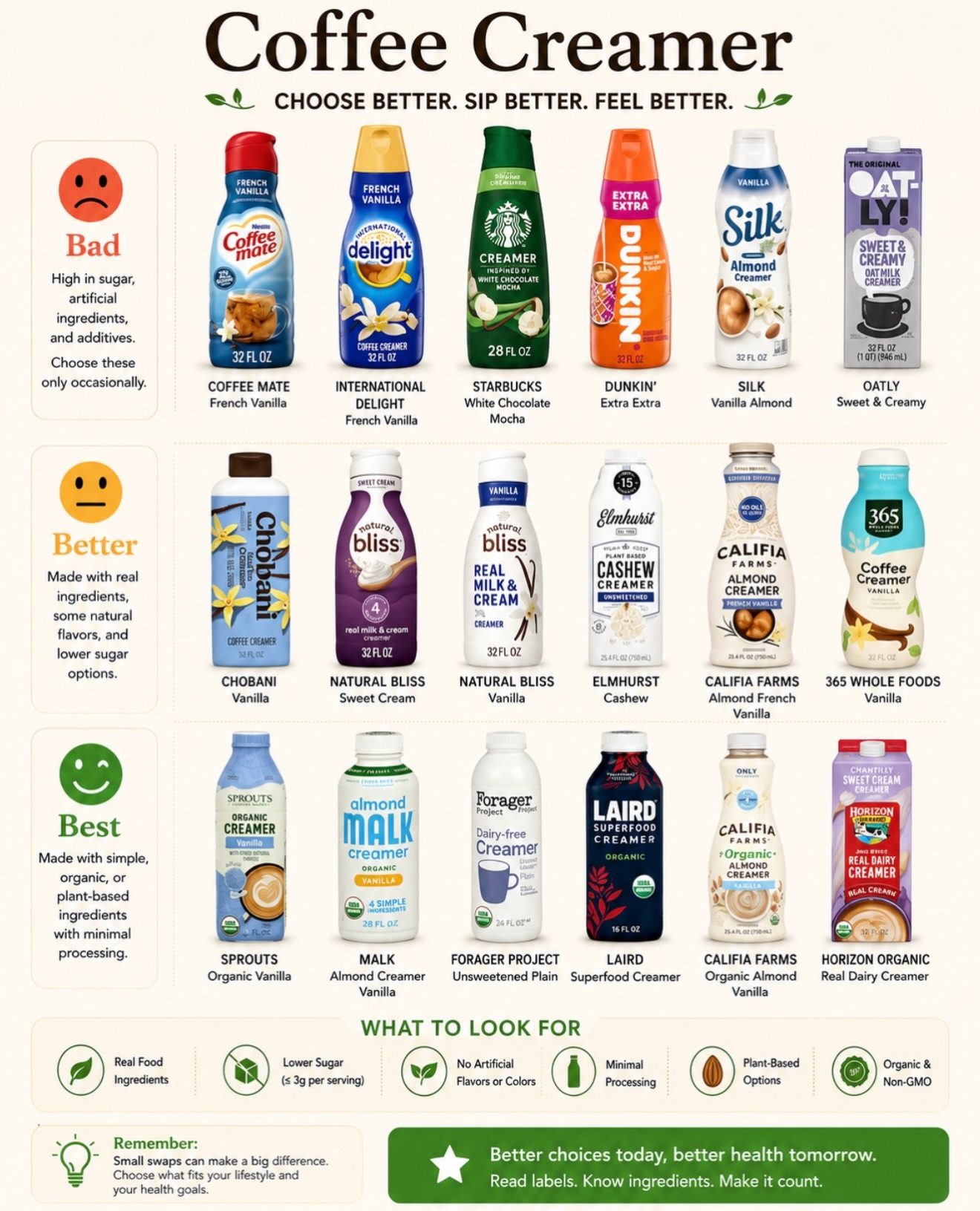
Coffee Creamer Comparison
Choosing the right coffee creamer can significantly impact your daily intake of sugar, additives, and other ingredients. With so many options available, it's essential to understand what makes some creamers better choices than others. While specific brand names may not be crucial, the focus remains on the overall quality of ingredients.
Why this matters
The right coffee creamer choice can have a significant impact on your daily intake of sugar, additives, and other ingredients. With a growing array of options in the marketplace, understanding the differences between various creamers can help you make more informed decisions. This comparison will guide you through the key considerations, helping you to prioritize products that align with your nutritional goals.
Main discussion
Types of Coffee Creamers
Coffee creamers come in various forms, including dairy-based, non-dairy, and plant-based options. Dairy-based creamers typically contain milk or cream, providing a richer flavor and texture. Non-dairy creamers often use oils and emulsifiers to mimic the mouthfeel of dairy products, while plant-based creamers are made from ingredients like almond milk, coconut milk, or oat milk.
Ingredients to Avoid
When selecting a coffee creamer, it's crucial to read the ingredient list carefully. Some common additives to avoid include:
- Artificial Sweeteners: These can include sucralose, aspartame, and acesulfame potassium, which may have potential health risks when consumed in large amounts.
- Trans Fats: Often listed as partially hydrogenated oils, trans fats are linked to increased cholesterol levels and heart disease.
- High-Fructose Corn Syrup: This sweetener can contribute to weight gain, insulin resistance, and other health issues when consumed in excess.
- Carcinogens: Avoid artificial ingredients like carrageenan, which has been linked to inflammation and digestive issues.
Ingredients to Prioritize
Focus on creamers with simpler, cleaner ingredient lists. Look for:
- Natural Sweeteners: Options like stevia, erythritol, or monk fruit are often better choices.
- Whole Food Ingredients: Creamers made from real ingredients like almond milk, coconut milk, or oats.
- Organic and Non-GMO: These labels can indicate that the product is free from synthetic pesticides and genetically modified organisms (GMOs).
Comparing Coffee Creamers
When comparing coffee creamers, consider the following key factors:
- Ingredient List: Prioritize products with minimal additives and artificial ingredients.
- Nutritional Value: Look for options with lower sugar content and higher protein or fat content, depending on your dietary needs.
- Taste and Texture: While health is a top priority, the creamer should still taste good and mix well with your coffee.
Practical tips
Reading Labels
Always read the ingredient list and nutritional information on the label. Look for products with shorter ingredient lists and few artificial additives. Pay attention to the serving size and nutritional content per serving to make an informed decision.
Making Informed Choices
Use guides and comparisons as a starting point, but don't rely on them as strict rules. Everyone's dietary needs and preferences are different, so choose products that align with your personal goals and values. Focus on small, consistent improvements over time.
Experimenting with Options
Don't be afraid to try different brands and types of coffee creamers. Everyone's taste buds are unique, and what works for one person might not work for another. Experiment with various options to find the ones you enjoy the most.
Important takeaways
Choosing a healthier coffee creamer is about more than just picking a brand; it's about understanding the ingredients and making informed decisions. Look for products with simple, clean ingredient lists, minimal processing, and natural sweeteners whenever possible.
Key Considerations
- Prioritize whole food ingredients and natural sweeteners.
- Avoid artificial additives, trans fats, and high-fructose corn syrup.
- Read labels carefully to understand what you're putting into your body.
- Focus on small, consistent improvements over time.
- Experiment with different options to find what works best for you.
Conclusion
Making better choices with your coffee creamer can be a simple yet effective way to improve your overall health. By focusing on whole food ingredients, natural sweeteners, and minimal processing, you can enjoy your coffee with peace of mind.
Remember, the healthiest diet is the one you can maintain consistently. Start with small improvements, and let those changes stack up over time. Your body will thank you for making informed, healthier choices.
Watch the Reel
Questions readers ask
What are the main types of coffee creamers available?
Coffee creamers come in three main types: dairy, non-dairy, and plant-based. Dairy creamers contain milk or cream, while non-dairy options, such as those made from soy or almond, can be suitable for those with lactose intolerance. Plant-based creamers, like those made from oats or coconut, are also popular choices for those seeking dairy-free alternatives.
How can I identify a healthier coffee creamer?
To identify a healthier coffee creamer, look for products with minimal added sugars and a short list of recognizable ingredients. Opt for creamers that contain natural sweeteners, such as stevia or monk fruit, and avoid those with artificial sweeteners and additives. Additionally, check the nutrition label to ensure the creamer is low in calories and saturated fat.
What are some common additives in coffee creamers and why should I avoid them?
Common additives in coffee creamers include artificial sweeteners, emulsifiers, and preservatives. These can potentially have negative effects on your health over time. Ingredients such as carrageenan, high fructose corn syrup, and artificial flavors are best avoided. Opt for creamers with simpler, more natural ingredient lists and use them sparingly.
Are there any benefits to using plant-based coffee creamers?
Yes, plant-based coffee creamers can be a beneficial choice for those with dietary restrictions or preferences. They are often suitable for people who are vegan or lactose intolerant. They may also have a lower environmental impact than dairy-based options. Additionally, many plant-based creamers are enriched with vitamins and minerals, making them a nutritious alternative.
What should I look for in a low-sugar coffee creamer?
When choosing a low-sugar coffee creamer, check the nutrition label for the sugar content and aim for options with 2 grams or less per serving. Look for creamers that use natural sweeteners like stevia, erythritol, or monk fruit, rather than artificial sweeteners. Additionally, consider the overall ingredient list and opt for those with minimal added sugars and natural flavors.
Can I make my own coffee creamer at home?
Yes, making your own coffee creamer at home can be a great way to control the ingredients and avoid additives. Use a base like unsweetened almond milk or coconut milk, and add natural sweeteners such as honey or maple syrup. You can also experiment with flavors like vanilla extract, cocoa powder, or cinnamon to create a personalized and healthier creamer.
Are there any health benefits to using coffee creamer?
Coffee creamers themselves do not typically provide significant health benefits. However, using a healthier creamer can help manage your intake of sugars and additives. Opt for creamers with natural ingredients that offer fewer artificial additives and less sugar. This can contribute to overall health by reducing the consumption of potentially harmful substances.
Recent articles
Fresh deep dives from the latest Reels we unpacked.




Comments
Be the first to comment.