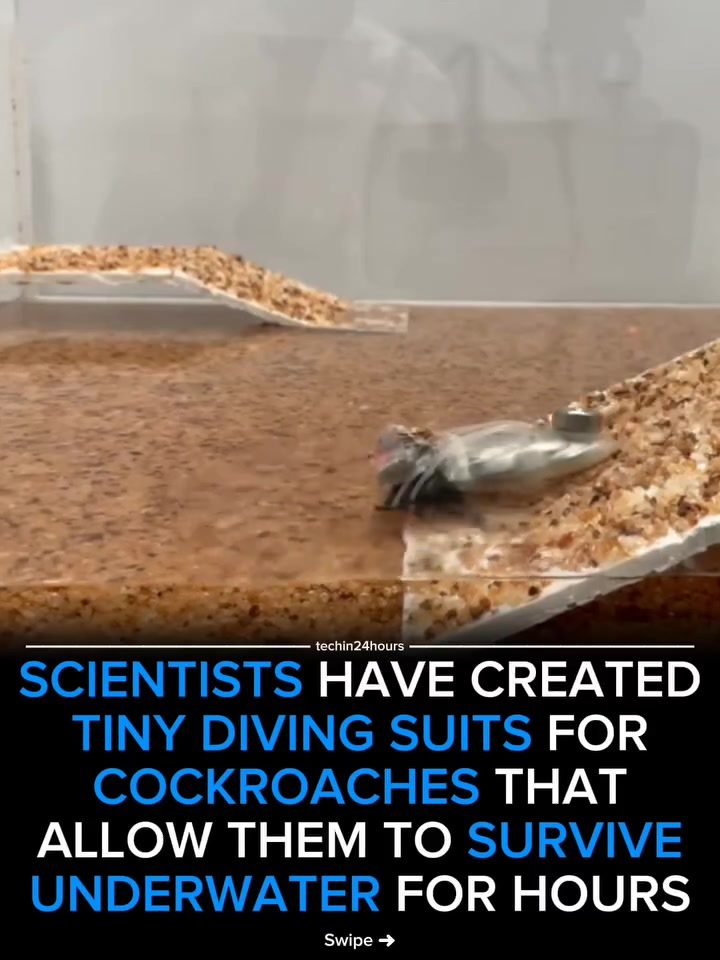
Cockroach Diving Suits for Disaster Relief
Cockroaches, known for their resilience, have now been equipped with miniature diving suits to enhance their capabilities in disaster relief operations. Researchers from Nanyang Technological University (NTU) and Waseda University have developed a 3D-printed "diving suit" designed specifically for Madagascar hissing cockroaches. This innovative suit uses a chemical oxygen generator to pump breathable air directly into the insect's breathing holes, known as spiracles. This allows the roaches to survive and navigate underwater for up to three hours.
Why This Matters
This technology represents a significant advancement in the field of bio-hybrid robots. Traditional disaster relief methods often rely on heavy robots or drones, which can be limited in their ability to navigate flooded environments. The miniature diving suits for cockroaches offer a unique solution by enabling these cyborg roaches to squeeze through flooded rubble, half-submerged voids, and drainage pipes where conventional equipment cannot go. This capability is crucial for accessing hard-to-reach areas in disaster zones, potentially saving lives and aiding in rescue efforts.
Main Discussion
The Technology Behind the Diving Suit
The diving suit is made using 3D-printing technology, ensuring a precise fit for the Madagascar hissing cockroach. The suit's design incorporates a chemical oxygen generator, which is essential for keeping the roach alive underwater. This generator pumps breathable air directly into the insect's spiracles, allowing it to breathe normally even when submerged. The suit is designed to be clear, which not only allows for better observation but also ensures that the roach can navigate effectively under water.
Applications in Disaster Relief
The primary application of these diving suits is in disaster relief scenarios. Traditional methods of searching for survivors in flooded areas are often hindered by the limitations of heavy equipment. The roaches, equipped with their diving suits, can be remotely controlled to explore these difficult-to-access areas. Their small size and agility make them ideal for navigating through tight spaces and submerged voids, where larger robots or drones would struggle.
Remote-Controlled Capabilities
One of the most impressive aspects of this technology is the ability to remotely control the roaches. This feature is crucial for navigating through dangerous and inaccessible areas. By controlling the roaches, rescue teams can gather vital information about the environment and the presence of survivors, which can then be used to plan more effective rescue operations. The remote-control capability also ensures that the roaches can be guided away from any potential hazards, adding an extra layer of safety.
Environmental Adaptability
The diving suits are designed to be environmentally adaptable, making them suitable for a variety of conditions. The roaches can navigate through sandy environments, underwater, and even in half-submerged voids. This adaptability is essential for disaster relief, where conditions can be unpredictable and harsh. The roaches' natural resilience, combined with the diving suit's advanced technology, makes them a versatile tool for rescue missions.
Practical Tips
When considering the use of these diving suits for disaster relief, several practical tips can help maximize their effectiveness:
-
Training and Preparation: Training for the remote control of the roaches is essential. Teams should undergo extensive training to ensure they can effectively navigate the roaches through various terrains and conditions.
-
Equipment Maintenance: Regular maintenance of the diving suits and the remote-control systems is crucial. Ensuring that the equipment is in optimal condition will enhance the roaches' performance and reliability during missions.
-
Integration with Other Technologies: Integrating the diving suits with other disaster relief technologies, such as drones and heavy robots, can provide a more comprehensive search and rescue operation. This integration can help cover a wider area and gather more detailed information.
-
Safety Protocols: Establishing clear safety protocols for the use of these roaches is important. This includes ensuring that the roaches do not come into contact with hazardous materials and that they are retrieved safely after missions.
-
Data Analysis: Effective data analysis of the information gathered by the roaches is necessary. This data can provide valuable insights into the conditions of the disaster zone and the location of survivors, enabling more targeted rescue efforts.
Important Takeaways
The development of diving suits for cockroaches is a groundbreaking advancement in disaster relief technology. These suits enable roaches to survive and navigate underwater for extended periods, making them invaluable in flooded environments. The remote-controlled capability and adaptability of these roaches provide a unique solution to the challenges faced in disaster relief operations. By integrating this technology with other rescue methods, disaster relief teams can enhance their effectiveness and potentially save more lives.
Conclusion
The creation of miniature diving suits for Madagascar hissing cockroaches marks a significant milestone in the field of bio-hybrid robots. These suits, developed by scientists from Nanyang Technological University and Waseda University, have the potential to revolutionize disaster relief operations. By allowing roaches to navigate through flooded and submerged areas, these suits provide a solution to the limitations faced by traditional rescue equipment. As this technology continues to evolve, it holds great promise for improving the effectiveness and efficiency of disaster relief efforts, ultimately contributing to better outcomes in critical situations.
Watch the Reel
Questions readers ask
How do the diving suits help Madagascar hissing cockroaches survive underwater?
The 3D-printed diving suits are equipped with a chemical oxygen generator that pumps air directly into the cockroach's spiracles, or breathing holes. This innovation allows the roaches to survive underwater for extended periods, up to three hours, making them effective for navigating flooded areas during rescue missions.
Why are Madagascar hissing cockroaches specifically chosen for these underwater missions?
Madagascar hissing cockroaches are selected for their natural resilience and ability to survive in harsh environments. Their size and agility make them suitable for navigating tight spaces in flooded disaster zones, where larger robots or drones cannot reach.
How are the 3D-printed diving suits manufactured and attached to the cockroaches?
The diving suits are created using 3D printing technology designed to fit the specific dimensions of the Madagascar hissing cockroaches. They are carefully attached to the roaches to ensure a secure fit that allows for natural movement while providing the necessary oxygen supply.
What are the key advantages of using tiny underwater roaches for rescue missions?
The small size and maneuverability of these roaches allow them to access areas that larger rescue robots cannot. Additionally, their natural ability to traverse uneven terrains and navigate tight spaces makes them effective for searching through debris and floodwaters.
What is the significance of the collaboration between Nanyang Technological University (NTU) and Waseda University in developing these diving suits?
The collaboration between NTU and Waseda University combines expertise in bio-hybrid robotics and material science. This partnership has led to the development of innovative solutions, such as the oxygen-generating diving suits, which enhance the capabilities of Madagascar hissing cockroaches for underwater rescue missions.
Can these roaches be utilized for other types of missions apart from underwater rescue?
While the primary focus is on underwater rescue, the technology developed for these diving suits could potentially be adapted for other types of missions. These might include exploring environments hazardous to humans, such as areas with high radiation levels or toxic gases, but further research is needed.
What impact do these roaches have on the field of rescue robotics and disaster relief?
These roaches represent a new frontier in bio-hybrid robotics, demonstrating the potential for small, resilient creatures to be used in disaster relief efforts. By enhancing their capabilities with the diving suits, researchers are opening up new possibilities for micro underwater rescue operations, particularly in scenarios where traditional methods fall short.
Related deep dives
Similar reads based on topic and creator.
Recent articles
Fresh deep dives from the latest Reels we unpacked.




Comments
Be the first to comment.