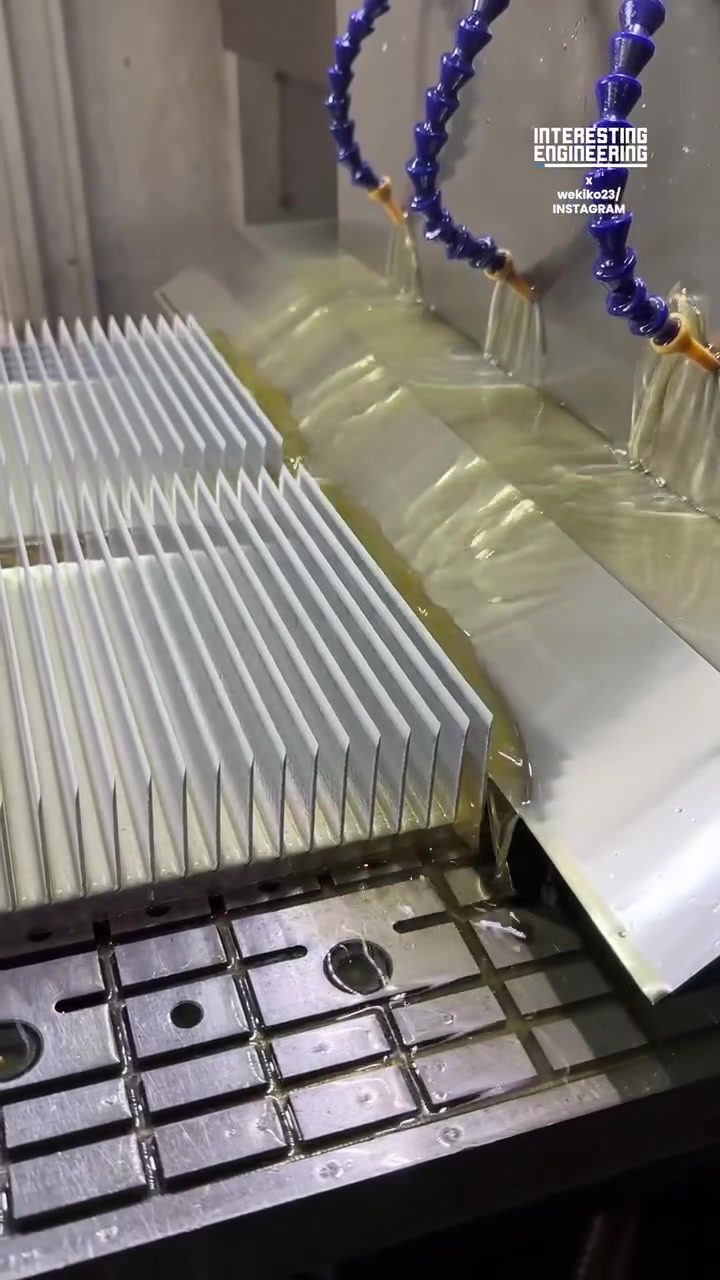
CNC Machining of Aluminum IGBT Heat Sinks with Heavy Flood Coolant
The process of CNC machining, particularly the creation of aluminum IGBT heat sinks, is a critical aspect of modern manufacturing, especially in electronics and power module cooling. This process involves using a CNC milling machine to shape aluminum into complex forms, such as heat sinks.
Why This Matters
Understanding CNC machining, especially of aluminum IGBT heat sinks, is vital for optimizing performance and reliability in high-performance electronic devices. The use of heavy flood coolant in this process ensures precise temperature control, surface finishing, and the formation of accurate, uniform fins, all of which contribute to effective power module cooling.
Main Discussion
The Role of Coolant in CNC Machining
Coolant plays a pivotal role in CNC machining. In this instance, heavy flood coolant stabilizes the temperature of the chips during the machining process. This is crucial for several reasons. Firstly, it prevents overheating of the metal, which can cause warping or other deformations. Secondly, it clears away the chips produced by the cutting process, ensuring that the milling tool can operate smoothly and accurately. Lastly, it enhances the surface finishing of the machined part, resulting in a smoother, more precise finish.
The Importance of Uniform Fins
The formation of accurate, uniform fins during the machining of IGBT heat sinks is essential for effective power module cooling. These fins increase the surface area of the heat sink, allowing for better heat dissipation. This is particularly important in electronic devices where heat management is critical for performance and longevity. The uniformity of the fins ensures even cooling across the entire heat sink, preventing hot spots that can lead to component failure.
The Process of CNC Machining Aluminum
The process of CNC machining aluminum involves several key steps. Firstly, the aluminum piece is secured in the CNC milling machine. The machine is then programmed with the specifications for the heat sink, including the dimensions and the pattern of the fins. The heavy flood coolant is then applied, ensuring that the cutting tool can operate at optimal conditions. As the milling tool works, it removes material from the aluminum, forming the desired shape and fins. The coolant continuously clears away the chips and maintains a stable temperature, ensuring a high-quality finish.
Practical Tips
Selecting the Right Coolant
Choosing the right coolant is essential for successful CNC machining. For aluminum IGBT heat sinks, a heavy flood coolant is recommended. This type of coolant provides robust temperature stabilization and effective chip clearance, which are crucial for achieving precise surface finishing and accurate fin formation.
Optimizing Coolant Application
The application of coolant should be optimized for the specific machining process. Ensure that the coolant is applied at the right pressure and flow rate to effectively stabilize the temperature and clear away chips. Adjusting the coolant application based on the material and the complexity of the part can significantly improve the quality of the finished product.
Maintenance of CNC Machining Tools
Regular maintenance of CNC milling tools is crucial for consistent performance. Ensure that the tools are sharp and free from wear, as this directly impacts the quality of the surface finish and the accuracy of the machined parts. Regular cleaning and lubrication of the tools can extend their lifespan and maintain their cutting precision.
Important Takeaways
Temperature Control
Controlling the temperature during the machining of aluminum IGBT heat sinks is paramount. The use of heavy flood coolant effectively stabilizes the temperature, preventing overheating and deformation. This results in a higher quality and more reliable finished part.
Surface Finishing
Achieving a precise surface finishing is essential for the performance of the heat sink. The coolant not only clears away chips but also helps in achieving a smooth and accurate finish. This is particularly important for the formation of uniform fins, which are crucial for effective heat dissipation.
Uniformity of Fins
The uniformity of the fins formed during the machining process is vital for the cooling efficiency of the heat sink. Uniform fins ensure even heat dissipation, preventing hot spots and enhancing the overall performance of the electronic device.
Conclusion
CNC machining of aluminum IGBT heat sinks using heavy flood coolant is a sophisticated process that ensures precise temperature control, surface finishing, and the formation of uniform fins. This process is essential for producing high-quality heat sinks that are crucial for effective power module cooling. By understanding and optimizing each step of this process, manufacturers can produce reliable and efficient cooling solutions for modern electronic devices.
Watch the Reel
Questions readers ask
What is the role of coolant in CNC machining of aluminum heat sinks?
Coolant in CNC machining serves multiple purposes. It helps to regulate the temperature of the aluminum, preventing overheating and maintaining the integrity of the material. Additionally, it aids in achieving a smooth surface finish and enhances the lifespan of the cutting tools by reducing friction and wear.
How does CNC machining enhance the performance of heat sinks?
CNC machining allows for the creation of precise, uniform fins on heat sinks, which are crucial for effective heat dissipation. This precision ensures optimal air flow and maximizes the surface area available for heat transfer, leading to improved performance and reliability of the electronic components being cooled.
What are the benefits of using heavy flood coolant in CNC machining of aluminum IGBT heat sinks?
Heavy flood coolant provides superior temperature control, which is essential for maintaining the dimensional accuracy of the heat sink. It also helps in achieving a high-quality surface finish and ensures the longevity of the cutting tools, making the overall machining process more efficient and cost-effective.
Why is aluminum a preferred material for heat sinks in high-performance electronics?
Aluminum is favored for heat sinks due to its excellent thermal conductivity, which allows for efficient heat transfer. It is also lightweight, corrosion-resistant, and relatively inexpensive, making it a practical choice for dissipating heat in high-performance electronic devices.
What are some tips for effective CNC machining of aluminum?
To achieve the best results in CNC machining of aluminum, use appropriate cutting tools and feed rates. Ensure consistent coolant flow to maintain temperature control and tool life. Additionally, consider the use of rigid fixturing to minimize vibrations and achieve precise cuts.
How does the design of fins in a heat sink impact its cooling efficiency?
The design of fins in a heat sink significantly affects its cooling efficiency. Uniform, precisely machined fins maximize the surface area exposed to air, which enhances heat dissipation. Proper fin spacing and orientation also optimize airflow, ensuring effective heat transfer from the electronic components.
Related deep dives
Similar reads based on topic and creator.


Recent articles
Fresh deep dives from the latest Reels we unpacked.




Comments
Be the first to comment.