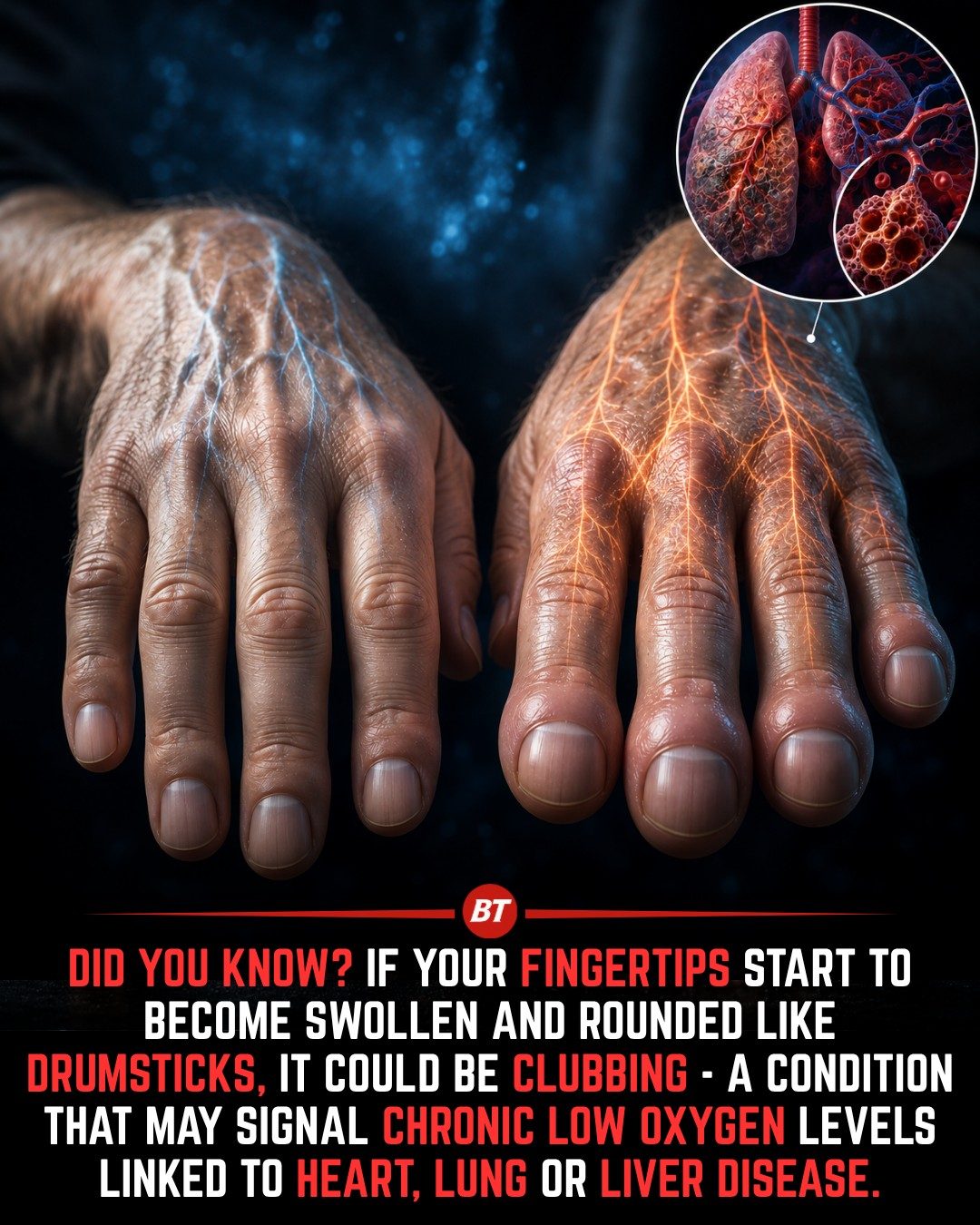
Clubbing of the Fingertips: A Silent Signal from the Body
Clubbing of the fingertips, a condition where the fingertips become enlarged and the nails curve around them, can be an important indicator of underlying health issues. This phenomenon, also known as digital clubbing, often signals chronic low oxygen levels in the body and may be linked to serious conditions affecting the heart, lungs, or liver. Understanding this condition can help individuals recognize when to seek medical attention.
Why This Matters
Though often overlooked, the changes in fingernails and fingertips can provide valuable insights into the body's internal health. Clubbing may be one of the earliest signs of chronic conditions that require timely intervention. Recognizing this sign can prompt individuals to seek medical evaluation, potentially leading to earlier diagnosis and treatment of serious illnesses.
Understanding Clubbing
What is Clubbing?
Clubbing refers to the enlargement of the fingertips and the curvature of the nails, making them resemble drumsticks. This condition can develop gradually, and it's important to distinguish it from natural variations in nail shape. Clubbing is characterized by the loss of the normal angle between the nail and the cuticle, as well as the enlargement of the soft tissue at the fingertip.
Causes and Mechanisms
The exact biological mechanisms behind clubbing are not fully understood, but researchers have identified several factors that contribute to its development. Changes in blood flow, connective tissue, and signaling molecules are believed to play a role. These changes can lead to the formation of extra tissue around the ends of the fingers, resulting in the characteristic clubbing appearance.
Associated Conditions
Clubbing is often associated with chronic lung infections, lung cancer, bronchiectasis, and certain congenital heart diseases. Less commonly, it can be linked to gastrointestinal or liver disorders. These conditions can cause chronic low oxygen levels in the body, which in turn may lead to the development of clubbing.
Identifying Clubbing
Recognizing clubbing involves careful observation of the fingernails and fingertips. One simple way to check for clubbing is by comparing the fingernails of two opposing fingers. Normally, a small diamond-shaped gap appears when the nails touch. In people with pronounced clubbing, that gap may disappear. This simple test can be an effective way to identify the condition.
When to Seek Medical Attention
While not everyone with rounded fingertips has a serious disease, new or progressively worsening clubbing should be evaluated by a healthcare professional. This is especially important if clubbing is accompanied by symptoms such as persistent cough, shortness of breath, unexplained weight loss, or reduced exercise tolerance. Early medical evaluation can help determine the underlying cause and guide appropriate treatment.
Practical Tips
Self-Examination
Regular self-examination of the fingertips and nails can help in the early detection of clubbing. Pay attention to any changes in the shape and curvature of the nails. If you notice any abnormalities, consult a healthcare professional for further evaluation.
When to See a Doctor
If you observe clubbing, it's important to consider the following factors:
- Persistent Symptoms: If clubbing is accompanied by symptoms such as chronic cough, shortness of breath, or unexplained weight loss, seek medical attention promptly.
- Sudden or Rapid Changes: Any sudden or rapid changes in the shape of the fingertips or nails warrant a visit to a healthcare provider.
- Family History: If there is a family history of conditions associated with clubbing, such as congenital heart diseases, regular check-ups are advisable.
Diagnostic Tests
Healthcare professionals may use various diagnostic tests to determine the underlying cause of clubbing. These tests may include:
- Blood Tests: To check for signs of infection, inflammation, or other abnormalities.
- Imaging Tests: Such as X-rays, CT scans, or MRIs to examine the lungs, heart, or other organs.
- Pulmonary Function Tests: To assess lung function and detect any underlying respiratory conditions.
Important Takeaways
- Clubbing of the fingertips can be an important indicator of underlying health issues, particularly conditions affecting the heart, lungs, or liver.
- Recognizing clubbing involves observing the shape and curvature of the nails and fingertips.
- Regular self-examination and prompt medical evaluation are crucial for early detection and treatment.
- Clubbing may be accompanied by other symptoms, such as persistent cough or shortness of breath, which should be evaluated by a healthcare professional.
Conclusion
Clubbing of the fingertips is a condition that should not be ignored. It can provide valuable clues about the body's internal health and prompt timely medical intervention. By understanding the signs and symptoms of clubbing, individuals can take proactive steps to monitor their health and seek appropriate medical care when needed. Regular self-examination and awareness of associated conditions can play a vital role in early detection and effective management of this condition.
Watch the Reel
Questions readers ask
What are the early signs of clubbing fingertips that I should watch out for?
Early signs of clubbing fingertips include changes in the shape and texture of the nails, fingernails becoming more curved, and enlarged fingertips. This might also be accompanied by a sore, warm or reddened area around your fingertip. If you notice these signs, it's important to speak to a healthcare professional.
What are the most common health issues associated with clubbing fingertips?
Clubbing fingertips are often linked to serious health issues, such as chronic lung infections, heart diseases, or liver disorders. These conditions can lead to chronic low oxygen levels in the body, which may cause the fingernails to change shape.
Can clubbing fingertips be a symptom of heart disease?
Yes, clubbing fingertips can indeed be a symptom of heart disease. Heart conditions that affect the oxygen levels in the body can cause the fingertips to enlarge and the nails to curve around them. If you have a family history of heart disease and notice changes in your fingertips, it's crucial to consult a doctor.
Are there any specific lung diseases that can cause clubbing fingertips?
Yes, several lung diseases can cause clubbing of the fingertips. Chronic lung infections, such as bronchiectasis, cystic fibrosis, and lung cancer, can lead to chronic low oxygen levels in the body, which in turn can cause changes in the shape of the fingernails and fingertips.
How does liver disease relate to clubbing fingertips?
Liver disorders, such as cirrhosis, can cause clubbing fingertips. This is often due to the reduced oxygen levels in the body caused by the liver's impaired function. If you have a history of liver issues and notice changes in your fingertips, it's important to speak with your healthcare provider.
Can clubbing fingertips be a sign of other health issues besides lung, heart, and liver diseases?
While less common, clubbing of the fingertips can also be associated with other health issues such as inflammatory bowel disease and certain types of cancer. Additionally, it can be a sign of low oxygen levels in the body caused by other conditions.
Should I be concerned if I notice clubbing fingertips and I have no other symptoms?
Yes, you should still consult a healthcare professional if you notice clubbing fingertips, even if no other symptoms are present. Early detection and intervention can help prevent further health complications. A medical professional can run tests to determine the underlying cause.
Related deep dives
Similar reads based on topic and creator.




Recent articles
Fresh deep dives from the latest Reels we unpacked.




Comments
Be the first to comment.