Financial Advisor Dynamics
Financial advisors play a crucial role in helping investors navigate the complexities of financial decisions. The dynamics between clients and their advisors are influenced by a variety of factors, many of which are emotional rather than purely financial. Understanding these emotional drivers can help advisors better serve their clients and foster stronger, more productive relationships.
Context
Clients often hire financial advisors for a mix of financial and emotional reasons. By recognizing and addressing these emotional factors, advisors can enhance their practice, build trust, and provide more comprehensive support to their clients.
Main discussion
Emotional Factors in Client-Advisor Dynamics
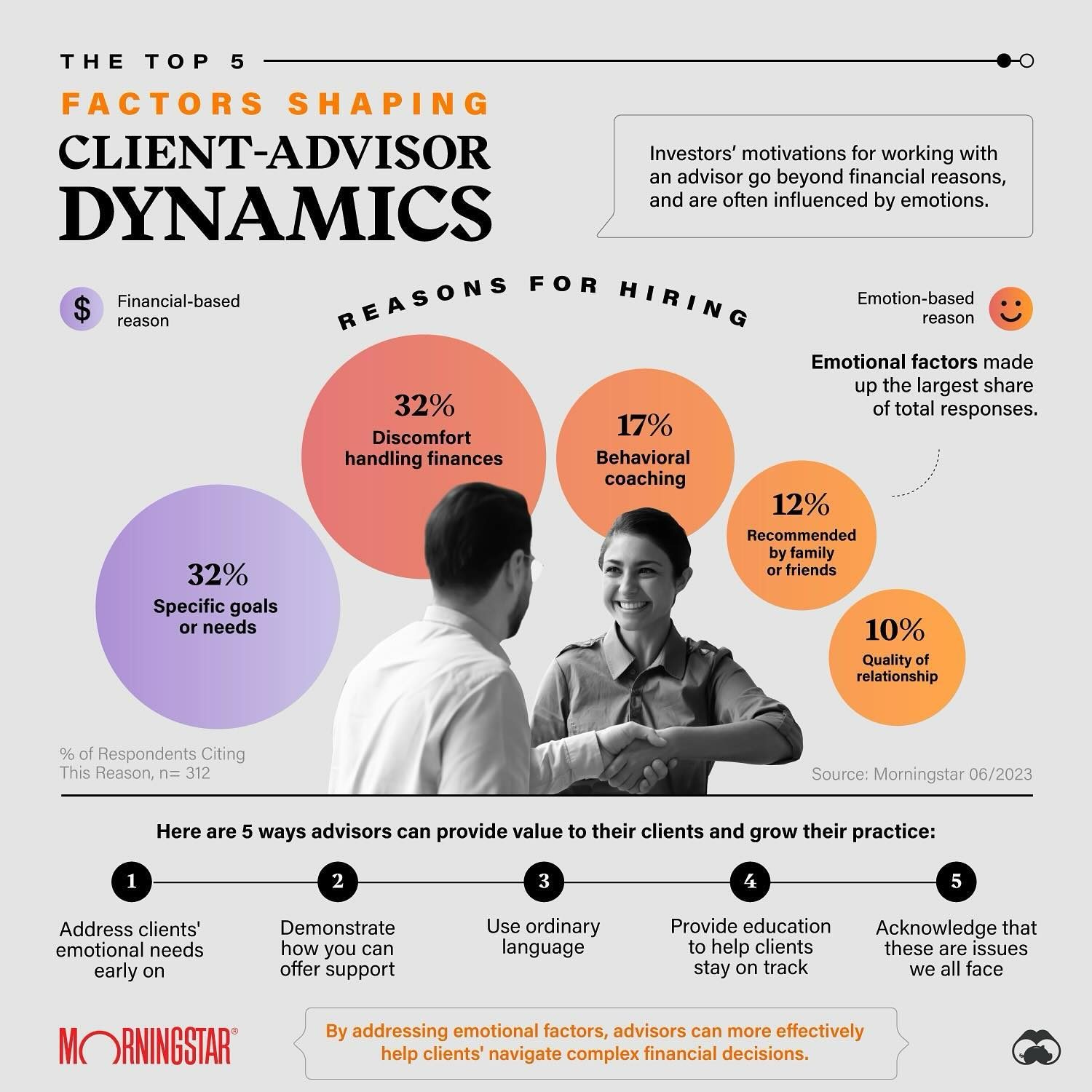
Clients seek financial advisors for a variety of reasons. According to Morningstar’s insights, a significant portion of clients are driven by emotional factors. This can include discomfort handling finances, seeking behavioral coaching, or valuing the quality of the relationship. By understanding these emotional needs, advisors can take proactive steps to address them, making the financial planning process more meaningful and effective.
Key Motivations for Hiring a Financial Advisor
-
Financial Reasons: While financial reasons are a primary factor, they are not the only driver. Certainly, clients want their advisors to manage investments and optimize financial outcomes. But often, the decision to hire an advisor is influenced by deeper, emotional factors.
-
Discomfort Handling Finances: One of the top reasons clients seek financial advisors is discomfort in managing their finances. A staggering 32% of respondents cited this as a primary reason. This discomfort can stem from a lack of financial knowledge, a fear of making mistakes, or simply the hassle of dealing with financial matters.
-
Behavioral Coaching: Another significant emotional factor is the need for behavioral coaching. About 17% of clients seek advisors to help manage their behavioral biases and impulsive decisions. This can include resisting the urge to panic-sell during market downturns or avoiding the temptation to over-invest during bull markets.
-
Recommendations from Trusted Sources: Word-of-mouth plays a crucial role in client decisions. Approximately 12% of clients hire advisors based on recommendations from family or friends. This underscores the importance of a strong reputation and client referrals.
-
Quality of Relationship: Building trust and establishing a strong relationship is essential. Around 10% of clients value the quality of the relationship with their advisor. This emotional connection can make clients feel more secure and confident in their financial decisions.
Improving Client-Advisor Dynamics
To enhance client-advisor dynamics, advisors can focus on several key strategies:
-
Address Emotional Needs Early On
Early in the client-advisor relationship, it's crucial to identify and address emotional needs. This can involve discussing the client’s fears, anxieties, and goals. By acknowledging and addressing these emotions early on, advisors can build a stronger foundation for their relationship and ensure that clients feel heard and understood.
-
Demonstrate Support
Clients need to feel supported, especially during uncertain times. Advisors can demonstrate support by offering consistent, personalized guidance and showing empathy towards the client’s concerns and challenges. Regular check-ins and open communication can foster a sense of security and trust.
-
Use Ordinary Language
Financial jargon can intimidate clients and create barriers to understanding. Using plain, everyday language helps bridge this gap. Advisors should aim to explain complex financial concepts in a way that is relatable and easy to grasp. This clarity can empower clients to make informed decisions and feel more confident in their financial planning.
-
Provide Education to Stay on Track
Financial education is a continuous process. Advisors should provide ongoing education to help clients stay on track and navigate the complexities of financial decisions. This can include workshops, webinars, or one-on-one sessions focused on specific topics such as retirement planning, investment strategies, or financial goal setting.
-
Acknowledge Shared Challenges
By acknowledging that financial decisions are challenging for everyone, advisors can create a more empathetic and supportive relationship. Clients need to feel that their advisor understands their struggles and is there to help them overcome obstacles. This shared recognition can build trust and strengthen the client-advisor bond.
Practical Tips
To improve client-advisor dynamics, advisors should:
-
Focus on Communication: Open and honest communication is key. Regularly check in with clients to understand their evolving needs and concerns.
-
Personalize the Experience: Every client is unique. Tailor your advice and approach to each client’s specific situation, goals, and emotional needs.
-
Be Transparent: Transparency about fees, investment strategies, and performance can build trust and help clients feel more secure in their decisions.
-
Emphasize Relationship Building: Building a strong, trusting relationship is as important as providing financial advice. Spend time getting to know your clients on a personal level to understand their motivations and fears.
-
Provide Regular Updates: Keep clients informed about market trends, investment performance, and changes in financial planning strategies. This helps them stay informed and feel more in control of their financial future.
Important Takeaways
Understanding the emotional factors that drive clients to hire financial advisors is essential for building strong, productive relationships. By addressing these emotional needs, advisors can provide more comprehensive support and help clients navigate complex financial decisions with greater confidence and trust.
Conclusion
The dynamics between clients and their financial advisors are multifaceted and often driven by emotional factors. By acknowledging and addressing these emotional needs, advisors can enhance their practice, build stronger relationships, and provide more meaningful support to their clients. This approach not only benefits the clients but also helps advisors grow their practice and achieve greater success.
Watch the Reel
Questions readers ask
Why do clients seek financial advisors beyond just managing money?
Clients often hire financial advisors for emotional support and behavioral coaching, helping them make sense of complex financial decisions and providing a sense of security and reassurance.
What are the key emotional drivers in the client-advisor relationship?
Emotional drivers in the client-advisor relationship include discomfort with handling finances, a desire for accountability, and the need for personalized guidance during significant life changes.
How can financial advisors provide emotional support to their clients?
Financial advisors can provide emotional support by actively listening to clients' concerns, offering reassurance during market volatility, and helping clients stay disciplined with their financial goals.
What role does behavioral coaching play in financial advising?
Behavioral coaching helps clients understand and manage their financial behaviors and biases. Advisors can guide clients to make rational decisions, avoid impulsive actions, and stay committed to their long-term financial plans.
How can financial advisors enhance their practice by understanding emotional factors?
By recognizing and addressing emotional factors, financial advisors can build stronger, more trusting relationships with clients. This understanding can lead to better client retention, more effective communication, and more successful financial outcomes.
What are some top reasons clients hire financial advisors?
Top reasons include seeking financial clarity and stability, gaining an objective perspective, acquiring expert knowledge, and finding an accountability partner. Additionally, clients may seek emotional reassurance and stress reduction during financial uncertainties.
How does emotional support from a financial advisor benefit clients?
Emotional support from a financial advisor can reduce client anxiety, empower them to make informed decisions, and foster a sense of confidence in their financial future. This support can lead to better long-term financial outcomes and a more positive client experience.
Recent articles
Fresh deep dives from the latest Reels we unpacked.




Comments
Be the first to comment.