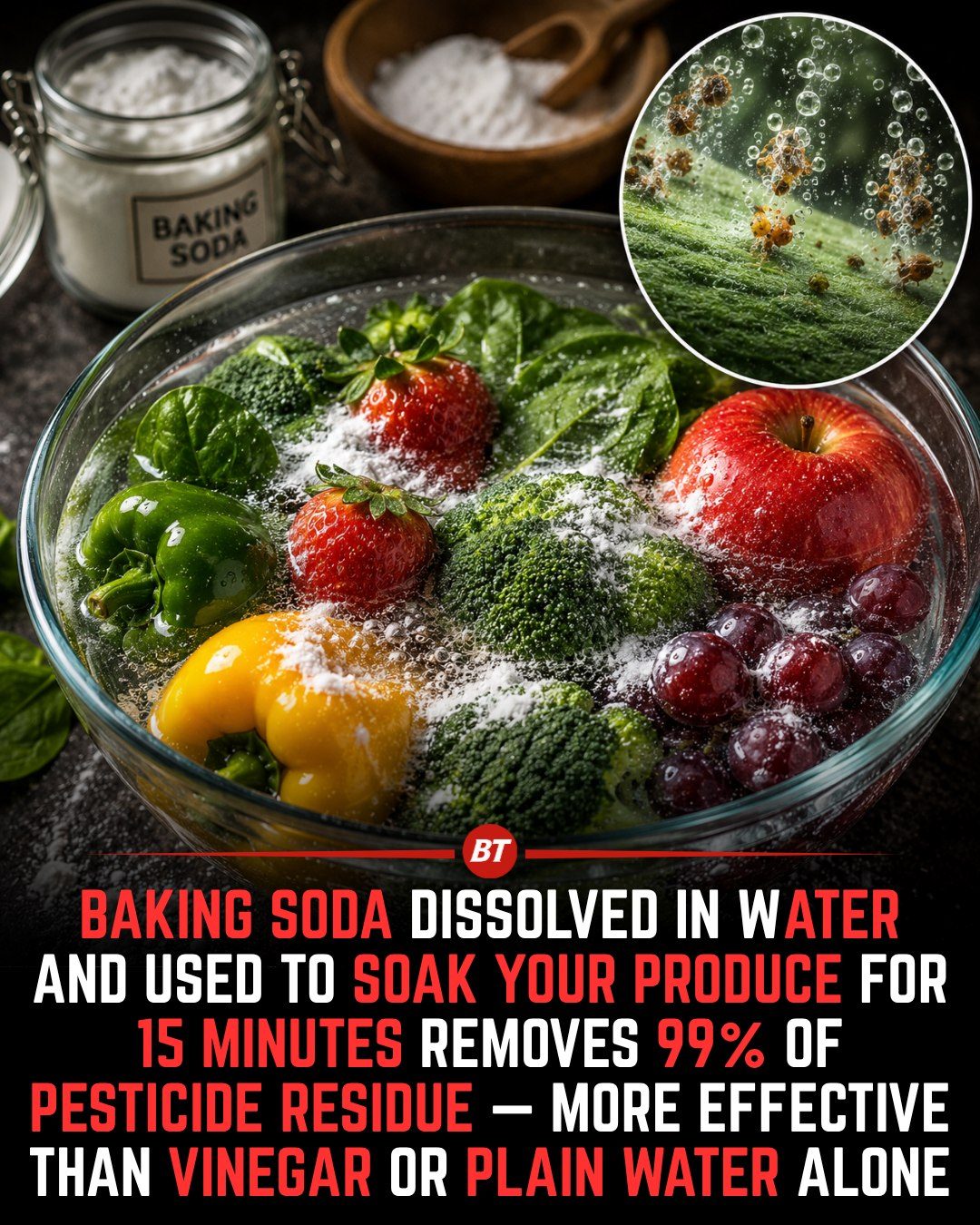
Produce Cleaning with Baking Soda
Cleaning produce effectively is a crucial step in food preparation, and a simple yet powerful method involves using baking soda. This method not only helps remove surface dirt but also significantly reduces pesticide residues, ensuring that your fruits and vegetables are safer to consume. Here’s a deeper look into why this method works and how to do it.
Why This Matters
Pesticide residues on produce can be a significant concern, as these chemicals are used widely in agriculture to protect crops from pests and diseases. Even after harvesting, these residues can linger on the surface of fruits and vegetables. While rinsing with plain water can help remove some of these residues, it is not as effective as using a baking soda solution.
Main Discussion
The Science Behind Baking Soda
Baking soda, or sodium bicarbonate, has mild alkaline properties that make it effective in breaking down certain pesticide compounds. When dissolved in water, it creates a solution that can loosen and dissolve these compounds, making them easier to rinse off. This process is particularly effective for removing residues of commonly used pesticides, such as those found on apples, spinach, and tomatoes.
Effectiveness Compared to Other Methods
Baking soda solutions have been shown to be more effective than vinegar or plain water in removing pesticide residues. Studies have found that soaking produce in a baking soda solution for around 10–15 minutes can significantly reduce the amount of pesticide residue on the surface. This method is not only more effective but also gentler on the produce, preserving their freshness and quality.
The Cleaning Process
The process of cleaning produce with baking soda is simple and straightforward. Here’s a step-by-step guide:
- Preparation: Mix 1 teaspoon of baking soda into 2 cups of water. This ratio ensures that the solution is strong enough to be effective but gentle enough to not damage the produce.
- Soaking: Submerge the fruits or vegetables in the baking soda solution and let them soak for 10–15 minutes. This timeframe allows the solution to break down and dissolve the pesticide residues effectively.
- Rinsing: After soaking, thoroughly rinse the produce under clean running water. This step helps to remove any remaining baking soda residue and ensures that the produce is clean and ready to eat or cook.
Practical Tips
- Choose the Right Produce: This method is particularly effective for produce with a waxy or firm skin, such as apples, peaches, and cucumbers. For delicate produce like berries, gently rub them with the baking soda solution before rinsing.
- Store Properly: After cleaning, store your produce in the refrigerator to maintain freshness. Keep in mind that some produce, like bananas and tomatoes, should be stored at room temperature.
- Combine with Other Methods: For an extra layer of cleanliness, combine this method with gentle scrubbing. Use a soft brush or your hands to scrub the produce while it is soaking in the baking soda solution. This can help remove any stubborn residues.
Important Takeaways
- Ease of Use: This method is incredibly simple and uses ingredients that are readily available in most kitchens. There’s no need for special equipment or costly products.
- Cost-Effective: Baking soda is not only effective but also inexpensive. It’s a cost-effective way to ensure that your produce is clean and safe to consume.
- Versatility: This method can be used on a wide variety of fruits and vegetables, making it a versatile cleaning solution for all types of produce.
Conclusion
Cleaning produce with a baking soda solution is a simple, effective, and affordable way to remove pesticide residues and ensure that your fruits and vegetables are safe to eat. By following the steps outlined, you can significantly reduce the amount of pesticide residue on your produce, contributing to a healthier diet. This method not only enhances the cleanliness of your produce but also ensures that you are consuming fresher, healthier food.
Watch the Reel
Questions readers ask
What are the benefits of using a baking soda soak for produce?
A baking soda soak helps to remove surface dirt and significantly reduces pesticide residues on fruits and vegetables. This method is gentle, making it suitable for all types of produce, and it helps ensure the produce is fresher and safer to consume.
How long should I soak produce in a baking soda solution?
For optimal results, soak your produce in a baking soda solution for 10 to 15 minutes. This duration allows the baking soda to effectively break down and remove pesticide compounds without causing any harm to the produce.
Can I use this method with all types of fruits and vegetables?
Yes, a baking soda soak is suitable for all types of produce. It is gentle enough to be used on soft fruits like berries and delicate vegetables like leafy greens, making it a versatile cleaning method.
Does a baking soda soak completely eliminate pesticide residues?
While a baking soda soak significantly reduces pesticide residues, it may not eliminate all traces. However, it is much more effective than rinsing with plain water, making your produce safer to consume.
Can I use other cleaning agents instead of baking soda for produce?
While some commercial produce washes are available, baking soda is a natural and cost-effective alternative. It is mild, non-toxic, and effective in breaking down pesticide compounds. Additionally, most households already have baking soda on hand.
How does baking soda help in removing pesticide residues?
Baking soda has mild alkaline properties that help to break down and remove pesticide compounds from the surface of fruits and vegetables. This process makes the pesticides easier to wash away, ensuring that your produce is safer to consume.
Can I reuse the baking soda solution for cleaning multiple batches of produce?
It is not recommended to reuse the baking soda solution for multiple batches of produce. The solution can become contaminated with dirt and pesticide residues, reducing its effectiveness and potentially transferring impurities back onto the produce.
Related deep dives
Similar reads based on topic and creator.




Recent articles
Fresh deep dives from the latest Reels we unpacked.




Comments
Be the first to comment.