Real Estate Bubble Index
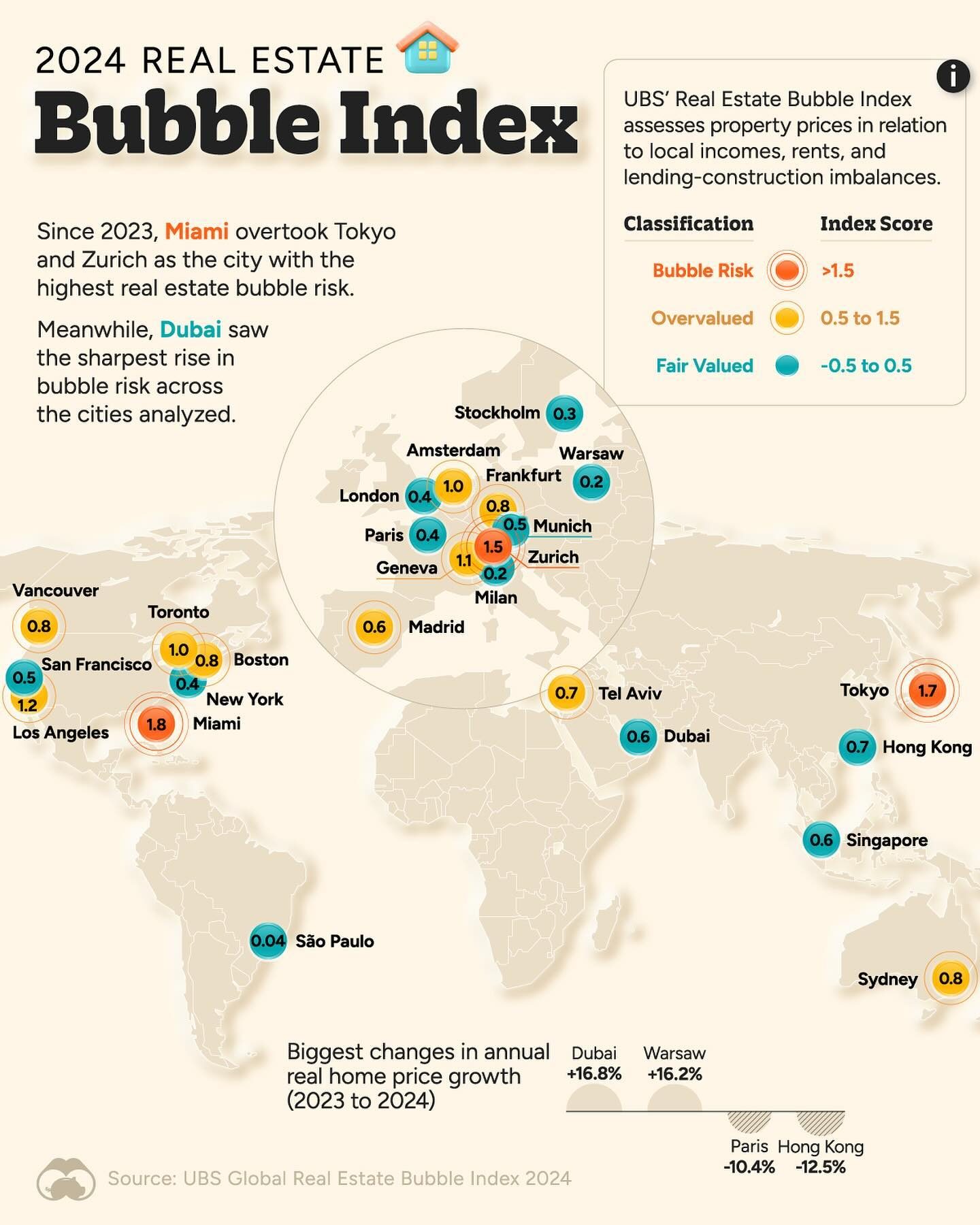
Miami's house prices have surged nearly 50% since late 2019, driven by a strong demand for luxury homes and a robust stock market. This dramatic increase has led to growing concerns about a real estate bubble, particularly in cities like Miami and Los Angeles. On the other hand, markets in cities such as Hong Kong, London, and New York are experiencing a slowdown. The UBS Global Real Estate Bubble Index 2024 provides valuable insights into the cities facing the highest real estate bubble risks.
Why This Matters
Understanding the real estate bubble index is crucial for investors, homebuyers, and policymakers. The index assesses property prices in relation to local incomes, rents, and lending-construction imbalances. This information helps identify cities that may be at risk of a market correction, allowing stakeholders to make informed decisions.
Main Discussion
Understanding the UBS Real Estate Bubble Index
The UBS Real Estate Bubble Index is a comprehensive tool that evaluates the health of global real estate markets. It considers several factors, including property prices relative to local incomes, rents, and construction activity. The index categorizes cities based on their bubble risk scores, ranging from -0.5 to 1.5, with scores above 1.5 indicating overvaluation.
Key Cities with High Bubble Risks
Several cities stand out for their high bubble risk scores:
- Miami: Since 2023, Miami has overtaken Tokyo and Zurich to become the city with the highest real estate bubble risk. This is largely due to the surge in luxury home prices and strong demand.
- Los Angeles: With a score of 1.8, Los Angeles is another city facing significant bubble risks. The high demand for properties and rising prices have contributed to this situation.
- Tokyo and Zurich: These cities have traditionally been at the top of the index, but they have seen their bubble risk scores decrease slightly, indicating a potential stabilization in their markets.
Cities with the Sharpest Changes
The index also highlights cities that have experienced the most significant changes in bubble risk:
- Dubai: Dubai saw the sharpest rise in bubble risk, with a 16.8% increase in annual real home price growth from 2023 to 2024. This rapid appreciation in property values has raised concerns about sustainability.
- Warsaw: Warsaw also experienced a significant rise in bubble risk, with a 16.2% increase in annual home price growth. The city's burgeoning real estate market has attracted considerable investment, contributing to this upward trend.
Cities with Lower Bubble Risks
While some cities face high bubble risks, others show more stable real estate markets:
- São Paulo: With a bubble risk score of 0.04, São Paulo has one of the lowest scores on the index, indicating a relatively stable market.
- Paris and Hong Kong: Both cities have seen their bubble risk scores decrease, with Paris experiencing a 10.4% decline and Hong Kong a 12.5% decline in annual home price growth from 2023 to 2024. This suggests a cooling of their real estate markets.
Classification and Interpretation
The UBS Real Estate Bubble Index uses a classification system to interpret the risk scores:
- Overvalued: Cities with scores above 1.5 are considered overvalued, indicating a high risk of a market correction.
- Fair Valued: Cities with scores between 0.5 and 1.5 are considered fairly valued, suggesting a balanced market with moderate risk.
- Undervalued: Cities with scores between -0.5 and 0.5 are considered undervalued, indicating a low risk of a market correction.
Practical Tips
For those navigating the real estate market, here are some practical tips based on the UBS Real Estate Bubble Index:
For Investors
- Diversify Your Portfolio: Consider investing in cities with lower bubble risk scores to mitigate potential market corrections.
- Monitor Market Trends: Keep an eye on annual home price growth and other economic indicators to stay informed about market trends.
- Conduct Thorough Research: Before making any investment decisions, conduct thorough research and consider seeking professional advice.
For Homebuyers
- Assess Affordability: Ensure that you can afford the property without overstretching your finances. Consider the property prices in relation to your income and local rents.
- Look for Stability: Focus on cities with lower bubble risk scores, as these markets are generally more stable and less prone to sudden corrections.
- Plan for the Long Term: Real estate is a long-term investment. Consider the potential for future appreciation and the overall stability of the market.
Important Takeaways
- Real estate markets vary significantly by city, with some facing high bubble risks and others showing more stability.
- Understanding the UBS Real Estate Bubble Index can provide valuable insights into the health of global real estate markets.
- Cities like Miami and Los Angeles are facing the highest bubble risks, while São Paulo and Paris show more stable markets.
- Investors and homebuyers should consider the bubble risk scores and other economic indicators when making real estate decisions.
Conclusion
The UBS Global Real Estate Bubble Index 2024 offers a comprehensive view of the global real estate market, highlighting cities with the highest and lowest bubble risks. By understanding these indices and their implications, investors and homebuyers can make more informed decisions. Whether you're looking to invest in a booming market or find a stable place to call home, keeping an eye on these risk scores can help you navigate the complexities of the real estate landscape.
Watch the Reel
Questions readers ask
Which cities are most at risk for a real estate bubble in 2024?
The UBS Global Real Estate Bubble Index identifies Miami, Los Angeles, Tokyo, and Zurich as the cities with the highest risks of a real estate bubble in 2024. These cities are experiencing significant price increases and strong demand, which are key indicators of potential bubble conditions.
What factors contribute to the real estate bubble risks in cities like Miami and Los Angeles?
In Miami, house prices have surged nearly 50% since late 2019, driven by a strong demand for luxury homes and a robust stock market. Similar trends in Los Angeles also contribute to the high risk of a real estate bubble. Overvaluation and strong demand are primary concerns in these markets.
Why does the UBS Global Real Estate Bubble Index matter for investors and homebuyers?
The index provides valuable insights into the health of real estate markets by assessing property prices in relation to local incomes, rents, and lending-construction imbalances. This information helps investors and homebuyers make informed decisions and assess the risks associated with their investments or purchases.
What is the current situation in the Hong Kong real estate market?
The Hong Kong real estate market is currently experiencing a slowdown, unlike cities such as Miami and Los Angeles. This shift is important for potential investors to consider, as it indicates a different level of risk compared to other high-risk cities.
What are the key indicators of a real estate bubble?
Key indicators of a real estate bubble include rapidly rising prices, strong demand, and overvaluation. These factors are prominent in cities like Miami, Los Angeles, Tokyo, and Zurich, which are flagged as high-risk areas in the 2024 UBS Global Real Estate Bubble Index.
How do luxury home demand and stock market trends influence real estate bubble risks in Miami?
In Miami, the demand for luxury homes and a strong stock market have significantly driven up property prices. Since late 2019, these factors have contributed to a nearly 50% surge in house prices, raising concerns about a potential bubble. Investors and homebuyers should be aware of these trends and the associated risks.
What should policymakers consider regarding the UBS Global Real Estate Bubble Index?
The index serves as a crucial tool for policymakers to understand the risks in various real estate markets. By assessing property prices in relation to local incomes, rents, and lending-construction imbalances, policymakers can better prepare regulations and strategies to mitigate potential market bubbles and maintain stability in their respective regions.
Recent articles
Fresh deep dives from the latest Reels we unpacked.




Comments
Be the first to comment.