Chocolate Brand Guide
Choosing the right chocolate can be a challenge, especially when navigating the vast array of options at the grocery store. Brands like Nestlé offer a spectrum of choices, from classic milk chocolates to artisanal dark varieties. Understanding the differences between these chocolates can help you make better choices for both taste and health.
Why This Matters
The quality of chocolate can significantly impact your health and enjoyment. High-quality chocolates often contain more cocoa, which is rich in antioxidants and nutrients. Conversely, lower-quality chocolates may be laden with sugar and artificial ingredients, offering little nutritional value and potentially harmful additives. Knowing how to evaluate chocolate brands can enhance your enjoyment and well-being.
Key Factors in Choosing High-Quality Chocolate
Understanding Cocoa Content
Cocoa content is a crucial factor when selecting a chocolate bar. Higher cocoa content generally means more antioxidants and less sugar. Dark chocolate, in particular, is a good choice for those looking to increase their intake of antioxidants. Look for dark chocolates with 70% cocoa or higher, which typically offer a richer flavor and more health benefits.
Reading Ingredient Labels
Reading ingredient labels is essential for identifying high-quality chocolate. Focus on chocolates with minimal ingredients and avoid those with artificial flavors and preservatives. Natural ingredients not only enhance flavor but also ensure that you are consuming a healthier product.
Evaluating Brands
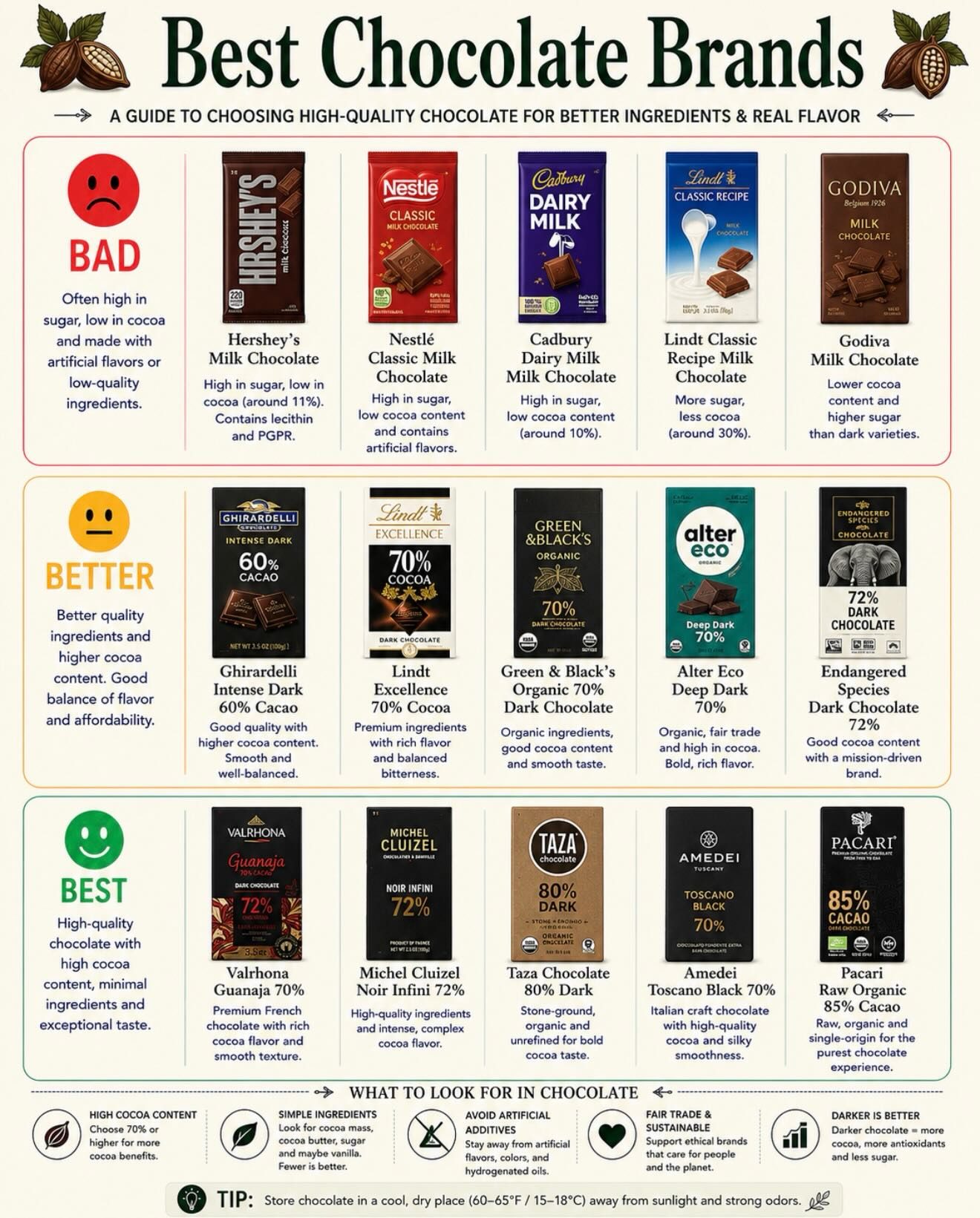
Different brands offer varying qualities of chocolate. Understanding the tiers of chocolate brands can guide you toward better choices. Here’s a breakdown of the 'Bad', 'Better', and 'Best' tiers:
The 'Bad' Tier
The 'Bad' tier includes chocolates that are high in sugar and low in cocoa content. These chocolates often contain artificial flavors and low-quality ingredients. Examples include:
- Nestlé Classic Milk Chocolate: This chocolate is known for its high sugar content and low cocoa content (around 11%).
- Hershey’s Milk Chocolate: Similar to Nestlé, Hershey’s milk chocolate is high in sugar and low in cocoa, making it a less healthy option.
The 'Better' Tier
The 'Better' tier offers improved quality and higher cocoa content. These chocolates strike a good balance between flavor and nutritional value. Some examples include:
- Lindt Classic Recipe Milk Chocolate: While still a milk chocolate, Lindt offers a smoother and slightly more balanced flavor with higher cocoa content.
- Ghirardelli Intense Dark: This dark chocolate has a higher cocoa content, making it a better choice for those looking for a richer, more antioxidants-filled experience.
The 'Best' Tier
The 'Best' tier features artisanal chocolates with minimal artificial ingredients and high-quality cocoa. These chocolates are perfect for those seeking premium quality and flavor. Notable brands in this tier include:
- Godiva Belgian 70% Chocolate: Known for its smooth and well-balanced taste, Godiva offers a premium chocolate experience with high cocoa content.
- Green & Black’s Organic 70% Dark Chocolate: This chocolate uses organic ingredients and offers a rich, smooth taste with minimal artificial flavors.
- Alter Eco Deep Dark Chocolate: Made with simple, natural ingredients and no artificial flavors, Alter Eco is a great choice for everyday use and cooking.
- Endangered Species 72% Dark Chocolate: This brand is not only high in cocoa content but also supports mission-driven initiatives, making it a great choice for those who value sustainability.
Premium and Artisanal Options
For the ultimate chocolate experience, consider premium and artisanal brands. These chocolates often use high-quality ingredients and offer rich, complex flavors. Brands like Valrhona Guanaja, Michel Cluizel, and Taza Chocolate are renowned for their artisanal craftsmanship and minimal ingredient lists. These chocolates are perfect for special occasions or for those who want to indulge in a truly high-quality experience.
Practical Tips
When shopping for chocolate, keep these tips in mind:
- Check the Cocoa Content: Aim for dark chocolates with 70% cocoa or higher. The higher the cocoa content, the more antioxidants and less sugar.
- Read the Ingredient List: Look for minimal, natural ingredients and avoid artificial flavors and preservatives.
- Consider the Brand: Opt for brands known for their quality and commitment to natural, organic, or fair-trade practices.
- Experiment with Different Types: Explore different types of chocolate—milk, dark, and even white—to find your personal favorites.
Important Takeaways
Understanding the differences between chocolate brands and their ingredients is key to making informed choices. By focusing on cocoa content, reading ingredient labels, and selecting high-quality brands, you can enhance your enjoyment and health. Whether you prefer classic milk chocolates or premium dark varieties, there are plenty of options to suit your taste and dietary needs.
Conclusion
Choosing the right chocolate brand can greatly enhance your enjoyment and overall well-being. By understanding the key factors that determine chocolate quality and exploring different tiers and brands, you can make better choices. Enjoy your chocolate responsibly, knowing that you are choosing a product that aligns with your health and taste preferences.
Watch the Reel
Questions readers ask
What should I look for when choosing high-quality chocolate?
When selecting high-quality chocolate, prioritize brands with a high cocoa content, especially for dark chocolate. Aim for at least 70% cocoa for the best combination of rich flavor and health benefits. Additionally, check the ingredient list to ensure the chocolate contains minimal sugar and no artificial flavors or preservatives.
Which brands are known for producing good quality chocolate?
Several brands stand out for their commitment to quality. Some of the best chocolate brands include Nestlé, which offers a range of high-quality options, and other artisan brands known for their premium ingredients and rich flavors. Look for brands that focus on organic and fair-trade practices for an even better choice.
How does the cocoa content in dark chocolate affect its taste and health benefits?
The cocoa content in dark chocolate directly influences its flavor and health benefits. Higher cocoa percentages, such as 70% or above, provide a richer, more intense flavor profile and contain more antioxidants and nutrients. This makes high cocoa dark chocolate a healthier option compared to chocolates with lower cocoa content.
What are the benefits of choosing organic chocolate brands?
Choosing organic chocolate brands ensures that the cocoa beans are grown without the use of synthetic pesticides and fertilizers. This not only supports environmentally friendly farming practices but also results in a more natural and pure flavor. Plus, organic chocolates are less likely to contain artificial flavors or preservatives, making them a better choice for health-conscious consumers.
Can I find low-sugar chocolate options that still taste good?
Yes, many brands now offer low-sugar chocolate options that maintain a good flavor. Look for chocolates that use natural sweeteners like stevia or erythritol instead of refined sugar. These sweeteners can help reduce the overall sugar content without sacrificing taste, making them a suitable choice for those looking to minimize their sugar intake.
Are there any brands that specialize in chocolate without artificial flavors?
Yes, several brands focus on producing chocolate without artificial flavors. These brands prioritize natural ingredients and often highlight their commitment to purity on the packaging. Some of the best chocolate brands for this are artisanal and independent companies, but even larger brands like Nestlé offer options that avoid artificial additives.
Why is it important to scrutinize ingredient labels on chocolate products?
Scrutinizing ingredient labels is crucial because it helps you avoid chocolates with excessive sugar, artificial flavors, and preservatives. By checking the labels, you can ensure that the chocolate you choose has a higher cocoa content and minimal additives, which enhances both the taste and health benefits. Look for simple, recognizable ingredients and steer clear of products with long lists of unfamiliar chemicals.
Recent articles
Fresh deep dives from the latest Reels we unpacked.




Comments
Be the first to comment.