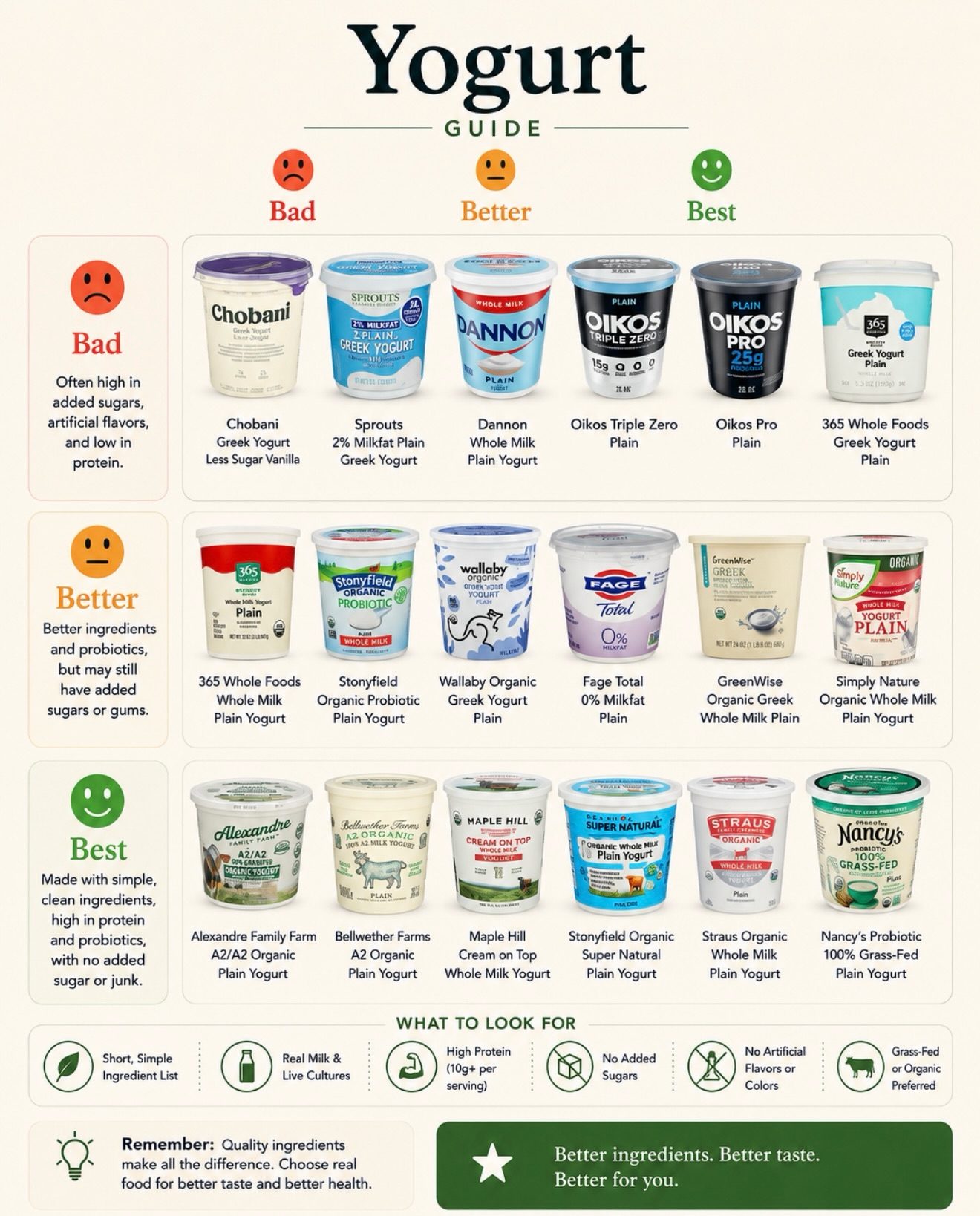
Healthy Food Choices: Navigating the Yogurt Aisle
Yogurt is a staple in many diets, praised for its probiotic benefits and versatility. However, not all yogurts are created equal. The packaging may be similar, but the ingredients can vary significantly. Understanding how to choose the best yogurt options can make a significant difference in your health.
Why this matters
Choosing the right yogurt goes beyond just picking up any container from the shelf. The quality of ingredients directly impacts the nutritional value and taste of yogurt. By making informed choices, you can enhance your diet with healthier options that support your overall well-being.
The Real Difference
The quality of yogurt is determined by several key factors. Look for whole milk yogurts as they generally provide a creamier texture and a richer nutrient profile. Prioritize yogurts with live cultures and probiotic content to support gut health. Avoid artificial flavors and added sugars, which can diminish the health benefits. Lastly, choose yogurts with a short, simple ingredient list to ensure you're getting a more natural product.
Understanding the Categories
When shopping for yogurt, categorizing options into 'Bad,' 'Better,' and 'Best' can simplify the decision-making process.
'Bad' Yogurts
'Bad' yogurts are often high in added sugars and artificial flavors. These add-ons not only reduce the nutritional value but can also lead to health issues like obesity and diabetes. Brands that fall into this category are typically mass-produced and prioritize cost over quality.
'Better' Yogurts
'Better' yogurts are an improvement over the 'Bad' variety. They may contain fewer artificial flavors and slightly less added sugar. These yogurts are often made with non-fat or low-fat milk, which can be beneficial for those watching their calorie intake. Examples might include brands like Nancy’s Organic, which offers 100% Grass-Fed yogurts. However, they still might not be the optimal choice for everyone.
Examples of 'Better' Yogurts
- Low-fat or non-fat varieties
- Minimally processed
- Moderate sugar content
'Best' Yogurts
'Best' yogurts are the cream of the crop. These are typically made from whole milk, contain live cultures, and have a short, simple ingredient list. They prioritize probiotic content and avoid artificial flavors. Examples include Chobani’s Less Sugar Vanilla Greek Yogurt, which stands out for its high protein content and live cultures.
Examples of 'Best' Yogurts
- Whole milk
- High protein content
- Plain yogurt varieties
Main Discussion
The Importance of Whole Milk
Whole milk yogurt offers a richer, creamier texture and a more satisfying taste. It also contains essential nutrients like vitamins A, D, and E, as well as higher levels of calcium and potassium. Whole milk yogurt is particularly beneficial for those looking to support bone health and maintain a balanced diet.
Prioritizing Probiotic Content
Probiotics are live bacteria and yeasts that are beneficial for your digestive system. They help maintain a healthy gut flora, which is crucial for overall health. When choosing yogurt, look for brands that clearly state the presence of live cultures and probiotics. These can aid in digestion, boost the immune system, and even improve mental health.
Avoiding Artificial Flavors and Sweeteners
Artificial flavors and sweeteners can negatively impact your health. They often contain ingredients that your body struggles to process. By opting for yogurts with natural flavors and minimal added sugars, you can enjoy a healthier snack. Natural sweeteners like honey or fruit purees are better alternatives to artificial sweeteners.
Simplifying the Ingredient List
A short, simple ingredient list is a clear indicator of a high-quality yogurt. Products with fewer, more recognizable ingredients are generally healthier. Look for yogurts that prioritize real food and avoid unnecessary additives. Quality ingredients make for better taste and nutritional value.
Practical Tips
Reading Labels Effectively
Reading labels is a crucial skill when it comes to choosing better yogurt options. Look for key information such as the type of milk used, the presence of live cultures, and the ingredient list. Opt for brands that are transparent about their production methods and ingredients. This ensures you're making an informed decision.
Checking Added Sugars
Added sugars can significantly reduce the nutritional value of yogurt. Even though many yogurts contain natural sugars from lactose, additional sugars from sweeteners can be detrimental. Always check the sugar content and opt for yogurts with lower added sugars.
Looking for Protein and Fiber
Protein and fiber are essential for a balanced diet. High-protein yogurts can help you feel fuller for longer, making them a great choice for snacking or meal replacements. Fiber, on the other hand, aids in digestion and can help manage weight. Choose yogurts that are high in protein and fiber for maximum benefit.
Choosing Minimally Processed Options
Minimally processed yogurts are generally healthier. They retain more of their natural nutrients and are less likely to contain harmful additives. Look for brands that prioritize minimal processing and natural ingredients. This ensures you're getting a more wholesome product.
Important Takeaways
- Whole milk yogurts generally offer a richer texture and more nutrients.
- Probiotic content is crucial for gut health and overall well-being.
- Artificial flavors and sweeteners can be detrimental to your health.
- A short, simple ingredient list is a sign of high-quality yogurt.
- Whole food ingredients and minimal added sugars are essential for a healthier choice.
- Protein and fiber enhance the nutritional value of yogurt.
- Minimally processed options generally retain more natural nutrients.
Conclusion
Choosing the right yogurt can significantly impact your diet and overall health. By understanding the key factors that determine yogurt quality and prioritizing healthier options, you can make more informed choices. Whether you opt for whole milk, probiotic-rich, or minimally processed yogurts, the goal is to make better choices consistently. This approach ensures that you benefit from the nutritional value of yogurt while enjoying its delicious taste.
Watch the Reel
Questions readers ask
What are the benefits of choosing whole milk yogurt?
Whole milk yogurt contains more natural fats and nutrients. Whilst it is higher in calories, it can be more satisfying. This can help you feel fuller for longer, which may prevent overeating. Additionally, the natural fats in whole milk yogurt can aid in the absorption of fat-soluble vitamins, enhancing your overall nutrient intake.
How can I identify low sugar yogurt options?
To find low sugar yogurt, check the ingredients list for added sugars. Look for yogurts that have fewer than 15 grams of sugar per serving and be sure to look for the sugar listed in the ingredients. To further reduce sugar intake, consider plain yogurt and add your own fresh fruits or a drizzle of honey for natural sweetness.
What are the benefits of choosing organic yogurt?
Organic yogurt is made from milk produced by cows that are not treated with synthetic hormones or antibiotics. This means that choosing organic yogurt can help you avoid potential hormone disrupters. Furthermore, organic farming practices often prioritize animal welfare and environmental sustainability, which can have a positive impact on the quality of the yogurt.
What ingredients should I avoid in yogurt?
When selecting yogurt, avoid products with artificial sweeteners, high fructose corn syrup, and excessive added sugars. Additionally, steer clear of yogurts with long lists of unpronounceable ingredients, as these are often indicative of processed additives. Opt for yogurts with simple, recognizable ingredients for a healthier choice.
How can I add more protein to my yogurt?
To add more protein to your yogurt, consider choosing Greek yogurt or strained yogurt, which are naturally higher in protein. You can also add a scoop of your favorite protein powder to plain yogurt or mix in high-protein ingredients like nuts, seeds, or a spoonful of nut butter for an additional protein boost.
Does the fat content in yogurt affect its taste?
Yes, the fat content in yogurt can significantly affect its taste and creaminess. Full-fat or whole milk yogurts tend to have a richer and more indulgent flavor because of their higher fat content. Low-fat or non-fat yogurts may have a more watery consistency and can sometimes taste less satisfying, which can be offset by adding fruits, nuts, or other flavorings.
Recent articles
Fresh deep dives from the latest Reels we unpacked.




Comments
Be the first to comment.