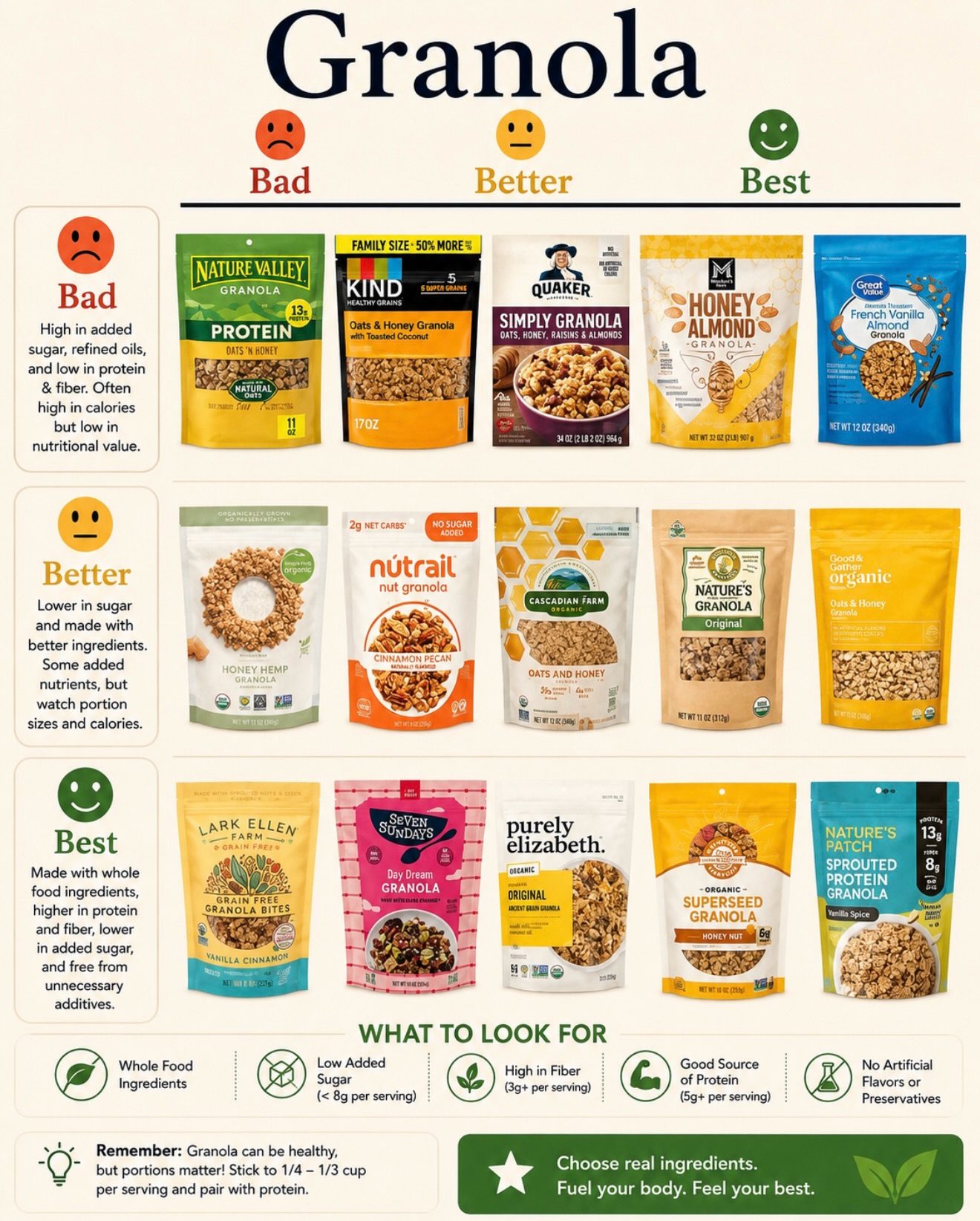
The Practical Guide to Choosing Better Granola
Granola is a popular breakfast and snack option, but not all brands are created equal. Understanding the nutritional differences between granola brands can help you make better choices that align with your health goals. Let's dive into the key factors to consider when selecting a granola.
Why This Matters
Granola can be a healthy addition to your diet when chosen wisely. It offers a mix of whole grains, nuts, and sometimes even dried fruits. However, many commercial granolas are high in added sugars and refined oils, which can negate their nutritional benefits. Making informed choices about granola can help you maintain a balanced diet without compromising on taste.
Understanding Granola Nutrition
Granola brands vary significantly in their nutritional content. Here are the key factors to consider when evaluating different options:
Sugar Content
One of the most important factors to look at is the sugar content. Granolas labeled as "Bad" often have high levels of added sugars, which can contribute to weight gain and other health issues. Aim for granolas that have less than 6 grams of added sugar per serving. This will help you avoid unwanted spikes in blood sugar levels and maintain a healthier diet.
Protein and Fiber
Protein and fiber are essential nutrients for a balanced diet. Granolas that are high in protein and fiber can help you feel fuller for longer, which is beneficial for weight management and overall health. Look for granolas that have at least 3 grams of protein and 3 grams of fiber per serving. These nutrients will support your digestive health and energy levels throughout the day.
Ingredient Lists
When shopping for granola, pay attention to the ingredient list. A shorter list with recognizable, whole-food ingredients is generally a better choice. Avoid granolas with artificial flavors, colors, and preservatives. Opt for options that use natural sweeteners like honey or maple syrup and contain whole grains, nuts, and seeds.
Calorie Count
Granola can be high in calories due to its dense nature. While this isn't necessarily bad, it's important to be mindful of portion sizes. Many granolas labeled as "Best" have a good balance of calories, protein, and fiber. These granolas will provide you with the energy you need without excessive calorie intake, making them a great option for a balanced diet.
Refined Oils
Refined oils can be harmful to your health when consumed in excess. Look for granolas that use healthier oils like olive oil or avocado oil. These oils are rich in monounsaturated fats, which are beneficial for heart health. Avoid granolas that contain palm oil, canola oil, or soybean oil, as these can be high in saturated fats and trans fats.
Nature Valley Granola
Nature Valley is a well-known brand that offers a variety of granola options. Their "Oats & Honey" granola is a popular choice, but it's important to evaluate its nutritional content. This particular variety is lower in sugar and refined oils, making it a "Better" option. However, it is also lower in protein and fiber, so portion control is key. Nature Valley's "Family Size" packaging offers a 5% more granola per package, which can be a cost-effective option for those who consume granola regularly.
Packaging and Portion Control
Portion control is crucial when it comes to granola. While it's easy to overindulge, sticking to recommended serving sizes can help you maintain a balanced diet. Many granolas come in family-size packages, which can be convenient but also tempting. Be mindful of how much you consume and use portion control to avoid overeating.
Practical Tips for Choosing and Enjoying Granola
Read the Labels
Reading nutrition labels and ingredient lists can provide valuable information about the granola you're considering. Pay attention to the serving size, calories, sugar content, protein, and fiber. This will help you make an informed decision about which granola is best for your health goals.
Portion Control
Portion control is essential when it comes to granola. A typical serving size is around 1/4 to 1/3 cup, which is about 120-150 calories. Use a measuring cup to ensure you're consuming the recommended amount. This will help you avoid overeating and keep your calorie intake in check.
Pairing Granola with Other Foods
Granola can be a versatile addition to your diet. Pair it with yogurt, milk, or a smoothie bowl for a balanced breakfast. You can also use it as a topping for oatmeal or as a snack on its own. The possibilities are endless, and incorporating granola into different meals can help you enjoy its nutritional benefits.
Important Takeaways
Choosing the right granola can make a significant difference in your diet. By focusing on granolas that are lower in sugar and refined oils, higher in protein and fiber, and made with whole-food ingredients, you can make healthier choices that support your goals. Remember, even the "best" options are still meant to complement a balanced diet, not replace whole foods. Small, consistent improvements in your diet can lead to big results over time. Make sure to read labels, practice portion control, and enjoy granola as part of a varied and balanced diet.
Conclusion
Selecting the right granola is about making informed choices that support your health goals. By understanding the nutritional content of different granola brands and focusing on key factors like sugar, protein, fiber, and ingredients, you can make better decisions. Incorporate granola into your diet in a mindful way, and enjoy the benefits it brings to your overall health and well-being.
Watch the Reel
Questions readers ask
What are the key nutrients to look for in granola?
When choosing granola, prioritize options high in protein, fiber and whole grains. These nutrients help support your overall health and keep you feeling full. Additionally, look for granola with a balance of healthy fats from sources like nuts and seeds.
How can I find low sugar granola?
To find low sugar granola, check the nutrition label for added sugars and choose options with less than 6 grams per serving. Opt for granolas sweetened naturally with ingredients like dried fruits or a small amount of honey or maple syrup. Additionally, look for granolas that list whole grains and nuts as the first ingredients.
What are the benefits of eating granola for breakfast?
Eating granola for breakfast can provide sustained energy due to its mix of complex carbohydrates, healthy fats and protein. Pairing granola with yogurt or milk can enhance its nutritional benefits, creating a balanced meal that supports your health goals.
Why is it important to choose whole grain granola?
Whole grain granola is more nutritious than refined grain granola because it contains more fiber, vitamins, and minerals. Fiber aids in maintaining digestive health and helps you feel full, making it a key factor in choosing a more satisfying and healthy granola.
How can I incorporate granola into a balanced diet?
To incorporate granola into a balanced diet, portion control is key. A typical serving of granola is about 1/4 to 1/2 cup. Pair granola with protein-rich foods like Greek yogurt or a side of fresh fruit to create a satisfying and nutritious meal or snack. Additionally, choose granolas with a lower calorie count and limit added sugars.
What are some healthy granola ingredients?
Healthy granola ingredients include whole grains like oats, nuts, seeds, and dried fruits. These ingredients provide essential nutrients such as fiber, protein, and healthy fats. Be cautious of granolas with excessive added sugars, refined oils, and artificial additives.
How does the order of ingredients on the label affect granola nutrition?
The order of ingredients on the label reflects the proportion of each component in the granola. Ingredients are listed in descending order by weight, so if sugar or refined oils are listed first, the granola may be high in these less desirable components. Opt for granolas where whole grains, nuts, and seeds are listed as the first ingredients.
Recent articles
Fresh deep dives from the latest Reels we unpacked.




Comments
Be the first to comment.