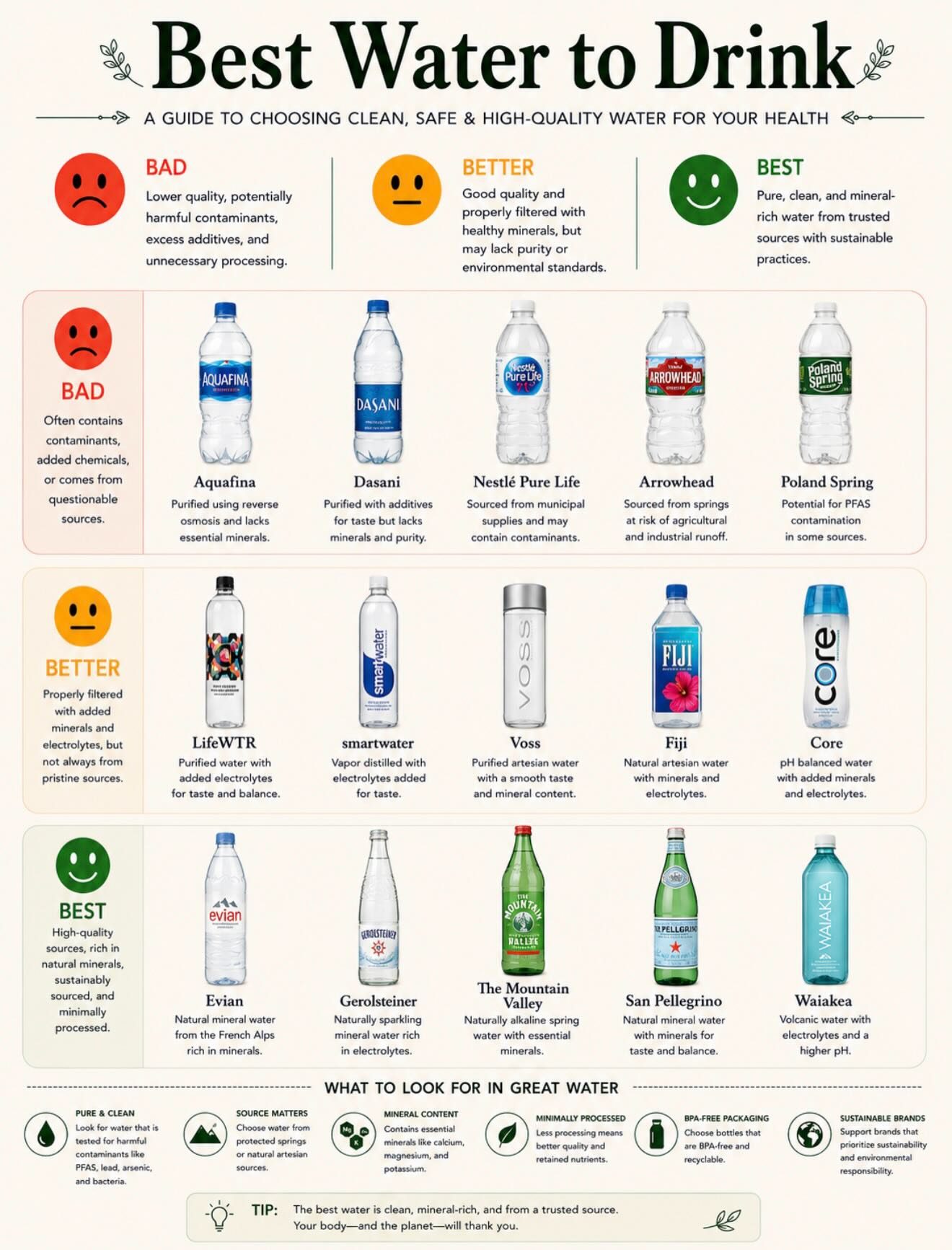
Water Brands Comparison: Making Informed Choices
Bottled water is a staple in many households, but not all brands are created equal. Understanding the differences in quality and sourcing can help you make better choices for your health. This comparison focuses on bottled water brands, categorizing them based on their quality and sourcing. One notable mention is Arrowhead, which is highlighted as a 'Bad' option due to its conventional sourcing and potential industrial runoff.
Why This Matters
Every grocery store decision adds up over time, impacting energy levels, hunger, recovery, digestion, and long-term health. While many focus on big factors like calories, protein, and workouts, the quality of daily food and beverage choices can have a significant impact. By making slightly better choices consistently, you can see massive results over months and years. This principle applies directly to bottled water—choosing higher-quality water over sugary drinks or lower-quality options can make a notable difference.
Main Discussion
Understanding Water Quality
When evaluating bottled water, it's crucial to consider the source and processing methods. Higher-quality water typically comes from pristine natural sources, undergoes minimal processing, and has fewer additives. In contrast, lower-quality water may contain harmful contaminants, excess additives, and undergo unnecessary processing, which can affect its overall quality and safety.
The Case of Arrowhead
Arrowhead, a well-known brand, is categorized as a 'Bad' option in this comparison. This categorization is primarily due to its conventional sourcing from municipal sources with industrial runoff. Municipal sources often contain a higher likelihood of contaminants, which can impact the overall quality of the water.
The Spectrum of Quality
The comparison categorizes bottled water brands into three tiers: 'Bad,' 'Better,' and 'Best.'
-
Bad: These brands are generally lower in quality. They may contain harmful contaminants, excess additives, and undergo unnecessary processing. Arrowhead falls into this category due to its conventional sourcing and potential industrial runoff.
-
Better: These brands offer a step up in quality. They may come from slightly better sources and undergo fewer processing steps, making them a more reliable choice.
-
Best: These brands are at the top of the quality spectrum. They are sourced from pristine natural environments, undergo minimal processing, and have the fewest additives, making them the healthiest option. These brands are typically sourced from natural springs or wells and undergo rigorous filtration processes to ensure purity.
Practical Tips
Choosing the Right Bottled Water
When shopping for bottled water, look for brands that prioritize natural sourcing and minimal processing. Check the labels for information on the water's origin and processing methods. Opt for brands that use natural filtration methods and have transparent sourcing practices.
Consider Additional Factors
Beyond sourcing and processing, consider other factors such as packaging and sustainability. Look for brands that use recyclable or eco-friendly packaging to reduce your environmental impact. Additionally, consider the cost and availability of the water brand to ensure it fits your budget and lifestyle.
Making Informed Decisions
Making informed decisions about the water you drink involves understanding the nuances of sourcing and processing. It's essential to prioritize your health by choosing brands that align with these principles. By making better choices consistently, you can support your overall well-being and long-term health goals.
Important Takeaways
- Quality Matters: The quality of bottled water can significantly impact your health. Opt for brands that prioritize natural sourcing and minimal processing.
- Be Informed: Understand the differences between brands and the potential impacts on your health. Brands like Arrowhead, which are categorized as 'Bad,' should be avoided.
- Consistency is Key: Small, consistent improvements in your choices can lead to significant health benefits over time.
Conclusion
Choosing the right bottled water involves understanding the differences in quality and sourcing. By making informed decisions and opting for higher-quality brands, you can support your health and long-term well-being. Remember, every grocery store decision adds up, so focus on progress and make slightly better choices consistently.
Watch the Reel
Questions readers ask
Why is Arrowhead water considered a poor choice?
Arrowhead water is deemed a less favorable choice due to its conventional sourcing methods, which may expose the water to potential industrial contaminants. These contaminants can affect the overall quality and purity of the water, making it a less safe option for daily consumption.
What factors should I consider when choosing the best bottled water for daily health?
When selecting the best bottled water for daily health, consider the sourcing methods, potential contaminants, and the overall quality of the water. Opt for brands that prioritize natural springs and have stringent purification processes to ensure minimal contaminants and high purity.
What are some alternatives to Arrowhead water?
There are several alternatives to Arrowhead water that are known for their high quality and purity. Brands like Fiji, which sources from a protected artesian aquifer, and Evian, known for its natural spring water from the French Alps, are often recommended. Additionally, look for brands that focus on natural spring water and have transparent sourcing practices.
How does bottled water sourcing impact its quality?
The sourcing of bottled water significantly impacts its quality. Water sourced from natural springs or protected aquifers tends to be purer and free from industrial contaminants compared to water sourced through conventional methods. This difference in sourcing can greatly influence the overall health benefits and safety of the bottled water.
What are industrial contaminants in bottled water, and why should I avoid them?
Industrial contaminants in bottled water refer to pollutants or impurities that enter the water supply due to industrial activities. These contaminants can include chemicals, heavy metals, and other harmful substances. Avoiding these contaminants is crucial for maintaining good health, as they can have adverse effects on the body when consumed regularly.
How can I identify the healthiest bottled water brands?
To identify the healthiest bottled water brands, look for those that source from natural springs or protected aquifers and have transparent labeling practices. These brands often undergo rigorous purification processes to ensure the water is free from contaminants. Additionally, checking for certifications and third-party testing can provide further assurance of the water's quality.
What are the benefits of drinking high-quality bottled water daily?
Drinking high-quality bottled water daily supports overall health by providing a clean, contaminant-free source of hydration. This can enhance energy levels, support digestion, and contribute to better long-term health. Choosing the right bottled water ensures you're not ingesting harmful substances, which is essential for maintaining optimal bodily functions.
Recent articles
Fresh deep dives from the latest Reels we unpacked.




Comments
Be the first to comment.