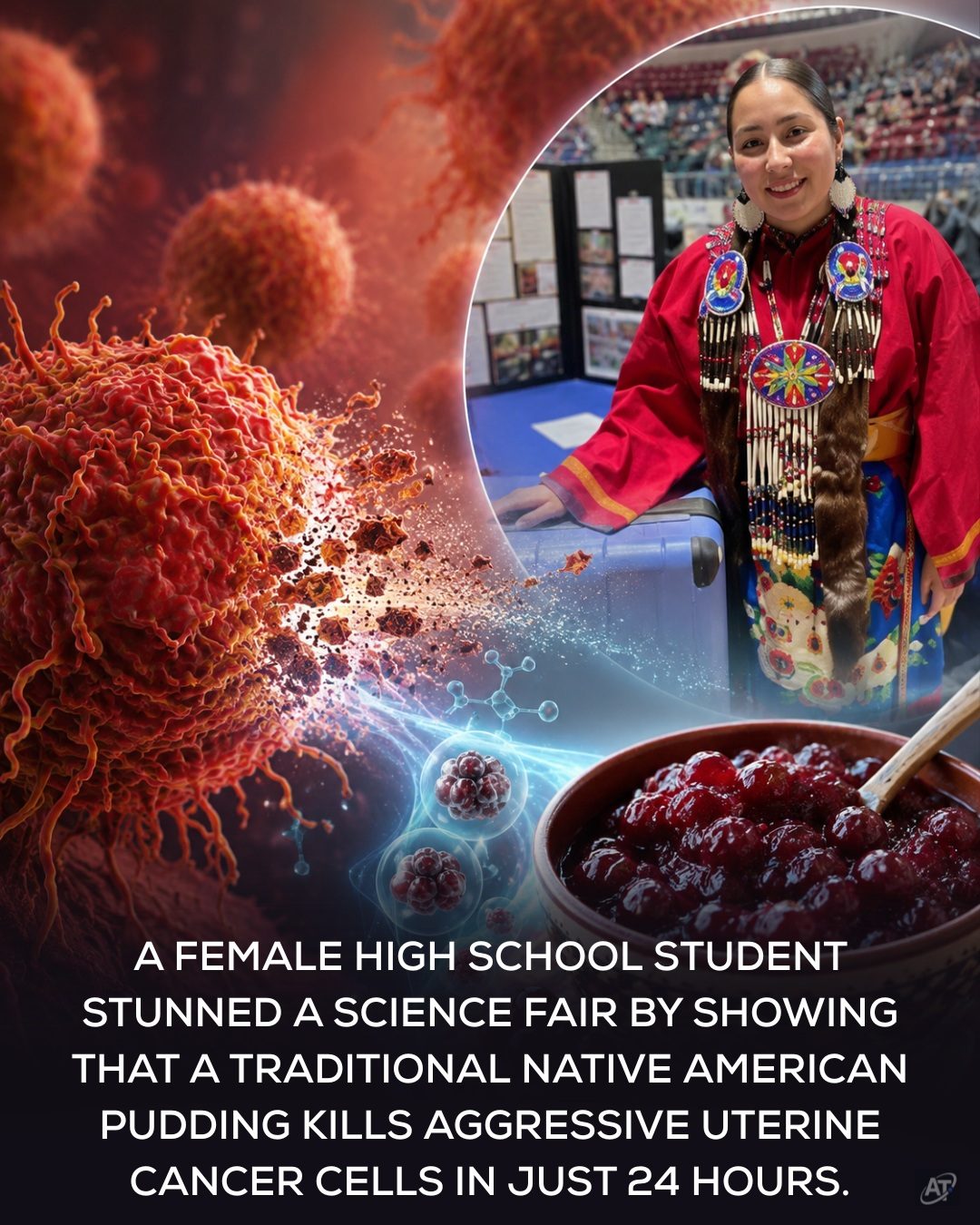
Traditional Chokecherry Pudding and Its Connection to Cancer Research
Educational misinterpretations of a high school science project have brought traditional chokecherry pudding into the spotlight of viral media. It is important to explore the truth behind the science, as well as the broader implications of the research.
Context / Why this matters
Destany “Sky” Pete, a Shoshone-Paiute student from the Duck Valley Reservation, conducted a 2017 science project that would ultimately capture viral attention. The project focused on the potential of a traditional preparation, toishabui, made from chokecherry fruits, including crushed seeds, used as a potential treatment for cancer, diabetes, and other health concerns in her community.
Her research is significant for the fusion of ancestral knowledge and modern science, which offers a rare opportunity to understand how traditional practices can evolve within contemporary science.
Main discussion
Pete's Inspiration and Motivation
Pete’s project was motivated by concern for declining health and the lack of traditional food use in her community. To address these issues, she turned to ancestral knowledge and the chokecherry pudding preparation, toishabui.
The Science Behind the Experiment
Pete worked with biochemistry professor Ken Cornell at Boise State University, where she investigated the effects of chokecherry preparations on uterine sarcoma cells.
Her experiment included several chokecherry-based samples:
- Traditional toishabui pudding
- Chokecherry juice
- A version without seeds
- A processed sample
Upon testing, Pete found that the traditional preparation produced a small amount of cancer-cell death within 24 hours in some parts of the experiment. However, this effect was not strong enough to prove significant anticancer activity. Pete's own scientific abstract summarized that the tested dilutions were ineffective, and further studies with stronger concentrations and additional cancer-cell types were necessary.
Misconceptions and Viral Claims
Despite Pete's findings, which did not support the efficacy of the pudding as a cancer treatment, viral claims have misrepresented the results. This misleading information often presents the pudding as a potential cure for cancer or a treatment that stops tumor growth, leading some to believe in its miraculous properties.
Misunderstanding the research can lead to dangerous claims that traditional chokecherry pudding can cure cancer, completely stop tumor growth, or work as a treatment inside the human body. While such claims are alluring, they are not supported by Pete's findings. It is essential to recognize the valuable aspects of the student’s work while considering the limitations of her initial findings.
The Importance of Rigorous Research
The research shows the importance of combining Indigenous knowledge with scientific inquiry. Pete’s work highlights how traditional knowledge can inspire valuable scientific questions, but these questions must still be tested carefully and rigorously through scientific research.
Practical tips
If you are inspired by this research and want to explore traditional foods for their health benefits, consider the following steps:
Cultural Sensitivity
Engage with Indigenous communities respectfully, recognizing their expertise in traditional foods. Seek their guidance and permission before conducting research or sharing information.
Scientific Rigor
Before making any health claims, conduct rigorous, peer-reviewed research. Ensure that your findings are consistent and strong enough to support any conclusions you draw.
Transparency
Clearly communicate the results of your research, distinguishing between preliminary findings and definitive conclusions. Avoid sensationalizing results, which can lead to misinformation.
Important takeaways
Traditional knowledge, combined with scientific research, can yield valuable insights. Destany Pete’s project is a testament to this potential, but it also highlights the need for caution and accuracy in reporting and interpreting scientific findings.
The viral claims surrounding chokecherry pudding and cancer research underscore the importance of understanding the nuances of scientific research. While the traditional preparation showed some promising preliminary results, further studies are crucial to validate any health claims.
Conclusion
Chokecherry pudding, or toishabui, is more than just a traditional recipe; it represents the intersection of cultural heritage and modern science. Pete’s research offers a unique perspective on the potential health benefits of traditional foods while emphasizing the importance of rigorous scientific inquiry.
Moving forward, it is essential to approach traditional knowledge with respect and to conduct thorough research before making health claims. By doing so, we can foster a deeper understanding of the potential benefits of traditional foods while maintaining scientific integrity.
Watch the Reel
Questions readers ask
Who is Destany “Sky” Pete and what inspired her research on chokecherry pudding?
Destany “Sky” Pete is a Shoshone-Paiute student from the Duck Valley Reservation. Her 2017 science project was inspired by traditional knowledge from her community. The project investigated the potential health benefits of toishabui, a traditional chokecherry pudding, including its use as a possible treatment for cancer and diabetes.
What is toishabui and how is it connected to cancer research?
Toishabui is a traditional preparation made from chokecherry fruits and seeds. Destany Pete's research examined this traditional pudding, exploring its potential in treating cancer, diabetes, and other health issues. The research she conducted sought to test the pudding's effectiveness in lab settings.
How did Destany Pete's project gain viral attention?
Destany Pete's project gained viral attention due to the unique blend of traditional knowledge and modern science. Her findings sparked interest in the potential health benefits of chokecherry pudding, leading to widespread media coverage and online discussions.
What kind of lab testing did Pete conduct on the chokecherry pudding?
Destany Pete conducted lab testing to examine the effects of chokecherry pudding on cancer cells. Her research involved testing the preparation's effectiveness in controlled laboratory conditions, contributing to a deeper understanding of the pudding's potential health benefits.
Why is Destany Pete's research significant in the context of Native American science?
Destany Pete's research is significant because it highlights the importance of traditional knowledge and its integration with modern scientific methods. Her work showcases how traditional practices from Native American communities can contribute to contemporary health research and treatments.
How did misinterpretations affect the perception of Destany Pete's science project?
Misinterpretations of Destany Pete's science project led to viral media attention, but also overshadowed the true scope of her research. It is important to clarify that her work was based on a science project investigating a traditional remedy and not a definitive cure for cancer.
Related deep dives
Similar reads based on topic and creator.



Recent articles
Fresh deep dives from the latest Reels we unpacked.




Comments
Be the first to comment.