China's Major Cities: A Deep Dive into Urbanization
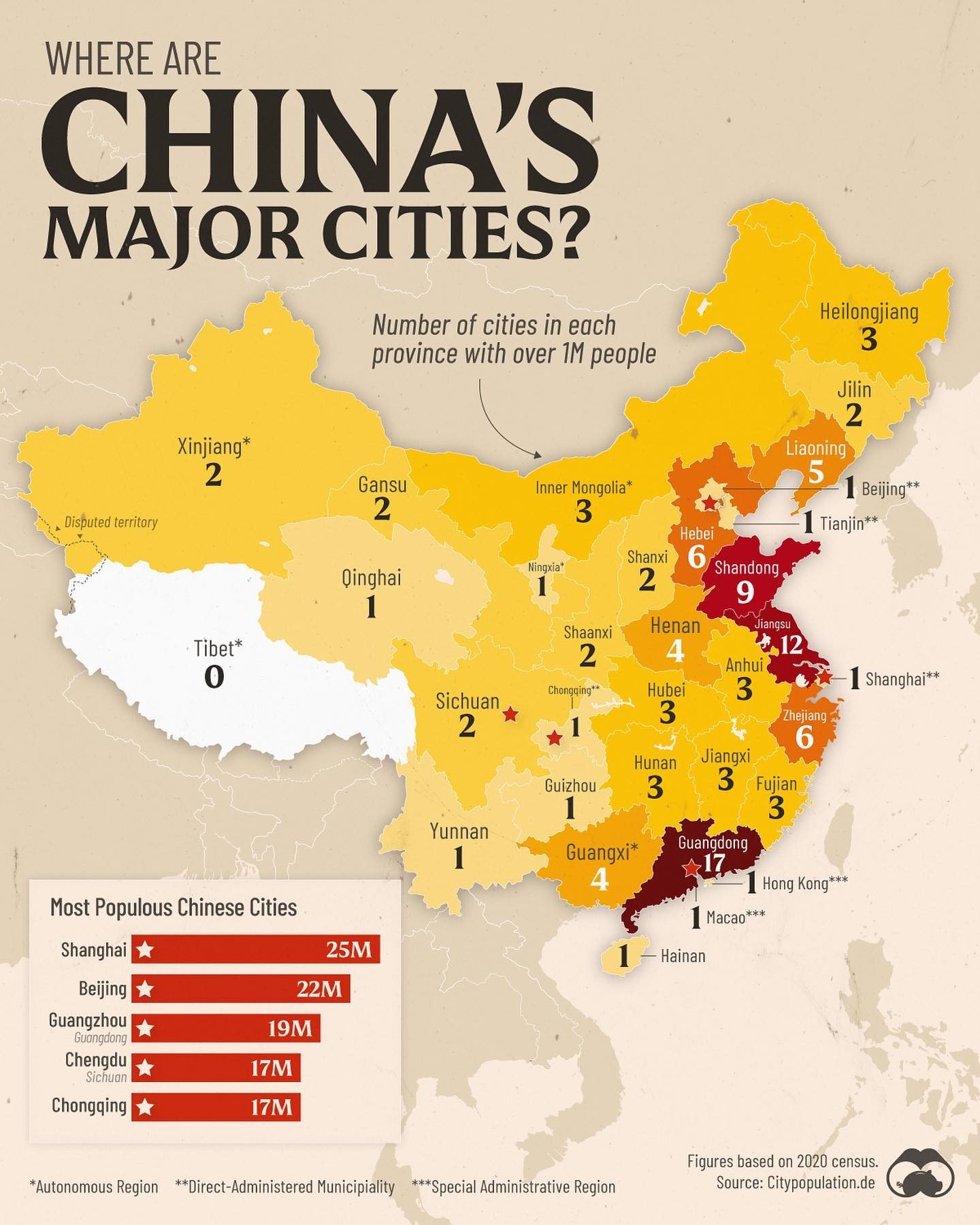
China is home to 105 cities with populations exceeding one million people. This staggering figure puts China far ahead of other populous countries like India, which has 65 cities with over one million residents, and the United States, which has only nine. Guangdong, China's most populous province, has a population that rivals the entire country of Japan. This urbanization trend is a testament to China's rapid economic growth and development over the past few decades.
Context: Why This Matters
Understanding the distribution and population of China's major cities is crucial for grasping the country's economic, social, and political dynamics. These urban centers are not just population hubs; they are the engines driving China's economy, innovation, and cultural influence. The concentration of people and resources in these cities shapes national policies, infrastructure development, and global trade.
The Distribution of Major Cities
Provincial Breakdown
China's cities with populations over one million are distributed across 23 provinces, along with several autonomous regions and municipalities. Here's a breakdown of the provinces and their major cities:
- Shaanxi: Xi'an
- Gansu: Lanzhou
- Inner Mongolia: Hohhot
- Heilongjiang: Harbin
- Liaoning: Shenyang
- Jilin: Changchun
- Tianjin: Tianjin
- Xinjiang: Ürümqi
- Qinghai: Xining
- Ningxia: Yinchuan
- Hubei: Wuhan
- Shanxi: Taiyuan
- Shandong: Jinan
- Hunan: Changsha
- Jiangxi: Nanchang
- Fujian: Fuzhou
- Guangxi: Nanning
- Guangdong: Guangzhou, Shenzhen, Dongguan, Foshan
- Hong Kong: Hong Kong
- Macao: Macao
- Hainan: Haikou
- Shanghai: Shanghai
- Sichuan: Chengdu
- Yunnan: Kunming
- Guizhou: Guiyang
- Zhejiang: Hangzhou
- Anhui: Hefei
- Chongqing: Chongqing
Administrative Regions
China's administrative regions add complexity to the urban landscape. Autonomous regions like Xinjiang, Guangxi, and Inner Mongolia have unique political and cultural dynamics that influence their urban development. Special administrative regions like Hong Kong and Macao operate under different legal and economic systems, making them distinct from mainland cities. Direct-administered municipalities such as Tianjin, Shanghai, and Beijing have a high degree of autonomy and serve as critical economic and political hubs.
The Most Populous Cities
China's most populous cities are economic and cultural powerhouses, each with its unique identity and significance.
Beijing
As the capital of China, Beijing is unsurprisingly the most populous city, with a population of over 22 million. It is the political, cultural, and educational center of the country. Beijing's urban landscape is a blend of ancient history, modern infrastructure, and cutting-edge technology. Key landmarks include the Forbidden City, Tiananmen Square, and the 2008 Olympic venues.
Guangzhou
Guangzhou, with a population of 19 million, is a major economic hub in southern China. Known for its manufacturing sector and export-oriented economy, Guangzhou is a crucial player in global trade. The city is also a cultural melting pot, blending traditional Cantonese culture with modern influences. Notable attractions include Canton Tower, Chen Clan Academy, and the ancient temples of the Six Banyan Tree Temple.
Chengdu
Chengdu, located in Sichuan province, is known for its laid-back atmosphere and vibrant food scene. With a population of 17 million, Chengdu is a major financial and technological center. The city is famous for its spicy Sichuan cuisine, giant panda sanctuaries, and historical sites like the Jinli Ancient Street and the Wenshu Monastery.
Chongqing
Chongqing, another city with a population of 17 million, is known for its mountainous terrain and unique culture. It is a major industrial and commercial center, especially in the automotive and technology sectors. The city is famous for its hotpot dining experience, ancient Bayu culture, and scenic spots like the Three Gorges and the Yangtze River.
The Role of Major Cities in China's Economy
China's major cities are the backbone of the country's economic growth. They are home to the headquarters of numerous multinational corporations, research institutions, and technological innovators. These urban centers attract talent from across the country, fostering a dynamic environment for entrepreneurship and innovation.
Economic Hubs
Cities like Shanghai, Beijing, and Shenzhen are global financial centers, hosting major stock exchanges and financial institutions. These cities are pivotal in driving China's economic policies, technological advancements, and international trade. They also serve as the headquarters for many of the country's tech giants, including Alibaba, Tencent, and Huawei.
Industrial Centers
Major cities are also significant industrial hubs. Guangdong, for instance, is renowned for its manufacturing sector, contributing significantly to China's export economy. Cities like Wuhan and Chongqing are hubs for heavy industries like automotive and aerospace.
Cultural and Educational Centers
China's major cities are not just economic powerhouses; they are also cultural and educational hubs. Beijing, for example, is home to some of the country's most prestigious universities, including Peking University and Tsinghua University. Shanghai and Guangzhou are known for their vibrant arts and music scenes, hosting international festivals and events.
Practical Tips for Navigating China's Major Cities
Navigating China's major cities can be an exciting and rewarding experience. Here are some practical tips to enhance your experience:
Transportation
China's cities offer a range of efficient transportation options. High-speed trains connect major cities, making long-distance travel convenient. Within cities, subways, buses, and taxi services are widely available. Apps like DiDi and Meituan are useful for booking rides and navigating through the urban landscape.
Language
While Mandarin is the official language, many signs and announcements are also available in English, especially in major cities. Learning basic Mandarin phrases can be very helpful, especially in areas where English is less common.
Local Customs
Understanding local customs and etiquette can greatly enhance your experience. For example, tipping is not customary in China, and it’s important to respect local dining etiquette, such as using chopsticks correctly and avoiding certain topics of conversation that may be considered sensitive.
Important Takeaways
China's urban landscape is a complex and dynamic ecosystem, shaped by a blend of ancient traditions and modern innovations. Understanding the distribution and significance of its major cities provides valuable insights into China's economic, political, and cultural dynamics. The cities are not just population centers but are pivotal in driving the country's growth and development.
Conclusion
China's major cities play a crucial role in shaping the country's future. From Beijing's political influence to Guangzhou's economic prowess, each city contributes uniquely to China's development. As the country continues to evolve, these urban centers will remain at the forefront of innovation, culture, and global influence. Whether you're a resident, a visitor, or just interested in understanding China better, exploring these cities offers a richer understanding of the nation's vibrant and diverse landscape.
Watch the Reel
Questions readers ask
How does China's number of large cities compare to other countries?
China has 105 cities with over one million people, significantly more than other large countries. For instance, India has 65 such cities, while the United States has only nine.
Which province in China has the largest population?
Guangdong is the most populous province in China. Its population is comparable to that of the entire country of Japan, making it a significant contributor to China's urban landscape.
What role do China's urban centers play in the country's development?
China's urban centers are pivotal in driving the country's economic and social growth. These cities are not just large population hubs; they are the engines that power China's overall development.
What is the population of Chongqing, one of China’s major urban centers?
Chongqing is one of the most populous cities in China, with a population that exceeds 14.5 million people as of the latest estimates. Its large population makes it a significant urban center in the country.
What factors have contributed to the rapid urbanization in China?
China's rapid urbanization can be attributed to its economic growth and development over the past few decades. This trend has led to the emergence of numerous cities with populations exceeding one million people.
What are the major cities in Guangdong, China's most populous province?
Guangdong is home to several major cities, including Guangzhou, Shenzhen, and Dongguan. These cities are significant contributors to the province's economic and social landscape, driving much of China's urban growth.
How has Shanghai's population grown in recent years?
Shanghai, one of China's most populous cities, has experienced significant population growth. As of the latest estimates, Shanghai's population exceeds 26.3 million people, making it a major urban center in the country.
Recent articles
Fresh deep dives from the latest Reels we unpacked.




Comments
Be the first to comment.