China's Nuclear Waste Storage: The Beishan Underground Research Laboratory
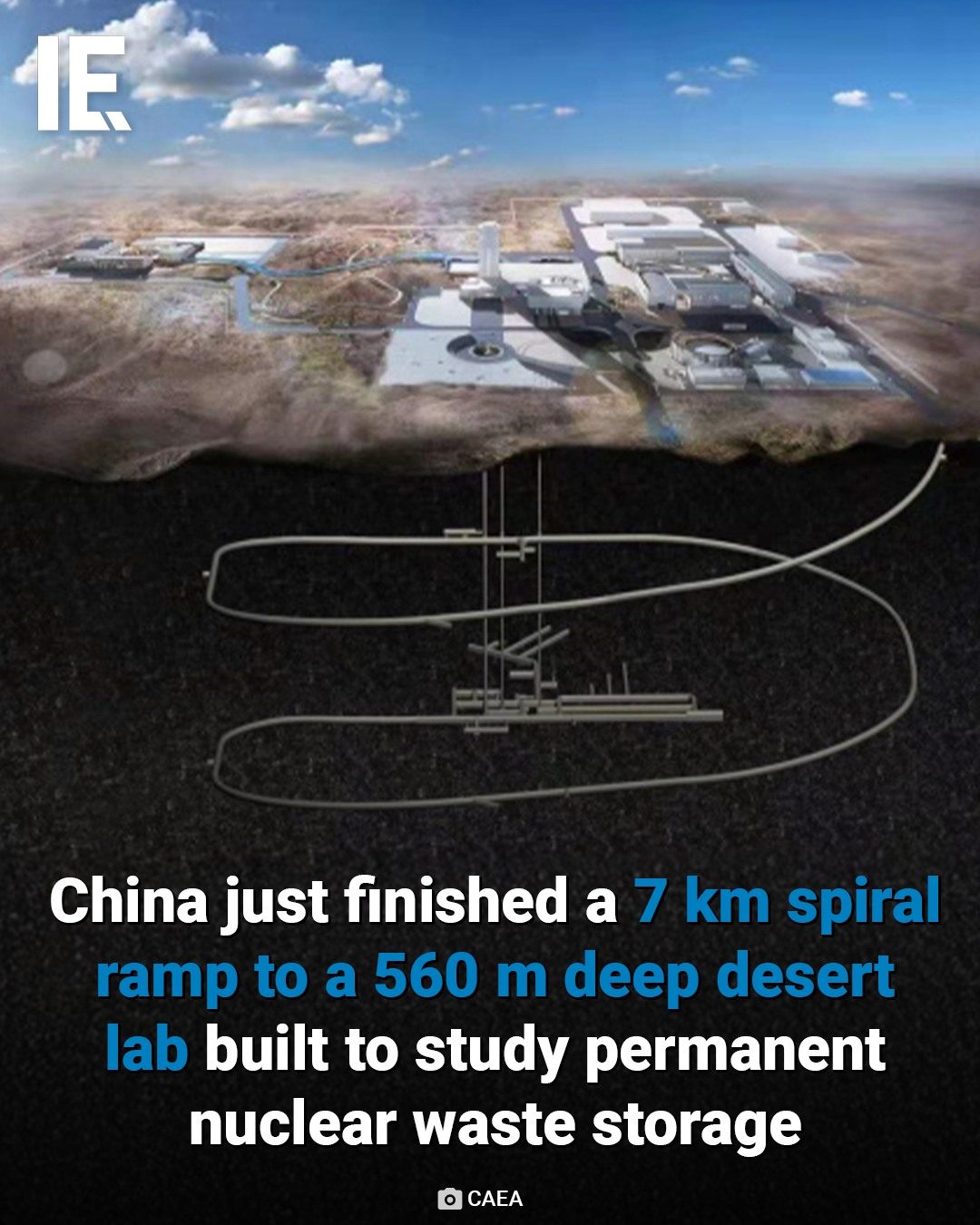
Deep beneath the Gobi Desert near Jiuquan, China, a monumental engineering feat is underway. The Beishan Underground Research Laboratory is a sprawling facility designed to test and validate methods for the long-term, safe isolation of high-level radioactive waste. A significant milestone in this project has recently been achieved with the completion of a 7-kilometer spiral ramp, which descends to a depth of 560 meters.
Context / Why This Matters
The safe disposal of nuclear waste is a global challenge, particularly for high-level waste, which remains radioactive for thousands of years. Proper disposal ensures public safety and environmental protection. China's Beishan facility aims to pioneer solutions for long-term, safe, and effective nuclear waste management.
The Beishan Underground Research Laboratory
The Beishan Underground Research Laboratory is part of a broader effort to enhance nuclear waste management technologies. The facility is designed to test and validate repository designs, ensuring that high-level radioactive waste can be safely isolated from the environment. The lab's unique structure, which includes the 7-kilometer spiral ramp and multiple shafts, allows for the efficient movement of people, equipment, and experiments deep into the stable rock where future repository designs can be validated.
The Spiral Ramp and Its Engineering
The 7-kilometer spiral ramp is a remarkable engineering achievement. The ramp is about 7.03 meters wide and descends at a 10 percent gradient, allowing for a smooth and controlled descent into the lab. The spiral design is not just for aesthetic purposes but serves a functional role by allowing for a gradual and controlled descent, which is crucial for safely transporting heavy equipment and personnel.
Multiple Shafts and Underground Levels
The laboratory features multiple shafts and two underground levels, each designed for specific research and storage purposes. These levels are interconnected by the spiral ramp, allowing researchers to move between different areas of the lab seamlessly.
Research and Validation
The underground lab will be used to validate future repository designs, ensuring that the methods used for isolating nuclear waste are effective and safe. The lab's design allows for extensive testing and validation, making it a crucial component in the development of future nuclear waste management technologies.
Permanent Nuclear Waste Storage
The primary goal of the Beishan Underground Research Laboratory is to test and validate methods for the permanent storage of nuclear waste. This involves ensuring that the waste can be safely isolated from the environment for the long term, which is crucial for public safety and environmental protection.
The Role of the Spiral Ramp
The spiral ramp plays a critical role in the lab's design, allowing for the efficient and safe transportation of nuclear waste and research equipment deep into the stable rock. The ramp's unique design ensures that researchers can move between different levels of the lab seamlessly, facilitating extensive testing and validation.
Ensuring Public Safety
One of the main concerns when managing nuclear waste is public safety. The Beishan Underground Research Laboratory is designed to address these concerns by ensuring that high-level radioactive waste can be safely isolated from the environment. The lab's design and the methods used for isolating the waste are carefully validated to ensure public safety.
Practical Tips for Understanding Nuclear Waste Management
Understanding nuclear waste management requires a grasp of several key concepts and technologies. Here are some practical tips to help you navigate this complex field:
Know the Types of Nuclear Waste
Nuclear waste can be categorized into low-, intermediate-, and high-level waste. Each type requires different management strategies. High-level waste, which is the focus of the Beishan facility, is the most radioactive and requires long-term isolation.
Understand Repository Design
Repository design is critical for the safe storage of nuclear waste. The Beishan facility is testing and validating various repository designs to ensure that they can effectively isolate nuclear waste from the environment.
Consider Long-Term Isolation
Long-term isolation is essential for managing high-level nuclear waste. The Beishan Underground Research Laboratory is designed to test methods for isolating waste for thousands of years, ensuring public safety and environmental protection.
Important Takeaways
The completion of the 7-kilometer spiral ramp marks a significant milestone in the development of the Beishan Underground Research Laboratory. The lab's design, which includes multiple shafts and underground levels, allows for extensive testing and validation of nuclear waste management technologies.
The Role of Engineering
Engineering plays a crucial role in the design and construction of the Beishan facility. The spiral ramp, for example, is a remarkable engineering achievement that facilitates the efficient and safe transportation of nuclear waste and research equipment.
The Need for Long-Term Solutions
The Beishan Underground Research Laboratory is a testament to the need for long-term solutions in nuclear waste management. The lab's design and the methods used for isolating nuclear waste are carefully validated to ensure public safety and environmental protection.
Conclusion
The Beishan Underground Research Laboratory represents a significant step forward in the quest for safe and effective nuclear waste management. The completion of the 7-kilometer spiral ramp marks a major milestone in this endeavor, and the lab's design and research capabilities hold great promise for the future. As the world continues to rely on nuclear energy, the need for innovative and effective nuclear waste management solutions has never been greater. The Beishan facility is poised to play a crucial role in addressing this global challenge.
Watch the Reel
Questions readers ask
Why is China building an underground nuclear waste lab in the Gobi Desert?
China is constructing the Beishan Underground Research Laboratory to develop and test methods for the long-term, safe isolation of high-level radioactive waste. The Gobi Desert was chosen for its geological stability, remoteness and dry climate.
What is the purpose of the 7km spiral ramp in the Beishan facility?
The 7km spiral ramp serves as a means of accessing the underground facility and transporting equipment and materials. It descends to a depth of 560 meters, allowing researchers to study the suitability of deep underground conditions for permanent nuclear waste storage.
What makes the Beishan project a significant engineering feat?
The Beishan project is notable for its scale and the challenges involved in excavating and constructing a massive underground facility with a 7km spiral ramp. The project requires precise engineering, geological expertise and safety measures to ensure the integrity of the site.
What types of nuclear waste will be studied at the Beishan facility?
The Beishan facility will focus on high-level radioactive waste, which is generated from nuclear power plants and remains dangerous for thousands of years. Research will be centered on methods for isolating this waste safely and permanently.
How does the Beishan Underground Research Laboratory contribute to global nuclear waste management?
By pioneering new methods for long-term nuclear waste storage, the Beishan facility aims to advance global efforts in nuclear waste management. The insights gained will be valuable for countries seeking effective and safe solutions for handling high-level radioactive waste.
Recent articles
Fresh deep dives from the latest Reels we unpacked.




Comments
Be the first to comment.