Solar Power Expansion in China: Innovative Approaches to Renewable Energy
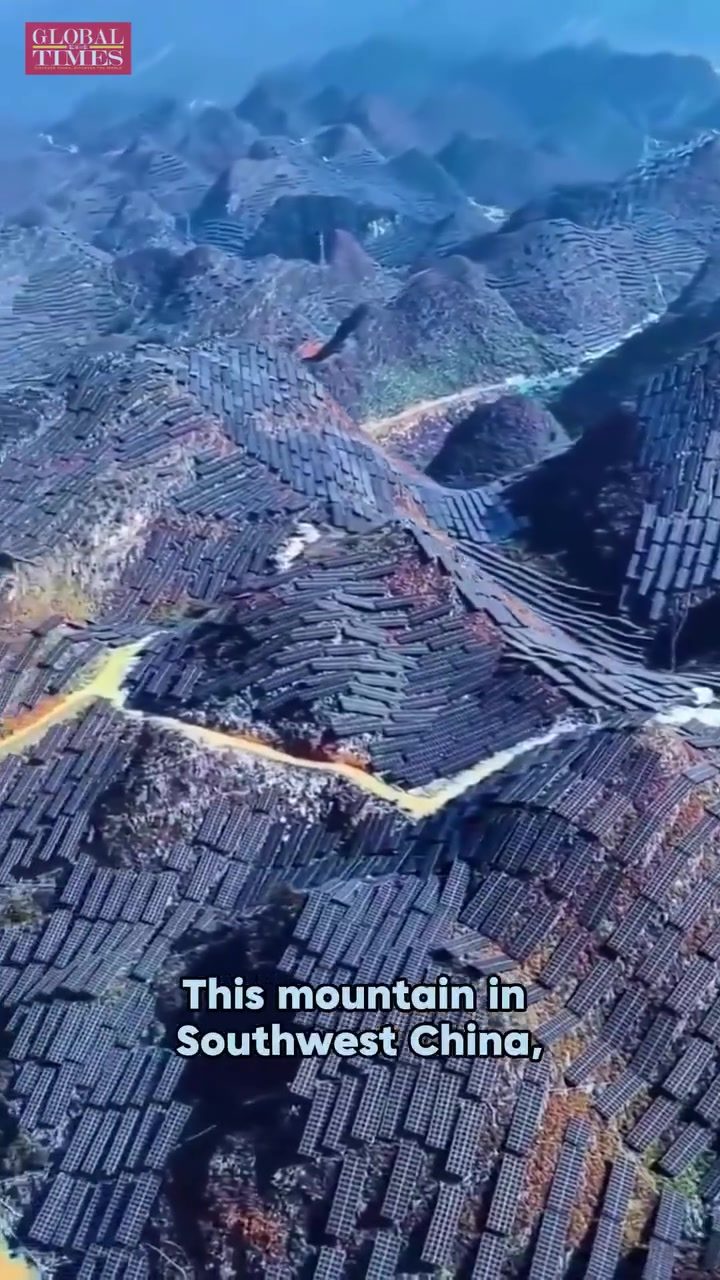
The expansive solar panel installations covering a mountain in southwest China's Guizhou province have sparked curiosity and intrigue. The unique landscape, characterized by karst topography, has historically posed significant challenges for traditional agriculture and development. The rocky terrain and harsh conditions made it difficult to cultivate crops like walnut and camphor trees, leading to a search for alternative uses for the land. The arrival of solar projects has transformed this once-unproductive area into a thriving renewable energy hub.
Why This Matters
China's ambitious plans for solar power expansion are part of a broader global trend. As the demand for clean energy grows, countries worldwide are exploring innovative ways to harness solar power. China is at the forefront of this movement, with plans to install 253 gigawatts of new solar capacity between 2025 and 2030. This initiative underscores the country's commitment to sustainable energy and its strategic approach to utilizing diverse landscapes for solar farms.
Context: The Unique Landscape of Guizhou
Karst Terrain and Agricultural Challenges
Guizhou's karst regions are known for their rugged, rocky landscape, which has long been unsuitable for conventional farming. Decades of attempts to cultivate various crops have met with limited success. The harsh conditions and rocky terrain made it economically unfeasible to develop the land for other purposes. The introduction of solar projects has provided a new lease on life for this challenging terrain.
Agricultural Integration
One of the most innovative aspects of China's solar power expansion is the integration of agriculture beneath the solar panels. Traditional Chinese herbs, which thrive in shaded, drought-tolerant environments, are now being cultivated beneath the solar arrays. This dual-use approach not only maximizes land utilization but also creates a symbiotic relationship between energy production and agriculture.
Global and National Expansion
China’s Leading Role
By June 2026, China's installed solar capacity had reached 1.27 billion kilowatts, making it the global leader in solar energy production. This achievement is a testament to the country's strategic planning and investment in renewable energy. Guizhou is just one example of how China is leveraging diverse landscapes to meet its energy needs.
Innovative Locations
China's solar projects are not limited to traditional flatlands. The country is exploring unconventional locations for solar farms, including:
- Deserts: Areas with vast expanses of unused land are being transformed into solar farms. Between 2025 and 2030, China plans to install 253 gigawatts of new solar capacity in desert regions.
- High Altitudes: In plateaus above 5,000 meters, the stronger sunlight is helping power some of the world’s highest solar stations. These high-altitude installations take advantage of increased solar radiation and minimal cloud cover.
- Floating Solar: Former mining lakes and other bodies of water are being converted into floating solar farms. These installations turn unused water surfaces into productive clean energy sites.
Practical Tips for Solar Power Expansion
Site Selection
When planning solar farms, consider the following factors:
- Topography: Assess the terrain for suitability. Rocky or unusually steep terrain can be challenging but may have hidden potential if proper engineering solutions are applied.
- Climate: Analyze the climate and sunlight availability. Locations with higher solar radiation are ideal but traditional agriculture can thrive even in areas with lower light.
- Dual-Use Potential: Explore opportunities for integrating agriculture or other land uses beneath solar panels. This can maximize land utilization and create additional revenue streams.
Technological Innovations
Innovative technologies can enhance the efficiency and effectiveness of solar farms:
- Floating Solar Panels: For areas with abundant water bodies, floating solar panels can be a game-changer. They save land and can be more efficient due to the cooling effect of water.
- High-Altitude Installations: High-altitude regions with clear skies and strong sunlight are ideal for solar farms. Be prepared to address logistical challenges related to installation and maintenance.
Regulatory and Policy Support
Government support and favorable policies are essential for the success of large-scale solar projects:
- Subsidies and Incentives: Leverage government subsidies and incentives to reduce the initial investment burden.
- Grid Integration: Ensure that the grid infrastructure is robust enough to handle the influx of renewable energy from solar farms.
Important Takeaways
- Diverse Land Use: Innovative approaches to solar power expansion, like integrating agriculture and utilizing unconventional locations, can maximize land use and energy production.
- Global Trend: Countries around the world are exploring new ways to meet their energy needs through solar power, driven by the urgency of climate change and the need for sustainable energy sources.
- Technological Advancements: Advances in solar technology, such as floating solar panels and high-altitude installations, are paving the way for more efficient and effective solar farms.
Conclusion
China's innovative approach to solar power expansion serves as a model for the world. By leveraging diverse landscapes and integrating renewable energy with agriculture, China is setting a new standard for sustainable energy production. As other countries follow suit, the global landscape of solar energy is poised for significant growth and innovation. Whether it's on rocky mountaintops, high-altitude plateaus, or floating on water surfaces, the future of solar power is bright and full of potential.
Watch the Reel
Questions readers ask
What makes the solar farms in Guizhou province unique?
The solar farms in Guizhou province are unique due to their installation on karst topography, a type of rocky, barren landscape that was previously challenging for traditional agriculture. This innovative approach to utilizing the land provides a double benefit of energy production and land preservation by preventing land degradation.
How does China integrate solar power with agriculture on rocky terrains?
China integrates solar power with agriculture by installing solar panels over crops or farmland, creating a mutually beneficial environment. This practice, known as agrovoltaics, maximizes land use and enhances the efficiency of both agricultural activities and solar power production, even in rocky and challenging terrains.
What is the significance of China's solar power expansion in global renewable energy trends?
China's solar power expansion signifies a broader global trend towards increased adoption of renewable energy sources. By investing heavily in solar power, China plays a pivotal role in the global shift towards clean energy and sets a powerful example for other countries to follow, promoting sustainable development on a global scale.
In what ways have Guizhou's solar farms transformed previously unproductive land?
Guizhou's solar farms have transformed previously unproductive land by converting rocky, barren landscapes into thriving renewable energy hubs. This transformation has not only increased energy output but also improved local economies by creating jobs and driving infrastructure development in the region.
What challenges does the karst topography pose to solar panel efficiency, and how are they addressed?
The karst topography poses challenges such as uneven surfaces and limited space for solar panel installation. These challenges are addressed through innovative engineering practices, including custom-designed mounting systems that ensure optimal angles for sunlight capture, maximizing solar panel efficiency even in rocky terrain.
What are the broader implications of China's commitment to sustainable development through solar power?
China's commitment to sustainable development through solar power has significant implications for both the country and the world. It reduces reliance on fossil fuels, mitigates climate change, and fosters a cleaner and more sustainable environment. Additionally, it encourages innovation in renewable energy technology, driving global progress towards a more environmentally friendly future.
How do the Guizhou solar farms contribute to China's land use strategy for solar power?
The Guizhou solar farms contribute to China's land use strategy by utilizing previously unproductive, rocky terrains for solar power generation. This approach not only maximizes the use of available land but also prevents further land degradation, ensuring a balanced and efficient approach to renewable energy infrastructure development in the country.
Related deep dives
Similar reads based on topic and creator.

Recent articles
Fresh deep dives from the latest Reels we unpacked.




Comments
Be the first to comment.