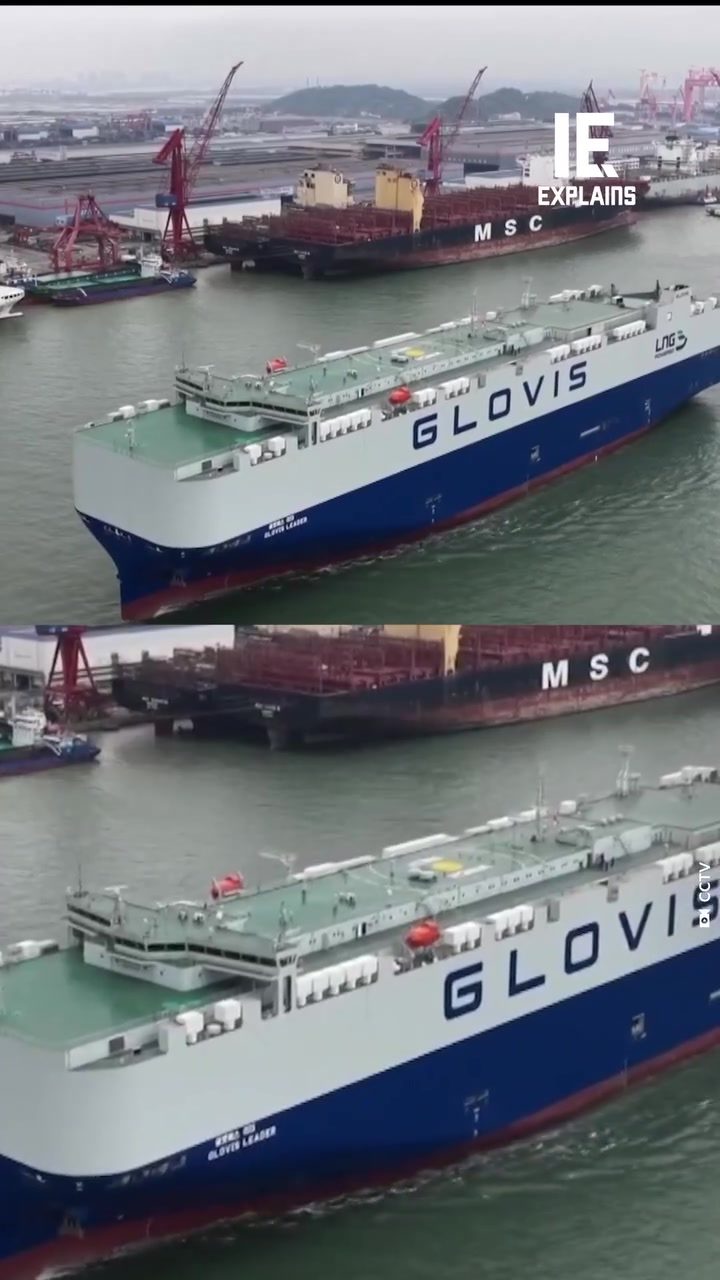
The Glovis Leader: China's New Maritime Giant
China has made a significant stride in the maritime industry with the delivery of the Glovis Leader, the world's largest car carrier. This monumental vessel, built entirely in China, represents a leap forward in cargo ship technology and underscores China's growing ambitions in the global auto export market.
Context / Why this matters
The Glovis Leader is more than just a record-breaker; it's a symbol of China's rapidly evolving industrial and technological prowess. The ship's immense capacity and advanced features highlight the country's capability to lead in maritime engineering and auto exports. For those in the shipping industry, this development signals a new era of efficiency and sustainability in global cargo transport.
Carrying Capacity and Versatility
The Glovis Leader stands at an impressive 754 feet (230 meters) in length and boasts 14 decks. Its capacity to carry 10,800 vehicles in a single voyage sets a new world record, surpassing the previous high of 9,500, which was also achieved by a Chinese company. This ship is designed to transport a wide array of vehicles, including conventional cars, electric vehicles (EVs), hydrogen-powered cars, and heavy-duty trucks. This versatility makes it a vital asset for global automotive logistics.
Environmental Impact
One of the most notable features of the Glovis Leader is its use of liquefied natural gas (LNG) as fuel. This choice significantly reduces the ship's environmental footprint. In pollution control zones, the use of LNG cuts nitrogen oxide emissions by nearly 80% and reduces CO2 emissions by around 20% compared to conventional marine fuel. This focus on sustainability is crucial as the maritime industry looks to reduce its carbon footprint and meet increasingly stringent environmental regulations.
Historical Context and Future Prospects
China's journey from an auto technology importer to a global exporter is a testament to its rapid industrial development. In 2023, China became the world's largest car exporter, overtaking Japan for the first time. This achievement is backed by substantial infrastructure investments, including factories, ports, and now, the world's largest car carrier ships. The Glovis Leader will be operated by Hyundai Globus, a South Korean shipping giant, and will handle both long-distance and international routes efficiently, boasting a maximum speed of 19 knots.
Practical Tips
For those involved in the automotive or shipping industries, the Glovis Leader offers several practical insights:
- Invest in Versatility: The ship's ability to carry a variety of vehicles highlights the importance of versatility in modern shipping.
- Embrace Sustainable Fuel: The use of LNG as a fuel source demonstrates a commitment to reducing emissions and complying with environmental regulations.
- Innovate Consistently: China's rapid progression from an importer to an exporter of auto technology underscores the benefits of continuous innovation and infrastructure development.
Important Takeaways
- Record-Breaking Capacity: The Glovis Leader can carry 10,800 vehicles in a single voyage, setting a new world record.
- Sustainable Fuel: The use of LNG significantly reduces nitrogen oxide and CO2 emissions.
- Versatile Design: The ship is designed to carry a wide range of vehicles, from conventional cars to heavy-duty trucks.
- Infrastructure Investment: China's rise in the auto export market is backed by substantial investments in factories, ports, and shipping infrastructure.
- Global Impact: The Glovis Leader will be operated by Hyundai Globus, highlighting the global reach and collaboration in the maritime industry.
Conclusion
The Glovis Leader is a testament to China's advancements in maritime engineering and its growing influence in the global auto export market. With its record-breaking capacity, sustainable fuel, and versatile design, this ship sets a new standard for cargo transport. As China continues to invest in infrastructure and innovation, the maritime industry can expect more groundbreaking developments in the years to come.
Watch the Reel
Questions readers ask
What makes the Glovis Leader unique among car carriers?
The Glovis Leader stands out due to its exceptional capacity, accommodating over 10,000 vehicles, making it the world's largest car carrier. Additionally, its construction in China signifies the country's advancing role in global maritime infrastructure and shipbuilding.
How does the Glovis Leader contribute to sustainable shipping?
The Glovis Leader is designed with sustainability in mind. One of its notable features is that it is an LNG-powered car carrier. LNG, or liquefied natural gas, is a cleaner-burning fuel compared to traditional marine fuels, helping to reduce the vessel's carbon footprint.
What does the Glovis Leader signify for China's maritime industry?
The Glovis Leader is a testament to China's growing maritime power. Its construction and launch demonstrate China's ability to build highly sophisticated and large-scale vessels, positioning the country as a leader in the global shipping industry.
What advantages does the Glovis Leader offer for long-distance car transport?
The Glovis Leader's immense capacity allows for the efficient transport of a large number of vehicles in a single voyage. This not only reduces the number of trips needed but also optimizes fuel consumption, making it a cost-effective and efficient solution for long-distance car transport.
What are the key specifications of the Glovis Leader?
The Glovis Leader is designed to carry over 10,000 vehicles, making it the largest car carrier in the world. It is powered by LNG, which is a more eco-friendly fuel option, and it is entirely built in China, showcasing the country's advanced shipbuilding capabilities.
How does the Glovis Leader enhance efficiency in global cargo shipping?
The Glovis Leader's high capacity and advanced design features contribute to enhanced efficiency in global cargo shipping. By transporting a large number of vehicles in one trip, it reduces the overall number of voyages required, leading to lower operational costs and emissions.
What role does the Glovis Leader play in the auto export market?
The Glovis Leader plays a crucial role in the auto export market by providing a highly efficient and sustainable means of transporting a large volume of vehicles. Its capacity and design features make it an ideal choice for companies looking to export vehicles globally, helping to streamline the supply chain and reduce environmental impact.
Related deep dives
Similar reads based on topic and creator.

Recent articles
Fresh deep dives from the latest Reels we unpacked.




Comments
Be the first to comment.