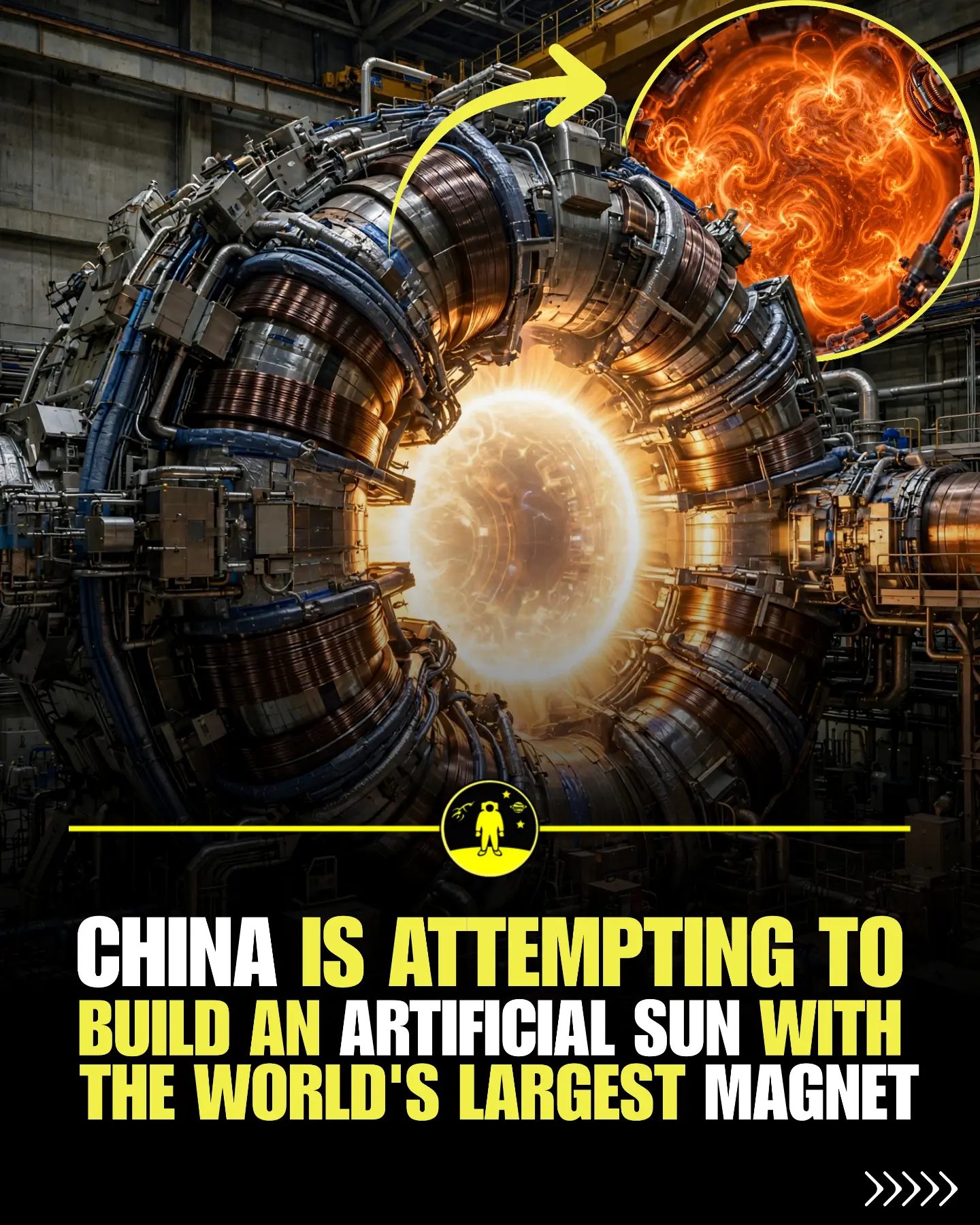
China's Ambition: Building an Artificial Sun with Nuclear Fusion
China is at the forefront of a monumental scientific endeavor to harness the power of nuclear fusion, often referred to as building an artificial sun. This project, one of the largest fusion research initiatives in the country, aims to revolutionize clean energy by recreating the physical processes that power our Sun. The goal is to generate abundant, low-carbon electricity while minimizing radioactive waste—an ambitious target that could reshape the global energy landscape.
Why This Matters
The pursuit of nuclear fusion represents a significant step toward sustainable energy solutions. Unlike traditional nuclear fission, which produces long-lived radioactive waste, fusion has the potential to offer a cleaner and more abundant energy source. This technology could address some of the most pressing environmental challenges of our time, including climate change and energy security. China's progress in this field is a testament to the global scientific community's commitment to developing practical fusion power.
Understanding Nuclear Fusion
What is Nuclear Fusion?
Nuclear fusion is a process where atomic nuclei combine to form heavier nuclei, releasing a tremendous amount of energy. This is the same process that powers the Sun and other stars. On Earth, scientists aim to replicate this process to generate electricity. Fusion reactors use powerful superconducting magnets to contain plasma heated to temperatures hotter than the Sun's core. This plasma is the fourth state of matter, consisting of free electrons and nuclei, and it is the medium through which fusion reactions occur.
The Artificial Sun Project
China's artificial sun project involves the construction of a massive nuclear fusion reactor. The key component of this project is the world's largest superconducting magnet, which weighs an impressive 582 tons. This magnet is crucial for containing the superheated plasma within the reactor. The goal is to achieve a stable and controlled fusion reaction, paving the way for unlimited energy production.
The reactor, though referred to as an "artificial sun," should not be mistaken for a miniature star. Instead, it aims to mimic the nuclear fusion processes that occur naturally in the Sun. By doing so, scientists hope to generate clean, abundant energy that could meet the growing demands of a rapidly developing world.
The Role of Superconducting Magnets
Superconducting magnets are essential for maintaining the stability of the plasma within the fusion reactor. These magnets create powerful magnetic fields that confine the plasma, preventing it from coming into contact with the reactor walls. The use of superconducting materials allows these magnets to operate efficiently, reducing energy losses and enhancing the overall performance of the reactor.
The Global Race for Fusion Power
China is part of a global effort to develop practical fusion power. Scientists and research teams worldwide are working on various fusion technologies, each with its unique approach and challenges. For instance, the International Thermonuclear Experimental Reactor (ITER), a collaborative project involving 35 nations, is another significant initiative in this field. ITER aims to demonstrate the feasibility of fusion power by producing more energy than it consumes.
Collaborative Efforts and Technological Breakthroughs
Despite the challenges, significant progress has been made in fusion research. For example, the Tokamak Energy project in the UK has developed a compact spherical tokamak that could lead to more efficient and cost-effective fusion reactors. Similarly, the Wendelstein 7-X stellarator in Germany is exploring an alternative approach to fusion, using a complex magnetic field configuration to confine the plasma.
Practical Tips for Staying Informed
If you're interested in staying informed about the latest developments in fusion energy, there are several steps you can take:
-
Follow Research Institutions: Keep an eye on updates from major research institutions and laboratories involved in fusion research. Organizations like the International Atomic Energy Agency (IAEA) and national fusion research centers often publish reports and articles on the latest advancements.
-
Subscribe to Scientific Journals: Journals such as Nuclear Fusion and Journal of Plasma Physics publish cutting-edge research and reviews on fusion energy. Subscribing to these journals can provide valuable insights into the field's progress.
-
Attend Conferences and Workshops: Participating in conferences and workshops focused on fusion energy can offer opportunities to learn from experts and network with professionals in the field. Events like the International Conference on Plasma Physics and Controlled Nuclear Fusion are excellent platforms for staying updated.
-
Engage with Online Communities: Joining online forums and social media groups dedicated to fusion energy can provide a wealth of information and discussions. Platforms like Reddit and specialized forums often have active communities sharing the latest news and insights.
Important Takeaways
- Potential of Fusion Energy: Nuclear fusion holds the promise of abundant, low-carbon electricity, making it a key technology for a sustainable future.
- Global Efforts: Countries and research institutions worldwide are collaborating to develop practical fusion power, marking a significant scientific endeavor.
- Technological Challenges: Despite progress, significant engineering challenges remain, requiring continued innovation and breakthroughs.
Conclusion
China's ambitious project to build an artificial sun is a testament to the global scientific community's dedication to advancing nuclear fusion technology. This endeavor, along with other global initiatives, represents a critical step toward a future powered by clean, abundant energy. The journey to practical fusion power is fraught with challenges, but every breakthrough brings us one step closer to harnessing the power of the stars for the benefit of humanity. By staying informed and engaged, we can contribute to and witness the evolution of one of humanity's most significant scientific challenges.
Watch the Reel
Questions readers ask
What exactly is the Artificial Sun project in China?
The Artificial Sun project is China's ambitious initiative to build a nuclear fusion reactor, mimicking the processes that power the Sun. The goal is to create a virtually limitless source of clean, low-carbon energy by fusing atomic nuclei together, rather than splitting them apart as in traditional nuclear power.
How does nuclear fusion differ from nuclear fission?
Nuclear fusion involves combining atomic nuclei to release energy, while nuclear fission involves splitting atomic nuclei. Fusion produces far less radioactive waste and has a lower risk of nuclear accidents. Furthermore, fusion fuel sources like hydrogen isotopes are more abundant and accessible
Why is China investing in this artificial sun project?
China is investing in the Artificial Sun project to secure a cleaner, more sustainable energy future. By developing nuclear fusion technology, China aims to reduce its reliance on fossil fuels, decrease carbon emissions, and minimize radioactive waste. Success in this endeavor could also position China as a global leader in clean energy technology.
What are the potential benefits of nuclear fusion power?
Nuclear fusion power promises abundant, low-carbon electricity with minimal radioactive waste. It could significantly reduce greenhouse gas emissions, decrease dependence on fossil fuels, and provide a more sustainable energy source for future generations.
What are the main challenges facing China's Artificial Sun project?
The primary challenges include achieving and sustaining the extremely high temperatures and pressures required for nuclear fusion, as well as developing materials that can withstand these harsh conditions. Additionally, creating a self-sustaining fusion reaction that produces more energy than it consumes is a significant hurdle.
How does China's Artificial Sun project compare to similar initiatives worldwide?
China's Artificial Sun project is one of the world's largest fusion research initiatives. Other notable projects include the International Thermonuclear Experimental Reactor (ITER) in France, which involves a collaboration of 35 countries, and the National Ignition Facility in the United States. Each of these projects aims to advance nuclear fusion technology, but China's endeavor stands out due to its scale and national focus.
What is the potential impact of China's Artificial Sun project on the global energy landscape?
If successful, China's Artificial Sun project could revolutionize the global energy landscape by providing a cleaner, more sustainable power source. It could reduce reliance on fossil fuels, decrease carbon emissions, and inspire other nations to invest in nuclear fusion research and development. The project's success could also lead to significant advancements in clean energy technology worldwide.
Recent articles
Fresh deep dives from the latest Reels we unpacked.




Comments
Be the first to comment.