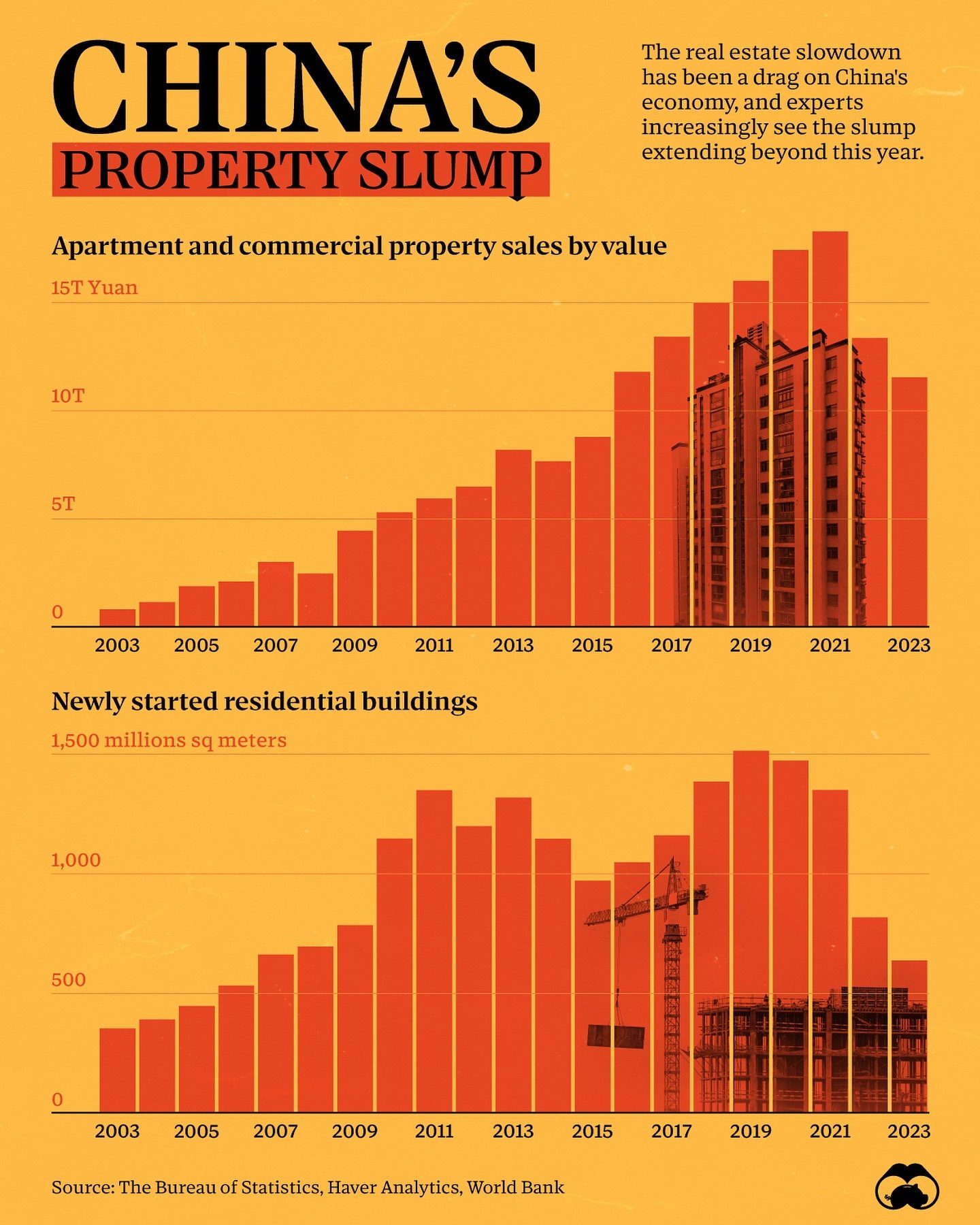
China's Property Slump
China's real estate market, once a powerhouse of economic growth, has encountered significant challenges. The liquidation of Evergrande, once the country’s largest real estate developer, on January 28th, marks a pivotal moment in the current economic landscape. This event highlights the ongoing struggles within China’s real estate sector, adding to a growing list of economic concerns.
Why This Matters
The real estate sector plays a crucial role in China’s economy, contributing significantly to GDP and employment. A sustained slump in this sector can have broader economic implications, affecting consumer spending, investment, and overall economic stability. Understanding the trends and metrics related to property sales and new housing starts provides valuable insights into the current state and future trajectory of China's real estate market.
Main Discussion
Historical Context
To grasp the current situation, it is essential to look back at the historical trends in China's real estate market. From 2003 to 2023, the market has seen significant fluctuations in both apartment and commercial property sales by value. This period also coincided with substantial changes in government policies, economic conditions, and urbanization trends.
Property Sales by Value
The value of apartment and commercial property sales in China has been volatile over the past two decades. Key milestones include:
- 2003-2007: The early 2000s saw a steady increase in property sales, driven by urbanization and economic growth.
- 2008-2012: The global financial crisis of 2008 had a ripple effect on China's real estate market, causing a temporary slowdown. However, government stimulus measures helped revitalize the sector.
- 2013-2019: This period saw a boom in property sales, with values reaching new highs. However, this boom was also marked by increasing debt levels and speculative investments.
- 2020-2023: The COVID-19 pandemic and subsequent economic policies have led to a significant decline in property sales. The liquidation of Evergrande further exacerbates these challenges.
New Housing Starts
New housing starts, measured in square meters, provide another critical metric for understanding the health of the real estate market. Historical trends show:
- 2003-2007: Rapid urbanization and infrastructure development led to a surge in new housing starts.
- 2008-2012: The financial crisis and its aftermath saw a temporary dip in new housing starts, but recovery efforts quickly revitalized the sector.
- 2013-2019: This period was characterized by high levels of construction activity, driven by government policies and economic growth.
- 2020-2023: The pandemic and recent economic policies have led to a significant decline in new housing starts, reflecting the current economic uncertainties.
Current Challenges
The liquidation of Evergrande is just one of the many challenges facing China's real estate market. Other key issues include:
- Debt Levels: High levels of debt among real estate developers and homebuyers have become a significant concern. The liquidation of Evergrande highlights the risks associated with excessive borrowing in the sector.
- Regulatory Policies: Government policies aimed at stabilizing the market, such as restrictions on speculation and tighter lending standards, have also contributed to the current slowdown.
- Economic Uncertainty: Broader economic uncertainties, exacerbated by the pandemic and geopolitical tensions, have dampened consumer confidence and investment in the real estate sector.
Practical Tips
For Investors
Investors in China’s real estate market should consider the following:
- Diversification: Spread investments across different sectors and geographic locations to mitigate risks.
- Due Diligence: Conduct thorough research on developers and projects to avoid high-risk investments.
- Government Policies: Stay informed about government policies and regulatory changes that could impact the market.
For Homebuyers
Homebuyers should also be mindful of the current market conditions:
- Financial Planning: Ensure a stable financial plan before making a purchase, considering factors like interest rates and debt levels.
- Market Trends: Keep an eye on market trends and consult with real estate experts to make informed decisions.
- Government Incentives: Look out for government incentives and support programs for first-time buyers or low-income households.
Important Takeaways
- Historical Trends: Understanding the historical trends in property sales and new housing starts provides valuable context for the current market conditions.
- Current Challenges: The liquidation of Evergrande and other economic uncertainties underscore the significant challenges facing the real estate sector.
- Investor Cautions: Investors and homebuyers must navigate the market carefully, considering factors like debt levels, regulatory policies, and economic uncertainties.
Conclusion
China's real estate market, once a pillar of economic growth, now faces substantial challenges. From the liquidation of Evergrande to broader economic uncertainties, the sector's future is fraught with uncertainty. By examining historical trends and current metrics, investors and homebuyers can gain valuable insights into the market's trajectory and make informed decisions. While the path forward may be uncertain, understanding the key factors at play is essential for navigating this complex landscape.
Watch the Reel
Questions readers ask
What triggered the current decline in China's property market?
The current decline in China's property market was significantly triggered by the liquidation of Evergrande, one of the country's largest real estate developers. This event exacerbated existing issues within the sector, leading to a broader slump.
How does the real estate sector influence China's economic stability?
The real estate sector is a key driver of China's economic stability, contributing significantly to GDP and employment. A slump in this sector can lead to reduced consumer spending, lower investment, and overall economic instability.
What are the implications of the Evergrande liquidation for investors?
The Evergrande liquidation has raised concerns among investors about the stability of China's property market. It has led to uncertainty and potential financial losses, making it crucial for investors to stay informed about market trends and regulatory changes.
What types of properties are most affected by the current market slump?
Both commercial and residential properties in China are experiencing the impact of the market slump. Developers are facing difficulties in completing projects, and there is a noticeable decrease in property sales and new housing starts, which affect both market segments.
What metrics should be monitored to understand the current property market trends?
Key metrics to monitor include property sales volumes, new housing starts, and the financial health of major property developers. These indicators provide insights into the market's performance and can help predict future trends.
How does the property market decline affect employment in China?
The property market decline has led to job losses in the construction and related sectors. With fewer projects being initiated and completed, employers are scaling back, resulting in reduced hiring and potential layoffs.
What measures can policymakers take to mitigate the impact of the property market slump?
Policymakers can introduce targeted fiscal and monetary measures to support the real estate sector and stimulate economic growth. These may include reducing interest rates, providing financial assistance to developers, and encouraging investment in other sectors to diversify the economy.
Related deep dives
Similar reads based on topic and creator.

Recent articles
Fresh deep dives from the latest Reels we unpacked.




Comments
Be the first to comment.