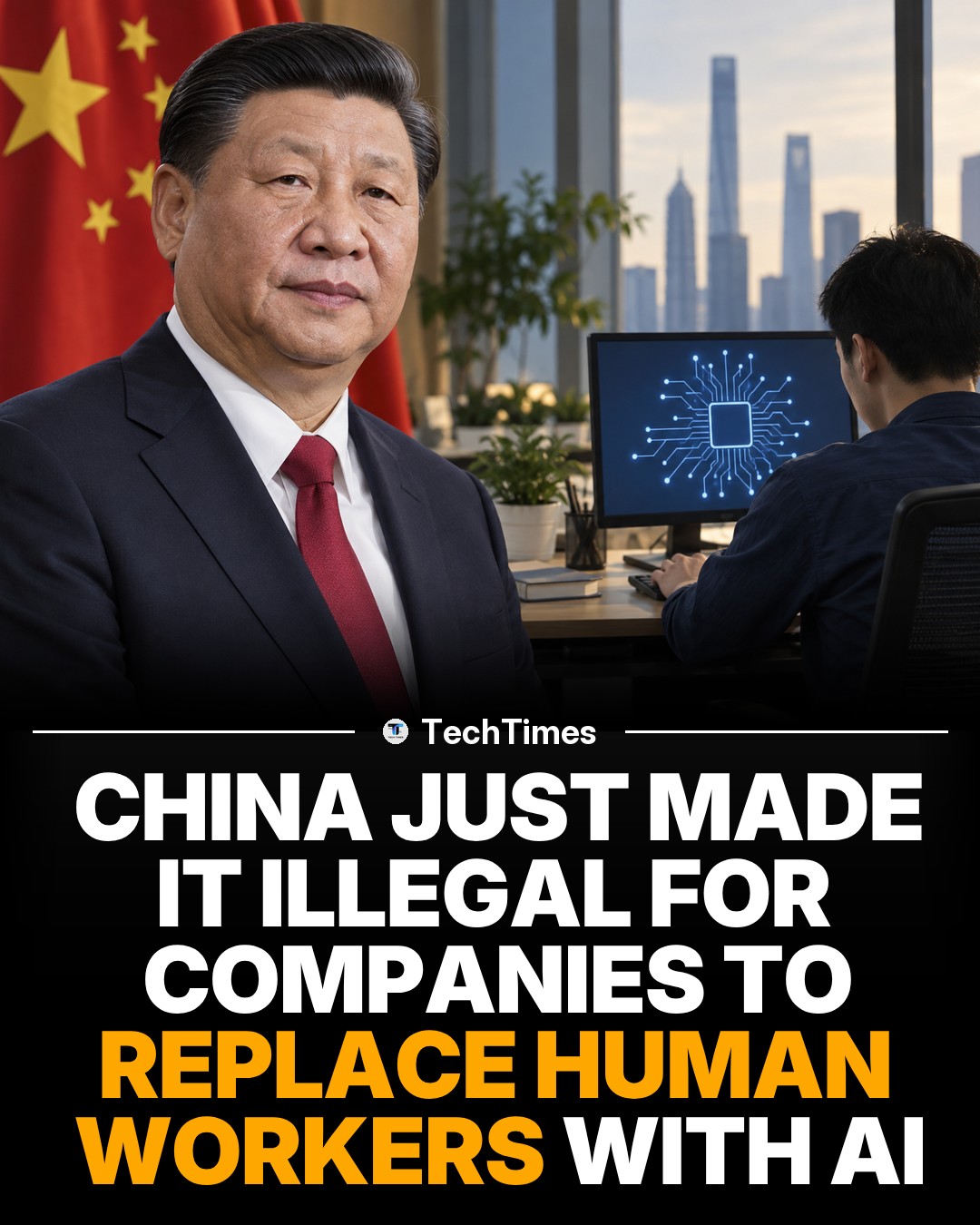
In a move that underscores its commitment to maintaining a balance between technological advancement and social stability, China has recently enacted a law that prohibits companies from replacing human workers with artificial intelligence (AI). While only a few of us may have heard of this yet, China's regulation is a landmark step in AI policy. It challenges the assumption that AI should prioritize efficiency and job cuts. First-world countries like the U.S. and the UK are quietly grappling with the "AI revolution." But China’s concrete policy offers a potential roadmap.
The Regulation’s Terms and Reach
On-screen text reported this law squarely: "China just made it illegal for companies to replace human workers with AI." This is a strict regulation. Businesses in China may not use AI to stop employing humans. The law applies across various sectors. It targets companies in fields from manufacturing to customer service. It does not specify how many workers must be retained or the kinds of jobs, but the purpose is clear: protect jobs, slow unemployment. In its strictness, the regulation is distinctive. Many governments have toyed with AI regulation, but China’s approach is notably aggressive. It tackles the complex interplay between AI and human roles head-on.
China’s Answer to Job Displacement Anxiety
The regulation reflects a critical global debate. Many countries are worried about AI leading to widespread job loss. The World Economic Forum estimates that AI could displace 85 million jobs by 2025. A smaller share of countries have been considering their answer. Just 28% of 2022 OECD surveys indicate countries had AI policy strategies. China's proactive stance contrasts with other strategies, like tax incentives for companies that replace humans with AI, or worker retraining programs. While these responses pertain to improving resilience, China may have steered the course in favor of resilience.
AI and the Labor Market
How will businesses respond?
This regulation sets China apart from other nations. It can encourage companies to focus on how AI can complement and improve human workers' roles. Rather than replacing workers, they might invest more in training, and the relationship between AI and workers is likely to evolve. These strategies could promote productivity while preserving jobs. A comment from the TechTimes source implies that companies must consider how this might impact their bottom line.
How will the workers respond?
Workers are also a part of this complex equation. The regulation acknowledges the broader societal impact of AI, not just economic factors. It reassures workers that their jobs are secure, reducing job displacement apprehension. Workers might experience less stress and anxiety, making them more productive and better able to adapt to new AI technologies.
What about AI?
AI technologies themselves are also impacted. This regulation could drive innovation in AI that focuses on collaboration rather than replacement. Developers might focus on AI that assists human workers, enhances productivity, and creates new job roles. It could spur a new wave of AI applications that are more integrated with human labor.
What about the consumers?
Consumer trust at stake too. They may feel more confident in companies that prioritize human workers and ethical AI practices. If consumers are more aware — as multiple sources suggest — they could drive market demand for these practices. This fosters a culture that values human skills and ethical considerations in technology.
What does the AI community think?
The AI community is split on the regulation. Some see it as a barrier to progress, while others appreciate the focus on social impact. Some view this regulation as a chance to promote innovative AI applications. As the debate continues, it's clear that China's approach will have a profound impact on the future of AI and labor. Companies will need to adapt their strategies, workers will need to upskill and reskill, and policymakers will need to refine their regulations to keep pace with technological advancements. The story of AI in China is far from over, and the future remains unpredictable. It might just be that the country is stepping into a space of unknowns.
What investors should know
The regulation highlights a crucial aspect of the labor market and AI. It shows how closely intertwined their fates are. The regulation will impact the labor market by mandating, indirectly, that companies hire and retain human workers. Investors with a stake in the labor market must consider this. It might also affect AI stock values, with an uptick in AI technologies that complement human labor. When considering your options,
- Watching global markets: As the AI revolution progresses, companies in China might face challenges adapting their business models. Investors might see opportunities in hardware manufacturing as AI augments labor. The labor market is expected to become increasingly dynamic, with new job roles emerging.
- Valuation of AI stocks: Investors might also see potential in AI companies prioritizing human-AI collaboration. They also might see potential in technologies that focus on retraining and upskilling. AI companies that prioritize ethical practices and human collaboration could see increased consumer trust and market demand.
- Portfolio diversification: Investors will need to diversify their portfolios. The regulation could lead to a flurry of new businesses.
China is challenging us to think about AI differently
China's groundbreaking regulation will force companies to reframe their relationship with AI. It pushes us to focus on the human aspect of AI. This can help us address its broader societal implications. It could also make our technology more collaborative and productive. Over time, China’s approach might just become the new normal.
Watch the Reel
Questions readers ask
What exactly does China's new AI law prohibit?
China's new AI law explicitly prohibits companies from using AI to replace human workers. This means businesses cannot fire humans to replace them with AI. The regulation applies across various sectors, including manufacturing and customer service, but doesn’t specify the number of workers to be retained or the job types.
How does China's approach to AI regulation differ from other countries' strategies?
China's approach is notably aggressive. Unlike other countries, China is not offering tax incentives for companies that replace humans with AI. They’re not just focusing on worker retraining programs. Instead, China’s regulation directly tackles job displacement by making it illegal for companies to replace human workers with AI. It’s a proactive stance to ensure job security.
What might companies in China do to comply with this new regulation?
Companies are likely to invest more in training programs for their existing workforce. They might also focus on how AI can complement and improve human workers' roles, rather than replacing them. For example, AI could be used to assist in mundane tasks, allowing workers to focus on more complex and creative aspects of their jobs.
How might this regulation impact the development of AI technologies in China?
This regulation could drive innovation in AI that focuses on collaboration rather than replacement. Developers might focus on AI that assists human workers, enhances productivity, and creates new job roles. For instance, AI could be used to assist in mundane tasks, allowing workers to focus on more complex and creative aspects of their jobs.
Will this regulation impact the workers’ attitudes and behaviors?
The regulation reassures workers that their jobs are secure, reducing job displacement apprehension. Workers might experience less stress and anxiety, making them more productive and better able to adapt to new AI technologies. This could foster a more positive work environment and improve overall productivity.
What sectors are affected by this new regulation?
The regulation applies across various sectors, including manufacturing and customer service. It does not specify how many workers must be retained or the kinds of jobs, but the purpose is clear: to protect jobs and slow unemployment. Businesses in these sectors will need to adapt their strategies to comply with the new law.
What are the potential challenges for companies in implementing this regulation?
Companies might face challenges in adapting to this regulation, as they will need to find ways to integrate AI into their operations without replacing human workers. This could involve significant investments in training and rethinking their business models. Additionally, companies might need to consider how this regulation could impact their bottom line.
Related deep dives
Similar reads based on topic and creator.



Recent articles
Fresh deep dives from the latest Reels we unpacked.




Comments
Be the first to comment.