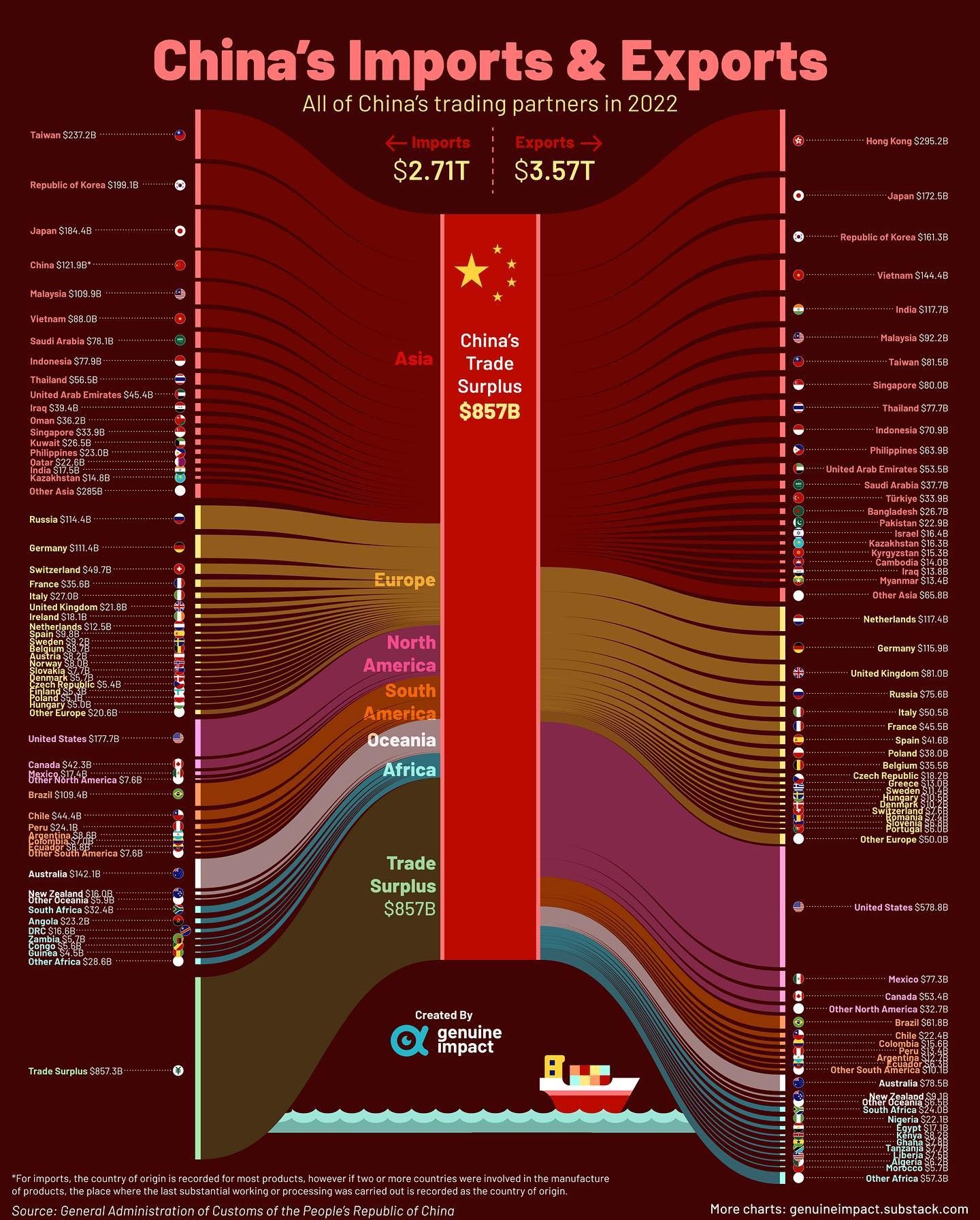
China's Trade Surplus: A Comprehensive Look at 2022 Figures
China stands as a dominant force in the global trade arena. With over 200 countries, regions, and territories as trading partners, it is the world's largest goods exporter and the second-largest economy. The nation's trade surplus in 2022 was significant, with extensive trading relationships spanning various continents. Let's dive into the details of China's imports, exports, and trade surplus to understand the global economic influence.
Why This Matters
The trade surplus, which amounted to $857 billion in 2022, highlights China's pivotal role in the global economy. This surplus is the difference between China's exports and imports. Understanding where these imports and exports go and come from provides valuable insights into global trade dynamics. This analysis will break down China's trade relationships across various regions and countries, offering a clear picture of its economic influence and trade patterns.
Main Discussion
China’s Trade Surplus: The Big Picture
China's trade surplus in 2022 stood at a staggering $857 billion. This figure is a testament to the country's robust export-oriented economic model. The total value of exports for the year reached $3.57 trillion, while imports amounted to $2.71 trillion. This substantial surplus reflects China's ability to produce and ship goods globally at a scale unmatched by many other nations.
Asia: A Major Trading Partner
Asia, particularly East Asia, is a critical region for China's trade. Key partners in this region include:
- Taiwan with a surplus of $237.2 billion
- Republic of Korea with $199.1 billion
- Japan with $172.5 billion
- Vietnam with $144.4 billion
- Malaysia with $92.2 billion
These countries are significant contributors to China's trade surplus, highlighting the region's importance in the global supply chain.
Europe: A Diverse Trade Landscape
Europe is another significant trading partner for China. The region's trade surplus includes:
- Germany with a surplus of 111.4B
- United Kingdom with 91.6B
- Russia with 114.4B
- France with 56.8B
- Netherlands with 117.4B
These figures underscore the importance of Europe as a key market for Chinese goods.
North America: A Steady Flow
North America also plays a crucial role in China's trade dynamics. The United States, with a surplus of $130.8 billion, is a central trading partner. Canada and Mexico, with surpluses of $49.5 billion and $22.1 billion respectively, also contribute significantly to China's trade balance.
South America: Emerging Opportunities
South America presents growing opportunities for China. Trade surpluses in the region include:
- Brazil with a surplus of $36.3 billion
- Argentina with $16.8 billion
These figures indicate China's increasing economic engagement with South America.
Africa: Growing Economic Ties
Africa, while smaller in trade volume compared to other regions, is a growing market for China. Key countries include:
- South Africa with a surplus of $25.8 billion
- Nigeria with 11.9B
Oceania: A Smaller but Significant Player
Oceania, while a smaller region, is still significant for China’s trade. Australia, with a surplus of $11.8 billion, and New Zealand, with $2.6 billion, are key partners in this region.
Practical Tips
- Diversify Trade Partners: For businesses looking to expand their trade horizons, diversifying trade partners across various regions can mitigate risks and open new market opportunities.
- Understand Regional Dynamics: Each region has unique economic dynamics. Understanding these can help in tailoring trade strategies to maximize profits and minimize risks.
- Leverage Free Trade Agreements: Many countries have free trade agreements with China. Leveraging these can reduce tariffs and other trade barriers, making it easier to do business.
Important Takeaways
- Asia is a Key Region: Asia remains a pivotal region for China's trade, with significant contributions from countries like Taiwan, Republic of Korea, and Vietnam.
- Europe and North America are Crucial: These regions play a major role in China's trade surplus, with substantial surpluses from countries like Germany, the United Kingdom, the United States, and Canada.
- Economic Engagement with South America and Africa: While smaller compared to other regions, South America and Africa present growing opportunities for China.
- Oceania's Growing Importance: Even smaller regions like Oceania are becoming more important in China's trade landscape, with Australia and New Zealand contributing to the trade surplus.
Conclusion
China's trade surplus in 2022 highlights the country's dominant role in the global economy. Through strategic trade partnerships and robust export capabilities, China continues to influence global trade dynamics. Understanding the intricacies of China's trade relationships across various regions provides valuable insights for businesses and policymakers alike. The figures from 2022 show that while Asia remains a key region, Europe, North America, South America, Africa, and Oceania are all significant contributors to China's economic influence.
Watch the Reel
Questions readers ask
What is China's trade surplus and how was it calculated in 2022?
China's trade surplus in 2022 was $857 billion. This figure is calculated by subtracting the total value of China's imports from the total value of its exports during the year.
Which regions were China's key trade partners in 2022?
China has extensive trade relationships, but key regions include Asia. Trade with Asia accounts for a significant portion of China's trade surplus. Other key regions include North America and Europe. For specific figures, consider reviewing a China trade surplus 2022 infographic, which will provide a visual breakdown of China's trade with these regions.
How does China's trade surplus impact global trade dynamics in 2022?
China's trade surplus contributes to global trade dynamics in several ways. It affects the flow of goods, influences currency exchange rates, and shapes the global supply chain. The surplus also impacts the economies of China's trading partners, as it reflects the imbalance in trade flows.
What role does the USA play as a trading partner for China 2022?
The USA is one of China's largest trading partners, but the trade relationship is complex. In 2022, the USA was a significant contributor to China's trade surplus, but trade tensions and tariffs also impact this relationship. The trade surplus between the two countries has been a subject of ongoing negotiations and discussions.
Which countries are the largest exporters in 2022, besides China?
While China is the world's largest exporter, other significant exporters in 2022 include the USA and Germany. These countries, along with others, contribute significantly to global trade flows. Their trade dynamics with China and other nations shape the global trade landscape.
How does China's trade with Africa contribute to its 2022 surplus?
Trade with Africa is a growing component of China's trade surplus. In 2022, China's imports from and exports to Africa have increased, driven by demand for natural resources and infrastructure development. This trade dynamic contributes to China's overall trade surplus and supports Africa's economic growth.
What are the top 3 regions of China's key trade regions in 2022?
The top 3 regions of China's key trade regions in 2022 are Asia, North America, and Europe. Asia, in particular, plays a crucial role due to the proximity and supply chain integration. North America, especially the USA, and Europe also significantly contribute to China's trade surplus.
Related deep dives
Similar reads based on topic and creator.

Recent articles
Fresh deep dives from the latest Reels we unpacked.




Comments
Be the first to comment.