China's Artificial Sun: The World's Largest Superconducting Magnet for Nuclear Fusion
China has recently achieved a monumental feat with the successful completion and testing of the world's largest superconducting magnet, a crucial component for the CRAFT "artificial sun" project in Hefei. This magnet, known as the toroidal field coil, weighs a staggering 582 tons, making it heavier than a fully loaded Boeing 747. Its purpose is to recreate the nuclear fusion reaction that powers the actual sun, right here on Earth. Here is what we know about this incredible project.
Why This Matters
The completion of this magnet is a significant milestone in the quest for clean, nearly limitless energy. Nuclear fusion, the process that powers stars, has long been pursued as a potential source of abundant energy with minimal environmental impact. The success of the toroidal field coil brings us one step closer to harnessing this power. Additionally, the fact that every critical part of the magnet was designed and built in China highlights the country's advancements in cutting-edge technology and engineering.
The Artificial Sun: Breakthroughs and Specifications
The artificial sun, also known as the Experimental Advanced Superconducting Tokamak (EAST), is a tokamak—a type of device used to confine plasma in the shape of a torus. The toroidal field coil is a vital part of this device, designed to generate a magnetic field to contain the superheated plasma. Here are some key specifications and breakthroughs:
Magnetic Field and Plasma Control
The toroidal field coil is designed to hold a plasma at an astonishing 100 million degrees Celsius. To put this into perspective, the surface of the actual sun is around 5,500 degrees Celsius. The magnet's ability to maintain such extreme temperatures without allowing the plasma to touch the walls is a remarkable feat of engineering. This containment is often referred to as an "invisible magnetic cage" by engineers. Sixteen of these coils will form a ring, each operating at 100 kiloamps and generating a magnetic field strength of 6.5 Tesla at the center.
Operating Conditions
The magnet operates at an incredibly low temperature of minus 269 degrees Celsius, just 4 degrees above absolute zero. This extreme cold is necessary to maintain the superconducting properties of the magnet, which allows it to carry high currents without resistance. The design life of the magnet is an impressive 60 years, demonstrating its robustness and reliability.
Central Solenoid and Full Load Testing
In addition to the toroidal field coils, a second magnet, known as the central solenoid, was rated for 46.5 kiloamps. This component plays a crucial role in initiating and maintaining the plasma current. The entire system passed full load testing on June 27th, confirming its readiness for further experimentation and development.
The Role of Domestic Technology
One of the most noteworthy aspects of this project is that every critical part was designed and built in China. This marks a significant achievement in domestic technological independence, reducing reliance on foreign technology. By developing this capability in-house, China has positioned itself at the forefront of global efforts to harness nuclear fusion.
Robotic Construction and Automation in Modern Building
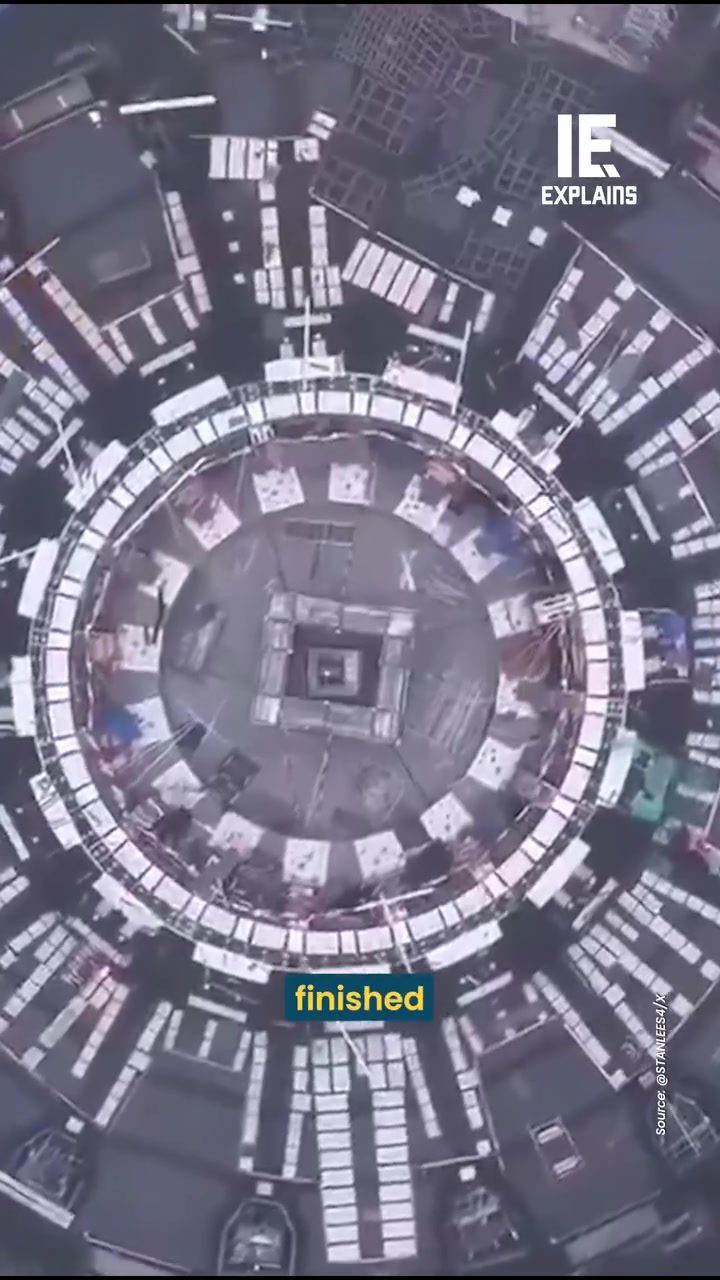
While the core focus is on the artificial sun, the visuals of the project reveal an impressive display of modern construction techniques. Robotic arms are used for welding and material handling, showcasing the precision and efficiency of automation in large-scale infrastructure development. This integration of advanced robotics highlights the broader trend of increased automation in the construction industry.
Practical Tips for Understanding and Following Fusion Projects
For those interested in staying updated on nuclear fusion and related technologies, here are some practical tips:
-
Follow Key Research Institutions: Stay informed by following institutions like the Institute of Plasma Physics in Hefei, where the artificial sun project is based. They often release updates and research papers.
-
Track Global Collaboration: Nuclear fusion is a global effort. Keeping an eye on international collaborations, such as the ITER project, can provide a broader perspective on advancements in the field.
-
Engage with Online Communities: Join online forums and communities dedicated to nuclear fusion and clean energy. These platforms can offer insights, discussions, and debates from experts and enthusiasts alike.
Important Takeaways
- Massive Magnet: The toroidal field coil for China's artificial sun weighs 582 tons, making it the world's largest superconducting magnet.
- Extreme Conditions: The magnet is designed to hold a plasma at 100 million degrees Celsius, an unprecedented achievement in plasma containment.
- Domestic Innovation: Every critical part of the magnet was designed and built in China, highlighting the country's advancements in technology and engineering.
- Automation in Construction: The project showcases the use of robotic arms in large-scale construction, underscoring the trend of increased automation in the industry.
- Clean Energy Potential: Successful implementation of this technology brings us closer to a future powered by near limitless, clean energy.
Conclusion
The completion of the world's largest superconducting magnet for nuclear fusion is a groundbreaking achievement that pushes the boundaries of what is possible in energy production. As China continues to develop and test this technology, the world watches with anticipation, hoping that the dream of clean, abundant energy will soon become a reality.
Watch the Reel
Questions readers ask
What is the significance of the 582-ton superconducting magnet in China's fusion energy project?
The 582-ton superconducting magnet is a crucial component of China's CRAFT 'artificial sun' project. Its primary function is to contain superheated plasma, which is essential for achieving and maintaining nuclear fusion reactions. This magnet is the largest of its kind, demonstrating China's advancements in fusion energy technology.
What is the CRAFT 'artificial sun' project?
The CRAFT 'artificial sun' project in Hefei, China, aims to harness the power of nuclear fusion by replicating the processes that occur in the sun. The project involves creating and controlling superheated plasma using powerful magnets, with the goal of producing clean, abundant energy.
How does the toroidal field coil contribute to the fusion process?
The toroidal field coil, which weighs 582 tons, is designed to generate a strong magnetic field that confines the superheated plasma in a toroidal shape. This containment is vital for sustaining the nuclear fusion reaction, as it prevents the plasma from coming into contact with the walls of the containment vessel and allows the reaction to continue long enough to produce energy.
What are the potential benefits of achieving sustained nuclear fusion?
Sustained nuclear fusion has the potential to provide a nearly limitless source of clean energy. Unlike fossil fuels, fusion reactions do not produce greenhouse gases or long-lived radioactive waste. Additionally, the fuel sources for fusion, such as isotopes of hydrogen, are abundant and widely available.
What makes the CRAFT project's magnet unique compared to other fusion energy efforts?
The CRAFT project's magnet is unique due to its size and the power of the magnetic field it generates. Weighing 582 tons, it is the largest superconducting magnet ever built for fusion energy. This size allows it to contain plasma more efficiently, and its powerful magnetic field is essential for sustaining the fusion reaction.
What is the next step for China's fusion energy project after constructing the magnet?
With the successful construction and testing of the 582-ton superconducting magnet, the next steps for China's fusion energy project include integrating the magnet into the CRAFT 'artificial sun' device, conducting further experiments to optimize plasma containment, and gradually increasing the duration and power of the fusion reactions.
How does the CRAFT 'artificial sun' project plan to handle the extreme conditions of nuclear fusion?
The CRAFT 'artificial sun' project utilizes advanced materials and technologies to manage the extreme conditions of nuclear fusion. The superconducting magnet creates a powerful magnetic field to contain the superheated plasma, while advanced cooling systems and robust containment vessels help to manage the intense heat and radiation generated by the fusion reaction.
Recent articles
Fresh deep dives from the latest Reels we unpacked.




Comments
Be the first to comment.