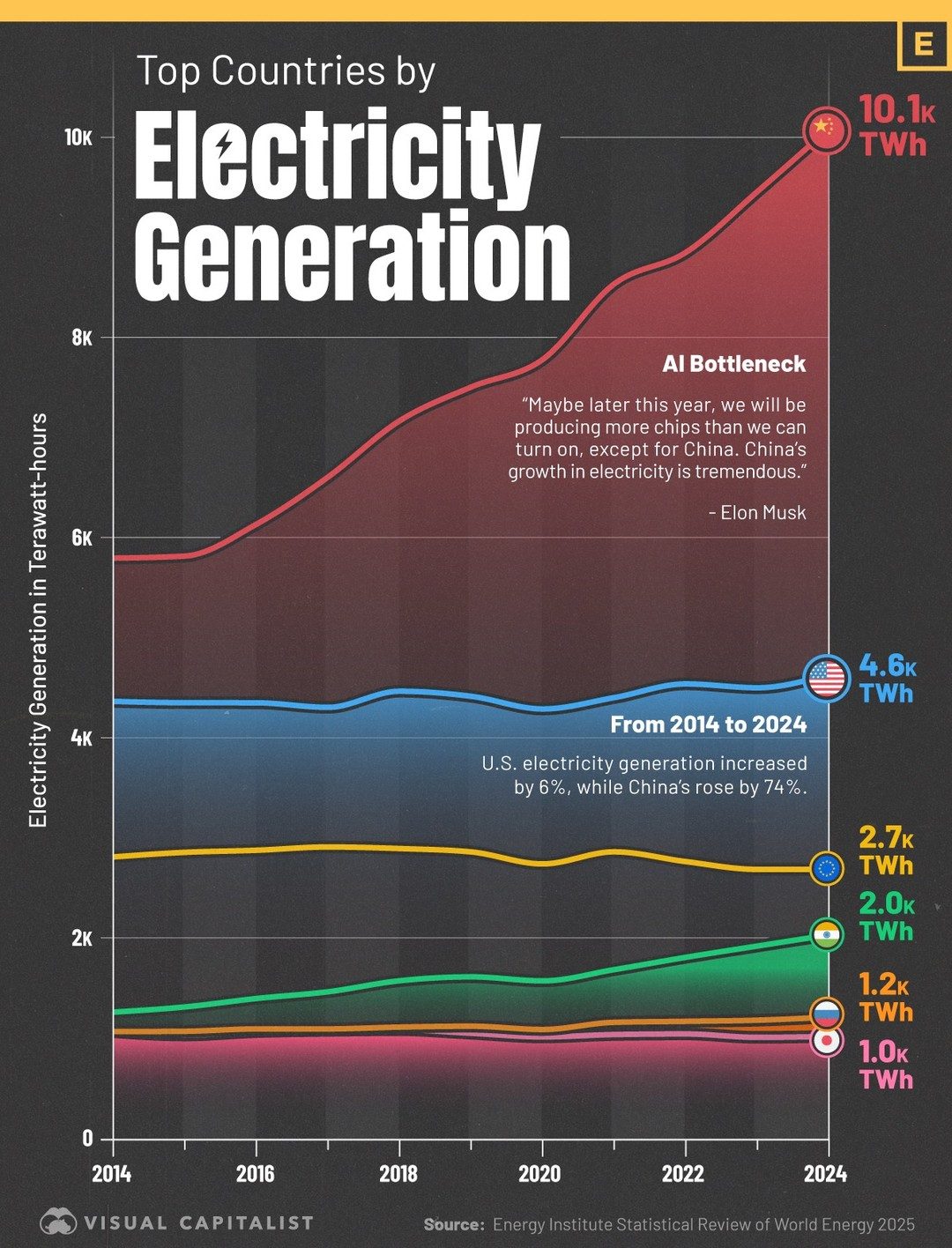
China now stands as the world’s leading electricity generator, producing more than twice as much as any other country. From 2014 to 2024, China's power output surged by 74%, reaching over 10,000 terawatt-hours, while the United States grew just 6% during the same period. This stark contrast is a critical reflection of global energy trends and strategies.
Why This Matters
The global energy landscape is rapidly evolving, with China at the forefront of significant changes in electricity generation. Understanding these trends is vital for policymakers, energy professionals, and anyone interested in the global economy. The shift in energy production has wide-ranging implications for climate change, economic development, and geopolitical dynamics.
Main Discussion
China’s Rapid Growth in Electricity Generation
China's electricity generation has seen an unprecedented surge over the past decade. This growth can be attributed to several factors, including a massive investment in renewable energy sources, industrial expansion, and a growing population with increasing energy demands. China now produces over 10,100 terawatt-hours of electricity, making it the global leader in electricity generation.
The United States: Steady but Modest Growth
In contrast, the United States has seen a much more modest increase in electricity generation, growing by only 6% from 2014 to 2024. This slower pace of growth can be linked to a stable but less dynamic energy sector, with a more conservative approach to expanding energy infrastructure and a greater reliance on existing energy sources.
Global Context and Other Major Players
While China and the United States dominate the conversation, it’s important to note the contributions of other major players. Countries like India, Russia, and Japan also play significant roles in global electricity generation, each with their unique energy strategies and challenges. For example, India’s rapid industrialization has led to a significant increase in electricity demand, while Japan’s focus on renewable energy post-Fukushima has driven changes in its energy mix.
The Role of Renewable Energy
One of the most significant factors in China’s electricity surge is its investment in renewable energy sources. Wind, solar, and hydroelectric power have become increasingly important components of China’s energy portfolio. This shift towards cleaner energy is not only environmentally beneficial but also aligns with global efforts to combat climate change. However, it’s worth noting that China still relies heavily on coal, which remains a contentious issue in global climate negotiations.
Technological and Infrastructural Investments
China’s aggressive push into renewable energy has been supported by substantial technological and infrastructural investments. This includes the development of advanced power plants, smart grid technologies, and significant investments in research and development. These investments have not only increased the efficiency and reliability of China’s power grid but have also positioned it as a leader in renewable energy innovation.
Economic and Geopolitical Implications
The surge in China’s electricity generation has profound economic and geopolitical implications. Economically, it supports China’s industrial growth and urbanization, making it a global manufacturing hub. Geopolitically, it strengthens China’s position as a leading player in global energy markets, influencing trade and diplomatic relations. Additionally, China’s energy policies have implications for global energy security, particularly in regions dependent on energy imports.
Practical Tips
For those interested in understanding and navigating the global energy landscape, here are some practical tips:
Stay Informed About Policy Shifts
Keep an eye on energy policy changes, both domestically and internationally. Policies around renewable energy, carbon emissions, and energy subsidies can significantly impact the global energy market.
Monitor Technological Advancements
Stay updated on technological advancements in energy production and distribution. Emerging technologies, such as grid storage and smart grid systems, are reshaping the energy sector and creating new opportunities for innovation.
Understand Regional Dynamics
Recognize that energy trends are often driven by regional dynamics. For example, Europe’s push for renewable energy and the United States’ focus on energy independence are shaped by local policies and geopolitical considerations.
Important Takeaways
The Global Energy Shift
China’s dominance in electricity generation reflects a broader global shift towards renewable energy. This shift is driven by environmental concerns, technological advancements, and economic incentives.
Investment in Energy Infrastructure
Investment in energy infrastructure, especially in renewable energy sources, is crucial for sustained growth and environmental sustainability. Countries like China are leading the way in this regard, setting a benchmark for others to follow.
Economic and Geopolitical Influence
Electricity generation has significant economic and geopolitical implications. Countries with strong energy sectors are better positioned to influence global trade, economic development, and geopolitical relations.
The Role of Innovation
Innovation in energy technologies and policies is vital for addressing global energy challenges. As the world moves towards cleaner and more efficient energy sources, innovation will play a critical role in shaping the future of the energy sector.
Conclusion
China’s unprecedented growth in electricity generation, coupled with the steady but modest increase in the United States, highlights the evolving global energy landscape. This shift, driven by investment in renewable energy and technological advancements, has far-reaching implications for climate change, economic development, and geopolitical dynamics. As the world continues to evolve, staying informed about these trends and their underlying factors will be crucial for navigating the future of energy.
Watch the Reel
Questions readers ask
What factors have driven China's electricity growth from 2014 to 2024?
China's electricity growth can be attributed to its rapid industrial expansion and significant investments in renewable energy. The country has prioritized developing its energy infrastructure to support its economic development, leading to a substantial increase in power output.
How does China's electricity output compare to the United States?
China's electricity output has surged by 74% from 2014 to 2024, reaching over 10,000 terawatt-hours, while the United States only saw a 6% increase. This makes China the world’s leading electricity generator, producing more than double the amount of electricity than the United States.
What is the significance of China's electricity growth for global energy trends?
China's rise in electricity production reflects a broader shift in the global energy landscape. It underscores the country's dominant role in energy production and highlights the importance of renewable energy in meeting growing energy demands. This trend has significant implications for climate change and global energy strategies.
What are the top countries in terms of electricity generation, and how does China stand out?
China leads the world in electricity generation, producing more than any other country. The United States is the second-largest producer, but China's output is more than double that of the US. India, Russia, and Japan are among other leading electricity producers, but none come close to China's output.
What role has renewable energy played in China's electricity growth?
Renewable energy has been a key component of China's electricity growth strategy. The country has invested heavily in renewable energy sources such as solar, wind, and hydroelectric power, which have contributed significantly to its overall power output and helped reduce its reliance on fossil fuels.
What are the implications of China's electricity growth for the global economy?
China's electricity growth has wide-ranging implications for the global economy, influencing trade, investment, and technological innovation. As a major energy producer, China's policies and investments will impact global energy markets and geopolitical dynamics, making it a critical player in shaping future energy trends.
What can be anticipated from China's electricity capacity in the future?
With a consistent focus on industrial growth and a continued commitment to renewable energy, China is expected to maintain its position as the world's leading electricity producer. Future projections suggest that China will likely continue to expand its electricity capacity, further solidifying its role in global energy trends.
Recent articles
Fresh deep dives from the latest Reels we unpacked.




Comments
Be the first to comment.