China's Economic Challenges
China's economy, the world's second-largest, has been a significant driver of global GDP growth for the past two decades. However, the recent months have seen a series of economic setbacks that have raised concerns about both China's post-pandemic recovery and the broader global economic outlook.
Why This Matters
China's economic health is crucial for the global economy, and recent indicators suggest that the country is facing several challenges. These challenges have the potential to impact not just China but also the global economy. By examining key economic indicators, these challenges can be understood and addressed.
Main Discussion
GDP Growth Slowdown
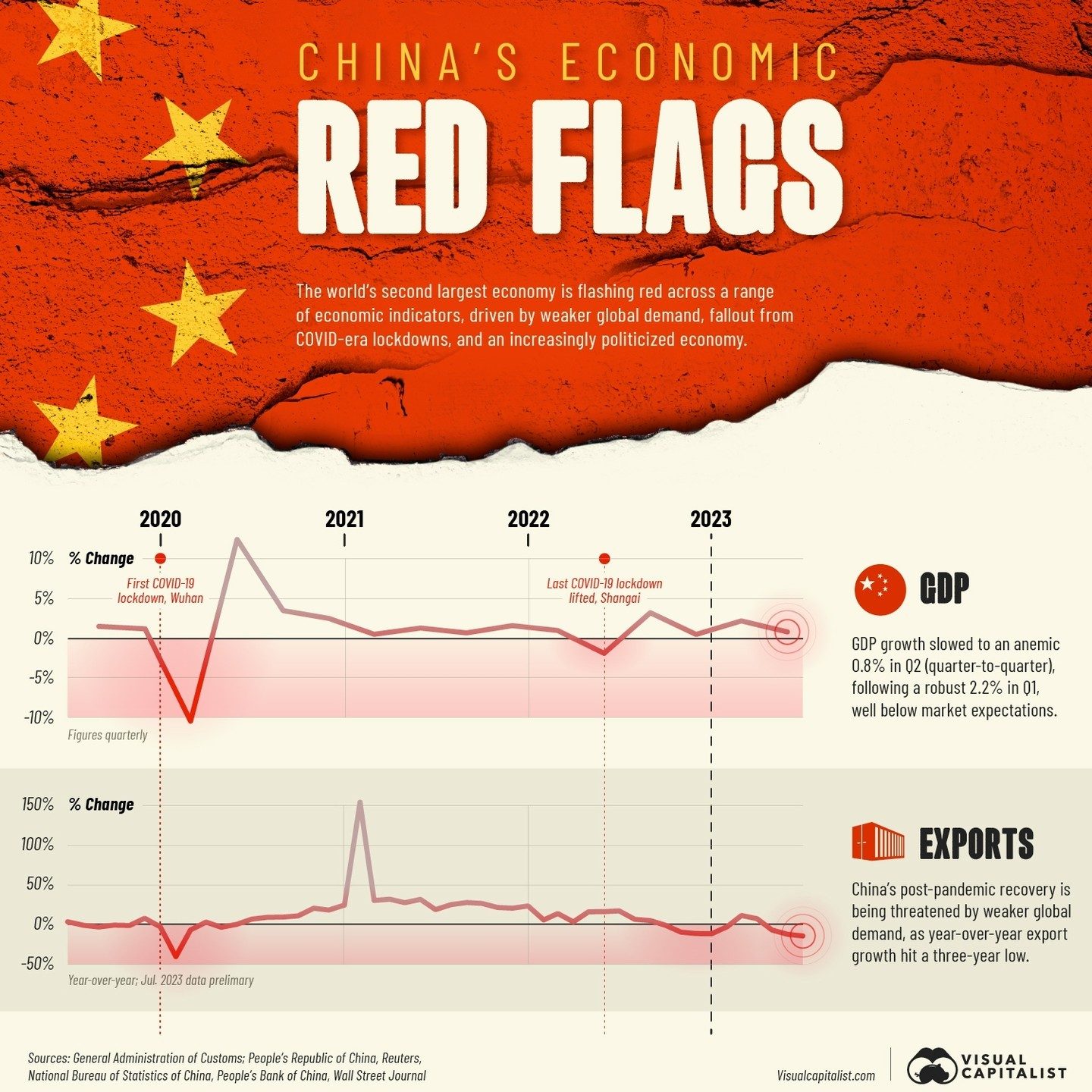
One of the most concerning indicators is the slowdown in GDP growth. In the second quarter of 2023, China's GDP growth slowed to an anemic 0.8% on a quarter-to-quarter basis, down from a robust 2.2% in the first quarter. This slowdown is well below market expectations and signals a significant economic headwind.
Export Challenges
China's post-pandemic recovery is being threatened by weaker global demand. Export growth, which is a crucial driver of China's economy, has hit a three-year low. This decline in export growth is a result of reduced demand from other countries, which has been exacerbated by economic uncertainties and geopolitical tensions.
Deflationary Pressures
Another concerning indicator is the movement of the Consumer Price Index (CPI) into deflationary territory. This is the first time the CPI has entered deflation since 2021, when widespread lockdowns shut down much of the economy. Deflation can lead to reduced consumer spending and investment, further slowing economic growth.
Youth Unemployment
Youth unemployment in China has reached a record high, with the urban youth unemployment rate hitting an all-time high in July. This high unemployment rate has led to the suspension of future releases by the National Bureau of Statistics of China. Youth unemployment is a particularly worrying indicator because it can have long-term effects on the economy and society, including reduced productivity and increased social unrest.
Currency Devaluation
The value of the Chinese Yuan has also been a cause for concern. The currency hit a 16-year low against the U.S. dollar in mid-August, leading some Chinese banks to buy up offshore yuan. A weaker currency can make exports more competitive but also raises concerns about capital flight and economic instability.
Decline in New Loans
Another red flag is the significant decrease in new bank loans. In July, new bank loans fell from ¥3.05 trillion in June to ¥3.46 billion, hitting a low not seen since late 2009. This decline in borrowing indicates a lack of confidence in the economy and a potential tightening of credit, which could further slow economic growth.
Practical Tips
For businesses and investors, understanding these challenges is crucial. Here are some practical tips to navigate the current economic climate in China:
Diversify Your Portfolio
Given the uncertainties, it may be wise to diversify your investment portfolio to reduce exposure to a single market or sector. This can help mitigate risks associated with economic downturns.
Monitor Economic Indicators
Keep a close eye on key economic indicators such as GDP growth, export growth, the CPI, and unemployment rates. These indicators can provide early warnings of economic changes and help in making informed decisions.
Assess Currency Risks
Be aware of currency fluctuations and their potential impact on your investments and operations. Consider hedging strategies to protect against currency risks.
Stay Informed
Stay updated on the latest economic news and policy changes. This can help you anticipate market movements and adjust your strategies accordingly.
Important Takeaways
The economic challenges facing China are significant and multifaceted. These challenges have the potential to impact not just China but also the global economy. Understanding these challenges and their implications is crucial for businesses, investors, and policymakers alike.
Conclusion
China's economic landscape is currently fraught with challenges, from slowing GDP growth to record-high youth unemployment and currency devaluation. These issues are not isolated but interrelated, each exerting pressure on the other and on the broader global economy. By staying informed and taking practical steps, stakeholders can navigate these challenges and mitigate their potential impact.
Watch the Reel
Questions readers ask
What are the key economic challenges currently facing China's economy?
China is grappling with several issues, including a slowdown in GDP growth, decreased demand for exports, and fears of deflation. Additionally, the country is experiencing a rise in youth unemployment, which poses further challenges to its economic stability.
How does China's economic slowdown affect the global economy?
China's economic health is significant for the global economy. A slowdown in China can lead to reduced demand for goods and services from other countries and lower global trade volumes, impacting economic growth worldwide.
What is the current state of China's export demand, and why is it concerning?
China's export demand has weakened, which is concerning because exports have been a key driver of the country's economic growth. A decline in export demand can lead to reduced production, job losses, and further economic slowdown.
What are the implications of deflation risks in China?
Deflation in China could lead to a decrease in consumer spending and investment, as people and businesses may delay purchases in anticipation of lower prices. This can create a vicious cycle, making it difficult for the economy to grow.
How reliable are the statistics released by China's National Bureau of Statistics?
The National Bureau of Statistics (NBS) of China has faced criticism for its data accuracy and transparency, though it is the official source for China's economic statistics. It's important to consider multiple sources and analyses when assessing China's economic performance.
What are the potential consequences of rising youth unemployment in China?
High youth unemployment can lead to social unrest and political instability. It can also result in a loss of productivity and innovation, as a large portion of the workforce may struggle to find meaningful employment.
What can other countries do to mitigate the global impact of China's economic challenges?
Countries can take steps to diversify their trade partners, invest in domestic industries, and maintain robust economic policies. By doing so, they can reduce their dependence on China's economy and better prepare for potential global economic shifts.
Recent articles
Fresh deep dives from the latest Reels we unpacked.




Comments
Be the first to comment.