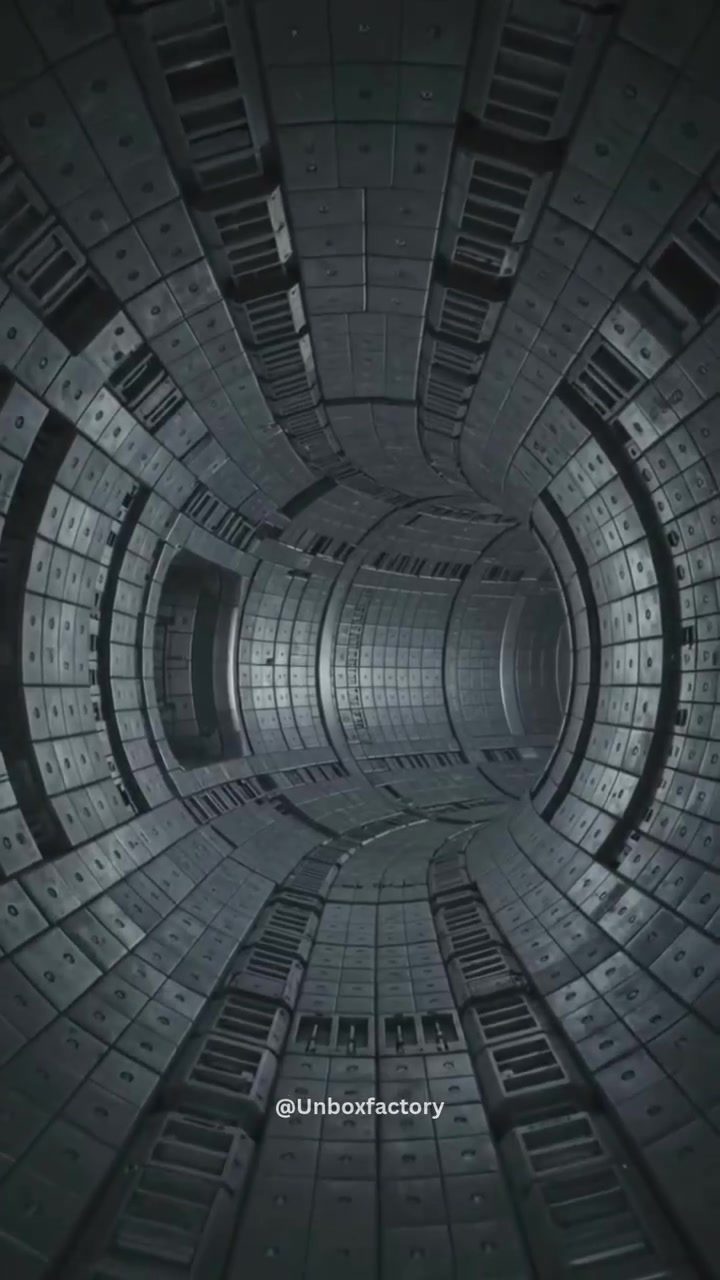
China's EAST Fusion Reactor: A Milestone in Plasma Containment
China's EAST tokamak fusion reactor has achieved a remarkable breakthrough by maintaining plasma at an astonishing 100 million degrees Celsius for 1,000 seconds in early 2026. This achievement is a world record, surpassing the previous benchmark of 160 seconds by a factor of six.
Why This Matters
The capacity to sustain plasma at such high temperatures for extended periods is a significant milestone in the journey toward commercial fusion energy. Fusion reactors aim to replicate the process that powers the Sun, but on Earth, this requires overcoming the immense gravitational pressure naturally present in stars. Magnetic containment fields are used to achieve similar conditions within experimental reactors.
Understanding the EAST Reactor
The EAST (Experimental Advanced Superconducting Tokamak) reactor is located at the Institute of Plasma Physics in Hefei, China. It is designed to test the plasma physics principles fundamental to commercial fusion energy production, rather than to generate net energy output.
Plasma Temperature and Duration
Maintaining plasma at 100 million degrees Celsius is approximately seven times hotter than the core of the Sun. This temperature is crucial for achieving fusion, where atomic nuclei combine to release vast amounts of energy. The duration of plasma stability is what matters most in the development of a viable fusion power plant. The EAST reactor's ability to sustain this plasma for nearly 17 continuous minutes is a testament to the stability of the confinement physics required for a commercial reactor.
Magnetic Containment and Stability
The key to maintaining such high temperatures is the magnetic containment field. This field confines the plasma within the reactor, preventing it from coming into contact with the reactor walls, which would otherwise cool it down and disrupt the fusion process. The EAST reactor's achievement demonstrates that the confinement physics needed for a commercial reactor is not just theoretical—it is a stable, practical reality.
Technical Challenges and Solutions
Achieving and maintaining such high temperatures and prolonged plasma stability involves overcoming several technical challenges.
Plasma Confinement
One of the primary challenges is keeping the plasma stable within the magnetic field. Any disruption can cause the plasma to lose confinement, leading to a sudden drop in temperature and energy loss. The EAST reactor has made significant strides in this area, showcasing its ability to maintain stable plasma for extended periods.
Energy Input and Efficiency
Sustaining plasma at fusion-relevant temperatures requires a significant amount of energy. The power input to maintain the plasma at 100 million degrees Celsius is substantial, highlighting the need for efficient energy management in future commercial reactors. The exact megawatts used by the EAST reactor to sustain this plasma remains a critical area of research and optimization.
Materials and Durability
The materials used in the construction of the reactor must withstand the extreme conditions inside the tokamak. The high temperatures and intense magnetic fields can degrade materials over time, necessitating the development of advanced materials that can withstand these conditions without failing.
Practical Tips for Understanding Fusion Technology
While the EAST reactor's achievement is groundbreaking, understanding the broader implications of fusion technology can be challenging. Here are some practical tips to help grasp the significance of this advancement:
Stay Informed
Fusion technology is a rapidly evolving field. Keeping up with the latest research and developments can provide valuable insights into the future of energy production.
Learn the Basics
Understanding the fundamental principles of fusion and plasma physics can demystify the complex processes involved in fusion reactors. Resources such as online courses, articles, and documentaries can be helpful in building a foundational knowledge.
Follow Key Players
Organizations and researchers at the forefront of fusion technology, including the Institute of Plasma Physics in Hefei, are leading the charge in this field. Following their work can provide a deeper understanding of the advancements and challenges in fusion research.
Important Takeaways
The EAST reactor's achievement of maintaining plasma at 100 million degrees Celsius for 1,000 seconds is a significant step toward realizing commercial fusion energy. This milestone demonstrates the feasibility of sustained plasma confinement, a critical component of fusion technology. The stability and duration of plasma confinement are essential for the development of a viable fusion power plant, and the EAST reactor's success highlights the practical potential of this technology.
Conclusion
The EAST tokamak fusion reactor's achievement is a monumental step forward in the world of fusion energy. By maintaining plasma at 100 million degrees Celsius for 1,000 seconds, the EAST reactor has demonstrated the stability and practicality of magnetic confinement physics needed for commercial fusion reactors. This breakthrough brings us one step closer to a future where fusion energy could power the planet, offering a clean, abundant, and sustainable energy source.
Watch the Reel
Questions readers ask
What is the EAST fusion reactor and why is its recent achievement significant?
The EAST (Experimental Advanced Superconducting Tokamak) fusion reactor is a Chinese experimental nuclear fusion reactor. Its recent achievement of sustaining plasma at 100 million degrees Celsius for 1,000 seconds is significant because it sets a new world record, demonstrating a substantial advance in plasma containment technology, which is crucial for developing practical fusion energy.
How does the EAST reactor's achievement compare to previous records?
The EAST reactor's achievement of 1,000 seconds at 100 million degrees Celsius is over six times longer than the previous record of 160 seconds, highlighting a major leap in sustained plasma duration.
What challenges does the EAST reactor face in achieving practical nuclear fusion energy?
The main challenges involve replicating the conditions of the Sun to generate more energy than is needed to maintain the reaction. This includes sustaining the plasma at high temperatures and finding materials that can withstand the harsh conditions inside the reactor.
How does fusion energy differ from fission energy used in traditional nuclear power plants?
Fusion energy involves combining light atomic nuclei to form heavier ones, releasing a vast amount of energy. In contrast, fission energy is produced by splitting heavy atomic nuclei. Fusion has the potential to provide a nearly limitless source of clean energy with less radioactive waste than fission.
What potential benefits does the EAST reactor's breakthrough offer for future energy production?
The EAST reactor's breakthrough brings us closer to harnessing fusion energy for commercial use. This could lead to a more sustainable and abundant energy source, reducing dependence on fossil fuels and mitigating climate change.
Related deep dives
Similar reads based on topic and creator.

Recent articles
Fresh deep dives from the latest Reels we unpacked.




Comments
Be the first to comment.