Solar Panel Supply Chain Dominance
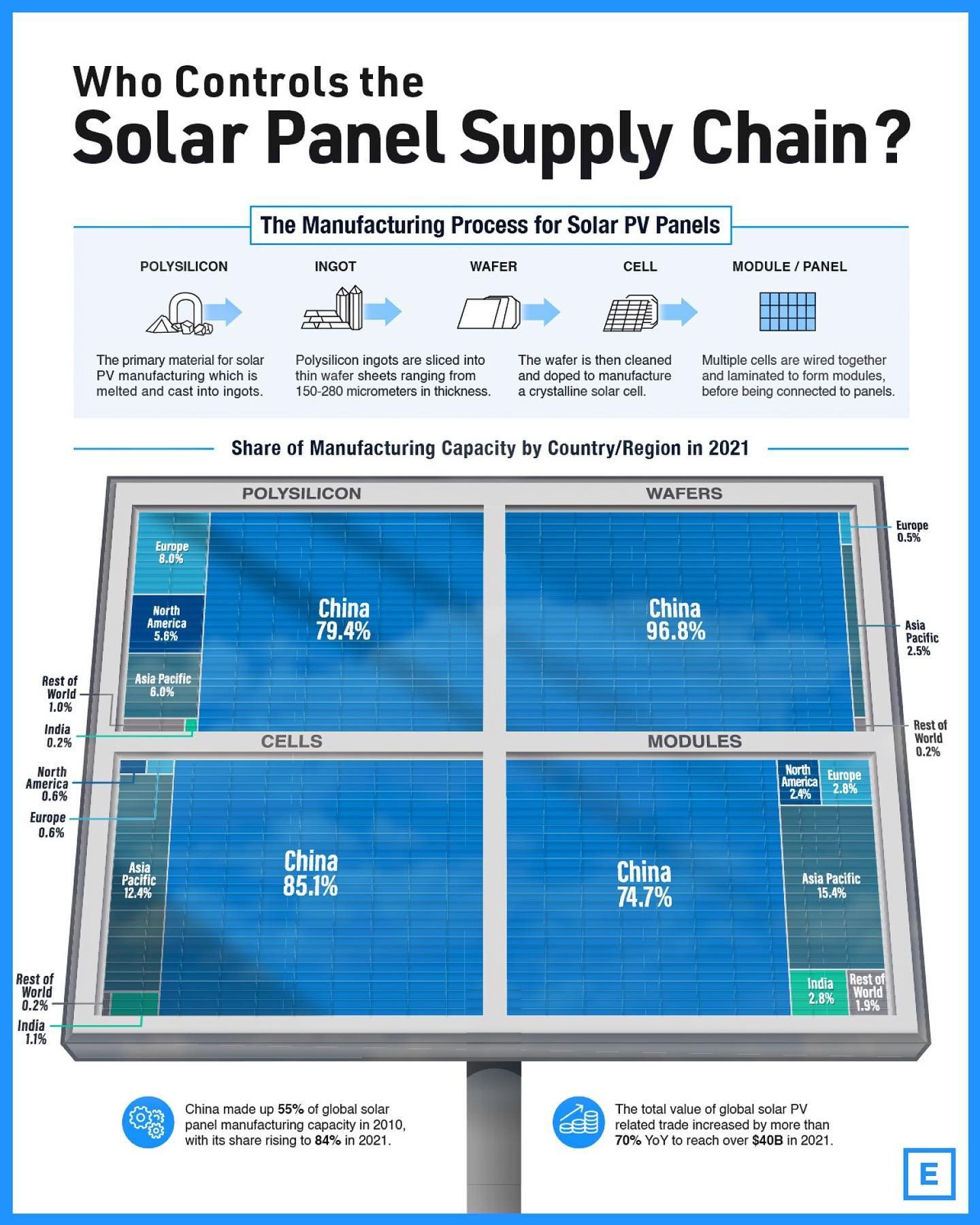
Understanding the solar panel supply chain is crucial for grasping the global shift towards renewable energy. Governments worldwide are investing heavily in solar power, but the manufacturing landscape for solar photovoltaic (PV) panels is surprisingly concentrated. China controls at least 75% of every key stage of solar panel manufacturing and processing.
The journey of a solar panel begins with polysilicon ingots, which are sliced into thin wafers, typically ranging from 150 to 280 micrometers in thickness. These wafers are then cleaned and doped to create crystalline solar cells. Multiple cells are wired together to form modules, which are eventually assembled into the solar panels we see on rooftops and in solar farms.
Why This Matters
With the increasing demand for renewable energy, the control over the solar panel supply chain has significant implications. China’s dominance in this sector not only affects the global market dynamics but also raises questions about energy independence and geopolitical influence.
Global Investment in Solar Energy
Many governments are committing substantial resources to solar power as part of their transition to renewable energy sources. This shift is driven by environmental concerns, energy security, and the need to reduce carbon emissions. However, the concentration of manufacturing power in the hands of a single country like China adds a layer of complexity to these efforts.
Understanding the Solar Panel Manufacturing Process
Polysilicon Ingots
Polysilicon ingots are the starting point for solar panel manufacturing. These ingots are sliced into thin wafers, which serve as the base for solar cells. The slicing process is precise, with wafers ranging from 150 to 280 micrometers in thickness. This step is critical because the quality of the wafer directly impacts the efficiency of the final solar panel.
Wafers to Solar Cells
Once the wafers are produced, they undergo a cleaning and doping process to create crystalline solar cells. Doping involves introducing impurities to the silicon to enhance its conductivity, making it suitable for converting sunlight into electricity. This step is crucial for the overall performance and efficiency of the solar panel.
Cells to Modules
Multiple solar cells are then wired together to form solar modules. These modules are the building blocks of solar panels. The wiring process ensures that the cells work cohesively to capture and convert sunlight efficiently. The quality of this wiring can affect the panel's overall performance and durability.
Assembly and Distribution
Finally, the modules are assembled, and the solar panels are ready for distribution. This stage involves packaging the modules into a durable and weather-resistant structure that can withstand various environmental conditions. The assembled panels are then shipped to customers, where they are installed to generate clean energy.
The Geographical Distribution of Manufacturing Capacity
China's Dominance
China's control over the solar panel supply chain is evident at every stage of the manufacturing process:
- Polysilicon: China holds 79.4% of the global manufacturing capacity for polysilicon.
- Wafers: China dominates the wafer production process, accounting for 96.8% of the global capacity.
- Cells: In the production of solar cells, China's share is 85.1%.
- Modules: For solar modules, China controls 74.7% of the global capacity.
Global Market Share
While China is the clear leader, other regions also play significant roles in the solar panel supply chain:
- Europe: Europe accounts for 8.6% of the polysilicon manufacturing capacity and 2.5% of the wafer production.
- North America: North America holds 5.6% of the polysilicon capacity and 2.8% of the wafer capacity.
- Asia Pacific: The Asia Pacific region, excluding China, has 6.5% of the polysilicon capacity and 12.4% of the wafer capacity.
- India: India is emerging as a notable player, with 2.8% of the polysilicon and wafer capacities.
Historical Trends
China's dominance in the solar panel supply chain has grown rapidly. In 2010, China made up 55% of the global solar panel manufacturing capacity. By 2021, this share had increased to 84%. This rapid expansion highlights China's strategic investments in renewable energy technology and its commitment to becoming a global leader in this sector.
Economic Impact
The global solar panel-related trade value increased by more than 70% year-over-year (YoY), reaching over $40 billion in 2021. This surge in trade value underscores the growing demand for solar panels and the economic significance of the solar panel supply chain.
Practical Tips for Navigating the Solar Panel Market
Understanding Supply Chain Dependencies
For governments and businesses investing in solar energy, it is essential to understand the supply chain dependencies. Knowing which countries control key stages of the manufacturing process can help in strategic planning and risk management.
Diversifying Supply Sources
Diversifying supply sources can mitigate the risks associated with relying heavily on a single country for critical components. Governments and businesses should explore options for sourcing materials and components from multiple regions to ensure a stable and reliable supply chain.
Investing in Local Manufacturing
Encouraging local manufacturing can reduce dependence on foreign suppliers and create jobs in the renewable energy sector. Governments can provide incentives for local production to foster a more robust and independent solar panel industry.
Important Takeaways
- China's Dominance: China controls a significant majority of the global solar panel supply chain, from polysilicon to assembled panels.
- Global Investment: The global trend towards renewable energy is driving substantial investments in solar power.
- Manufacturing Process: Understanding the stages of solar panel manufacturing—from polysilicon ingots to assembled panels—is crucial for grasping the complexities of the supply chain.
- Market Dynamics: The geographical distribution of manufacturing capacity and the historical trends in market share provide valuable insights into the evolving solar panel industry.
- Economic Impact: The increasing value of global solar panel-related trade highlights the economic significance of the sector.
Conclusion
The solar panel supply chain is a critical component of the global renewable energy landscape. China's dominance in this sector underscores the need for strategic planning and diversification in the renewable energy industry. By understanding the manufacturing process, market dynamics, and economic impact, governments and businesses can navigate the complexities of the solar panel market more effectively. This knowledge is essential for ensuring a stable and sustainable future for solar energy.
Watch the Reel
Questions readers ask
Why does China's dominance in solar panel manufacturing matter for the global solar industry?
China's dominance shapes the global market for solar panels. With at least 75% control over key manufacturing stages, China influences pricing, supply, and technological advancements, impacting how quickly and efficiently the world transitions to renewable energy. This dominance also affects energy independence and geopolitical dynamics.
What are the key stages of solar panel manufacturing that China dominates?
China controls the majority of the key stages in solar panel production, including the production of polysilicon ingots, the slicing of wafers, the creation of crystalline solar cells, and the assembly of solar modules into panels.
How does China's control over the solar panel supply chain impact global energy independence?
China's control over the solar panel supply chain can influence the energy independence of other nations. Countries dependent on Chinese solar panels may face supply chain disruptions, trade disputes, or changes in export policies that could affect their renewable energy transition.
What is the significance of polysilicon in the context of China's solar panel dominance?
Polysilicon is a critical raw material in solar panel production. China's substantial capacity in polysilicon production gives it a strong foothold in the solar panel supply chain, allowing it to control the initial stages of manufacturing and maintain dominance throughout the process.
How does China's dominance in the solar panel market affect geopolitics?
China's control over the solar panel market can influence geopolitical dynamics by shaping global energy policies and trade relations. Countries relying on Chinese solar panels may need to balance their energy security needs with potential political or economic dependencies.
What were the implications of China's solar panel dominance in 2021?
In 2021, China's dominance in the solar panel supply chain continued to be a significant factor in the global solar market. This dominance influenced pricing, supply availability, and the overall pace of the renewable energy transition worldwide, as countries increasingly turned to China to meet their solar power needs.
What steps can other countries take to reduce dependency on China for solar panels?
To reduce dependency on China, other countries can invest in domestic solar panel manufacturing, establish strategic partnerships for solar supply, and invest in research and development of alternative renewable energy technologies. This may include fostering innovation in other segments of the solar panel supply chain, such as materials research or advanced manufacturing techniques.
Related deep dives
Similar reads based on topic and creator.

Recent articles
Fresh deep dives from the latest Reels we unpacked.




Comments
Be the first to comment.