Nuclear Reactor Construction
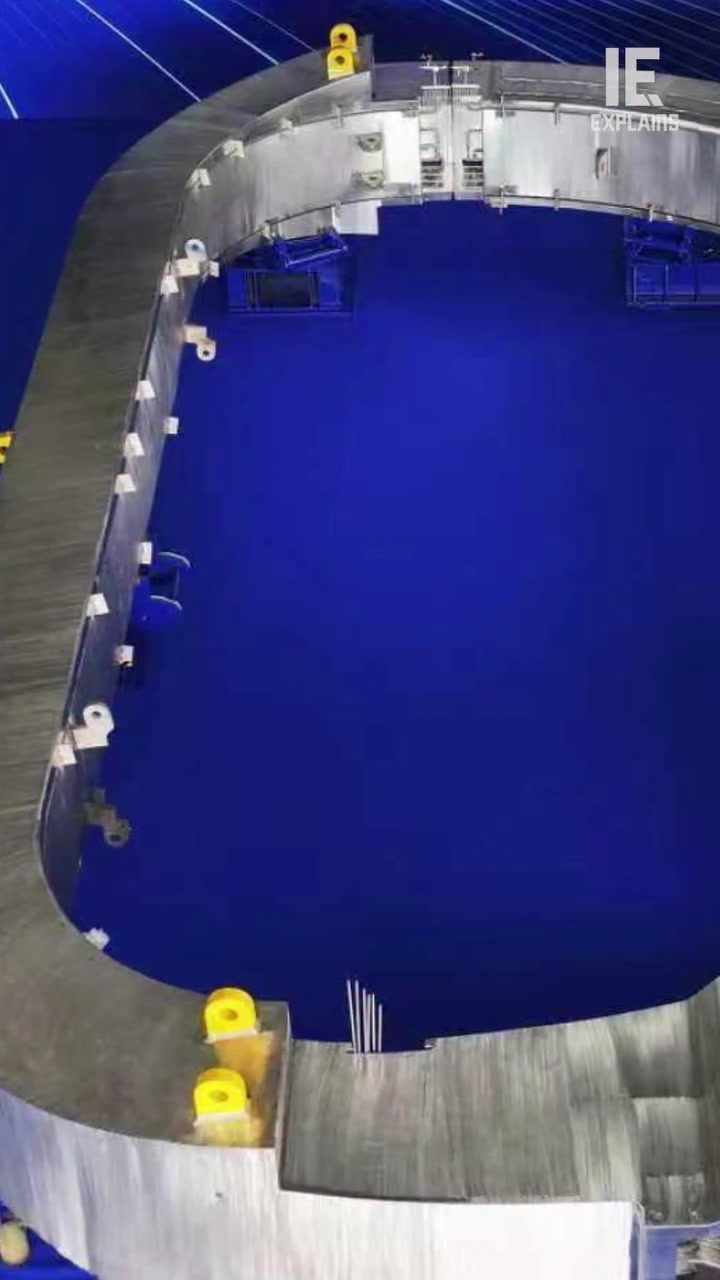
China is making significant strides in nuclear fusion technology, with ambitious plans to generate its first electricity from nuclear fusion around 2030. This milestone is supported by the successful full-load testing of two massive 582-tonne toroidal field magnets, the largest superconducting magnets ever built for a fusion device. These magnets are integral to the Burning Plasma Experimental Superconducting Tokamak (BEST) project, currently under construction in Hefei.
Context / Why This Matters
Nuclear fusion has long been touted as a potential source of nearly limitless clean energy. Unlike nuclear fission, which powers current nuclear reactors, fusion involves combining atomic nuclei to release energy. This process is the same one that powers the Sun and stars, making it a highly attractive option for sustainable energy production.
China's fusion program is particularly noteworthy because it aims to achieve something no other fusion machine on Earth has accomplished: producing more energy from the fusion reaction than is put into it. This is known as achieving net energy gain, a critical step towards making fusion a viable power source.
Main Discussion
The BEST Tokamak
The BEST tokamak, housed in the Hefei city, is a compact high-field machine. Its base was installed in October 2025, and its giant magnets have now passed full load testing. The completion of the project is scheduled for the end of 2027. The mission of the BEST is to demonstrate actual fusion power generation, extracting more energy from the burning plasma than is input and managing the tritium fuel cycle in real-time.
China's Fusion Roadmap
China's ambitious plans for nuclear fusion are backed by official state policy and are part of the country's 15th Five-Year Plan, which covers the period from 2026 to 2030. The roadmap, laid out by the China National Nuclear Corporation's (CNNC) chief scientist, includes several key milestones:
- A first fusion ignition experiment by around 2027.
- Full design capability for an engineering test reactor by around 2030.
- Construction of that reactor around 2035.
- Commercial operation of fusion power plants by the middle of the century.
These milestones reflect China's commitment to becoming a global leader in fusion technology.
Key Players: EAST and HL-3 Tokamaks
Behind these ambitious plans are two key tokamaks: the Experimental Advanced Superconducting Tokamak (EAST) in Hefei and the HL-3 tokamak in Chengdu. EAST holds the world record for sustaining a 100-million-degree plasma for 1,066 seconds. Meanwhile, the HL-3 tokamak has pushed atomic nuclei to 117 million degrees Celsius, nearly eight times hotter than the Sun's core. These achievements underscore China's technological prowess in the field of nuclear fusion.
International Collaboration
China is also an equal partner in the International Thermonuclear Experimental Reactor (ITER), a 35-nation fusion mega-project in southern France. China is manufacturing key components for ITER, and the EAST and HL-3 tokamaks effectively serve as test beds for the physics ITER will run at full scale. This international collaboration is crucial for advancing fusion technology on a global level.
Practical Tips
For those interested in the practical aspects of nuclear fusion, here are some key points to keep in mind:
- Magnet Technology: The success of fusion reactors depends heavily on advanced magnet technology. The toroidal field magnets in the BEST tokamak are a testament to this, as they are the largest superconducting magnets ever built for a fusion device.
- Fuel Cycle Management: Handling the tritium fuel cycle in real-time is a significant challenge. China's fusion program aims to tackle this by 2030, which is a critical step towards sustainable fusion power.
- International Collaboration: Fusion research is a global endeavor. Collaborations like ITER are essential for sharing knowledge, resources, and technology.
Important Takeaways
- China's nuclear fusion program is on track to achieve significant milestones by 2030, including the generation of the first fusion-generated electricity.
- The BEST tokamak, EAST, and HL-3 are key projects contributing to China's fusion goals.
- International collaboration, particularly with ITER, is crucial for advancing fusion technology.
- Achieving net energy gain is the ultimate goal, and China is making substantial progress towards this objective.
Conclusion
China's efforts in nuclear fusion technology are not just about scientific achievement but also about securing a sustainable energy future. With ambitious plans, cutting-edge technology, and strong international collaboration, China is well-positioned to lead the world in this transformative field. The successful testing of the 582-tonne toroidal field magnets is a significant step forward, bringing the dream of fusion power one step closer to reality.
Watch the Reel
Questions readers ask
What is the BEST project and why is it significant for China's fusion energy goals?
The BEST (Burning Plasma Experimental Superconducting Tokamak) project is a key initiative in China's pursuit of fusion energy. It aims to achieve net energy gain from fusion, a crucial step in making fusion a practical power source. The project involves the construction of a tokamak reactor and has already successfully tested large superconducting magnets, which are essential for sustaining fusion reactions.
What are superconducting magnets and how do they contribute to nuclear fusion?
Superconducting magnets are powerful magnets made from materials that conduct electricity without resistance when cooled to very low temperatures. In fusion reactors, these magnets are used to confine and control the hot plasma where fusion reactions occur. China's successful testing of 582-tonne toroidal field magnets is a significant achievement for the BEST project, as these magnets are the largest of their kind ever built for a fusion device.
Why is the 2030 deadline important for China's nuclear fusion efforts?
China's target of generating electricity from fusion by 2030 is an ambitious goal that reflects the country's commitment to advancing fusion technology. This deadline serves as a milestone for achieving a sustained, net energy gain from fusion, which would demonstrate the viability of fusion as a power source and significantly advance China's position in global fusion energy research.
How does nuclear fusion differ from nuclear fission in terms of energy production?
Nuclear fusion involves combining light atomic nuclei to form heavier ones, releasing a vast amount of energy. In contrast, nuclear fission involves splitting heavy atomic nuclei. Fusion has the potential to provide nearly limitless, clean energy with less radioactive waste compared to fission. Furthermore, fusion fuel sources, such as isotopes of hydrogen, are more abundant and widely available.
What are the primary components of a tokamak reactor, and what role does the BEST project play in advancing this technology?
A tokamak reactor is a device used to confine and control plasma for nuclear fusion. Key components include a toroidal chamber to hold the plasma, superconducting magnets to create a magnetic field for confinement, and heating systems to raise the plasma temperature. The BEST project is advancing tokamak technology by testing and integrating large-scale superconducting magnets, which are critical for sustaining stable plasma conditions necessary for fusion reactions.
What are the implications of China's advancements in fusion energy for the global energy landscape?
China's progress in fusion energy has the potential to reshape the global energy landscape by introducing a new, clean, and nearly limitless power source. As one of the world's largest energy consumers, China's success in achieving fusion power could set a global standard and accelerate the transition from fossil fuels and traditional nuclear fission to more sustainable energy solutions. Other countries and research institutions may also benefit from China's advancements through collaborative efforts and technological exchanges.
What challenges must be overcome to achieve sustainable nuclear fusion power?
Achieving sustainable nuclear fusion power involves overcoming several key challenges, including maintaining stable plasma confinement, achieving a net energy gain (where the energy produced exceeds the energy required to sustain the reaction), and developing materials that can withstand the harsh conditions inside a fusion reactor. Additionally, scaling up the technology from experimental reactors to commercial power plants will require significant engineering and technological advancements.
Recent articles
Fresh deep dives from the latest Reels we unpacked.




Comments
Be the first to comment.